

Choosing the wrong adhesive for a tile or mirror installation isn’t just an inconvenience—it’s a direct risk to project integrity, safety, and your bottom line. The difference between a bond that lasts and one that fails often comes down to a fundamental principle: the chemistry of the substrate, not just the glue.

This article explains why fiberglass provides a superior bonding surface compared to other materials by examining the science of surface porosity, chemical outgassing, and peel strength. You’ll see specific data, such as how porous surfaces require up to two adhesive coats for proper coverage and how industry standards like ASTM D 903 measure peel strength in pounds-force per inch, to inform your material selection and application protocols.
Surface Porosity and Adhesive Contact Area
Effective adhesive bonding requires at least one porous surface, such as wood, concrete, or drywall, to enable mechanical interlocking. The porosity level dictates adhesive absorption, coverage rates, and the necessary bead size to achieve the required contact area for a strong bond that can support vertical loads.
| Parameter | Specification | Notes |
|---|---|---|
| Maximum Vertical Load | 20 lbs/ft² (10 g/cm²) | Rating for porous substrates in vertical applications. |
| Coverage Rate (Porous) | 45-60 ft²/gal (1.1-1.4 m²/L) | Varies significantly with substrate porosity; lower than non-porous surfaces. |
| Recommended Bead Size | 3/8” (9.5 mm) | For foam-to-porous bonds to ensure flat, close-fitting contact. |
| Overlap Shear Strength | 300 N/cm² (430 lb/in²) | Achievable with contact adhesives on porous substrates after proper dwell time. |
| Application Temperature | 40-100°F (5-38°C) | Optimal range for adhesive performance and curing. |

The Porous Surface Rule for Mechanical Interlocking
For a durable adhesive bond, at least one of the bonding surfaces must be porous. Adhesives will not reliably bond two non-porous substrates like polyethylene, polypropylene, or glazed ceramics, as these materials prevent the mechanical interlocking and adhesive wicking essential for long-term durability.
Porous surfaces such as wood, gypsum board (drywall), concrete, masonry, and non-glazed brick allow the adhesive to penetrate and create a mechanical lock. This process prevents failure modes like delamination. Due to their absorbent nature, these materials often require up to two coats of adhesive to achieve uniform, non-glossy coverage that indicates sufficient material for a strong bond.
Engineering Specifications for Porous Substrate Bonding
The technical parameters for bonding to porous materials are defined by load limits, coverage, and application methods. The maximum recommended vertical load on a porous substrate is 20 lbs per square foot. Coverage rates can drop to 45-60 square feet per gallon on highly porous surfaces, compared to nearly 300 ft²/gal for a standard application on less absorbent materials, due to adhesive absorption into the substrate.
To compensate for absorption and ensure full contact, a 3/8-inch bead size is recommended for bonds involving foam and porous materials. Application should occur within a temperature range of 40 to 100 degrees Fahrenheit. When applied correctly, contact adhesives on porous substrates can achieve an overlap shear strength of 300 N/cm², with performance validated against industry standards such as MMM-A-121 and A-A-1936A.
Chemical Outgassing: Why EPS Rejects Glue Over Time
Chemical outgassing is the release of trapped solvents and moisture from the porous structure of EPS foam. This process contaminates the bonding surface, weakens adhesive cross-linking, and leads to bond rejection over time, especially under heat or vacuum conditions.

The Science of Outgassing in EPS Foam
The manufacturing process of EPS involves expanding polystyrene beads with a volatile blowing agent, like pentane. As these solvents evaporate, they leave behind a micro-porous structure. This inherent porosity makes the foam highly susceptible to absorbing moisture from the environment.
Over time, these trapped volatiles and absorbed moisture migrate to the surface. When an adhesive is applied, this migrating material creates a weak boundary layer at the interface. This layer prevents the adhesive from properly wetting and mechanically interlocking with the foam substrate, fundamentally compromising the bond’s strength.
The outgassing process is not static; it accelerates under specific conditions. Heat from manufacturing environments or during an adhesive’s own curing cycle increases the vapor pressure of trapped substances, forcing them out more rapidly. Similarly, vacuum conditions, common in aerospace or electronics applications, will aggressively pull volatiles to the surface.
Quantifying Failure: Standards and Adhesive Solutions
Industry standards provide a quantitative method to assess and compare outgassing. NASA ASTM E595 is a key benchmark, testing materials under a vacuum at 125°C for 24 hours. It defines acceptable levels for Total Mass Loss (TML <1.0%) and Collected Volatile Condensable Materials (CVCM <0.1%). Standards like MIL-STD-883/5011 and Telcordia GR-1221 serve similar purposes for military and telecom applications.
Thermogravimetric analysis (TGA) scans provide concrete data on adhesive performance. For example, a specialized epoxy like EPO-TEK E2101 shows a TML of only 0.32% and a CVCM of 0.01% at cure temperatures, while generic adhesives can exhibit significantly higher weight loss, leading to failure.
Adhesive chemistry and cure profile are critical for success. Solvent-based or moisture-curing adhesives (e.g., cyanoacrylates) often fail because they introduce or rely on volatiles. In contrast, formulated low-outgassing epoxies are designed to minimize this. A post-cure heat treatment—such as 2 to 5 hours at 60–80°C after the initial room-temperature set—drives the cross-linking reaction to completion. This enhances the polymer’s density and seals the surface, effectively minimizing the future release of any residual volatiles and ensuring long-term bond integrity.
Epoxy vs. Silicone: Best Practices for Glass Bonding
Silicone sealants are generally superior for glass bonding in applications requiring flexibility, UV resistance, and long-term weathering. Their silicon-oxygen bonds provide high thermal stability and elongation, making them ideal for insulating glass units and structural glazing. Epoxy adhesives offer high initial strength and rigidity but can become brittle and fail under thermal stress or UV exposure over time.
| Property | Silicone Sealant | Epoxy Adhesive |
|---|---|---|
| Primary Bond Type | Silicon-oxygen (Si-O) | Carbon-carbon (C-C) / Carbon-oxygen (C-O) |
| Bond Energy | 128 kcal/mole | 80-81 kcal/mole |
| Key Advantage | Flexibility, UV/thermal stability, long-term weathering | High initial strength, rigidity |
| Typical Elongation | Up to 250% | Low (brittle over time) |
| Temperature Range | -50°C to +150°C | Limited by thermal expansion mismatch |
| Best For | Insulating glass units, structural glazing, exterior applications | Temporary or interior bonds where movement is minimal |

The Chemistry of a Durable Bond: Silicone’s Structural Advantage
The molecular structure of silicone provides inherent advantages over organic adhesives like epoxy for long-term glass bonding. The silicon-oxygen (Si-O) bond in silicone has an energy of 128 kcal/mole, significantly higher than the 80-81 kcal/mole of carbon-carbon or carbon-oxygen bonds found in epoxies. This higher bond energy translates directly to superior resistance to UV degradation and thermal breakdown.
Furthermore, the bond angles in silicone polymers range from 130-170°, compared to the 109° angle in carbon-based chains. This larger angle allows for greater molecular rotation and flexibility within the polymer chain. This inherent flexibility enables the silicone adhesive to absorb movement and thermal expansion in glass without cracking or losing adhesion.
This chemical stability results in reliable performance across extreme conditions. Silicones maintain adhesion and seal integrity across a temperature range from -50°C to +150°C, a critical factor for products installed in varied climates and for applications like insulating glass units exposed to direct sunlight.
Performance Data and Application Standards for Professional Use
Specific technical specifications and industry standards guide the selection and use of silicone sealants in professional manufacturing. For insulating glass units (IGUs), the industry benchmark is a dual-seal system. This system uses a polyisobutylene (PIB) primary seal paired with a silicone secondary seal. This configuration achieves edge seal durability exceeding 12-15 weeks in accelerated P1 chamber tests (ASTM E2190), far outperforming single-seal systems.
Structural silicone glazing, used in curtain walls and high-performance windows, relies on products like DOWSIL™ 993 or 994 that meet ASTM C1184. These sealants are designed for high-wind and hurricane zones, with a typical design strength of 0.21 MPa. They provide the necessary adhesion to both glass and metal framing to withstand dynamic loads.
Key performance metrics for a high-quality insulating glass sealant, such as DOWSIL™ 3-0117, include a tensile strength of 150-350 psi (ASTM D 412) and elongation up to 250%. With a durometer of 46 Shore A, these products ensure a bond that is both strong and flexible. A major practical benefit is that these silicones achieve reliable adhesion to glass—clear, tinted, or coated—without requiring a primer, simplifying the manufacturing and installation process.
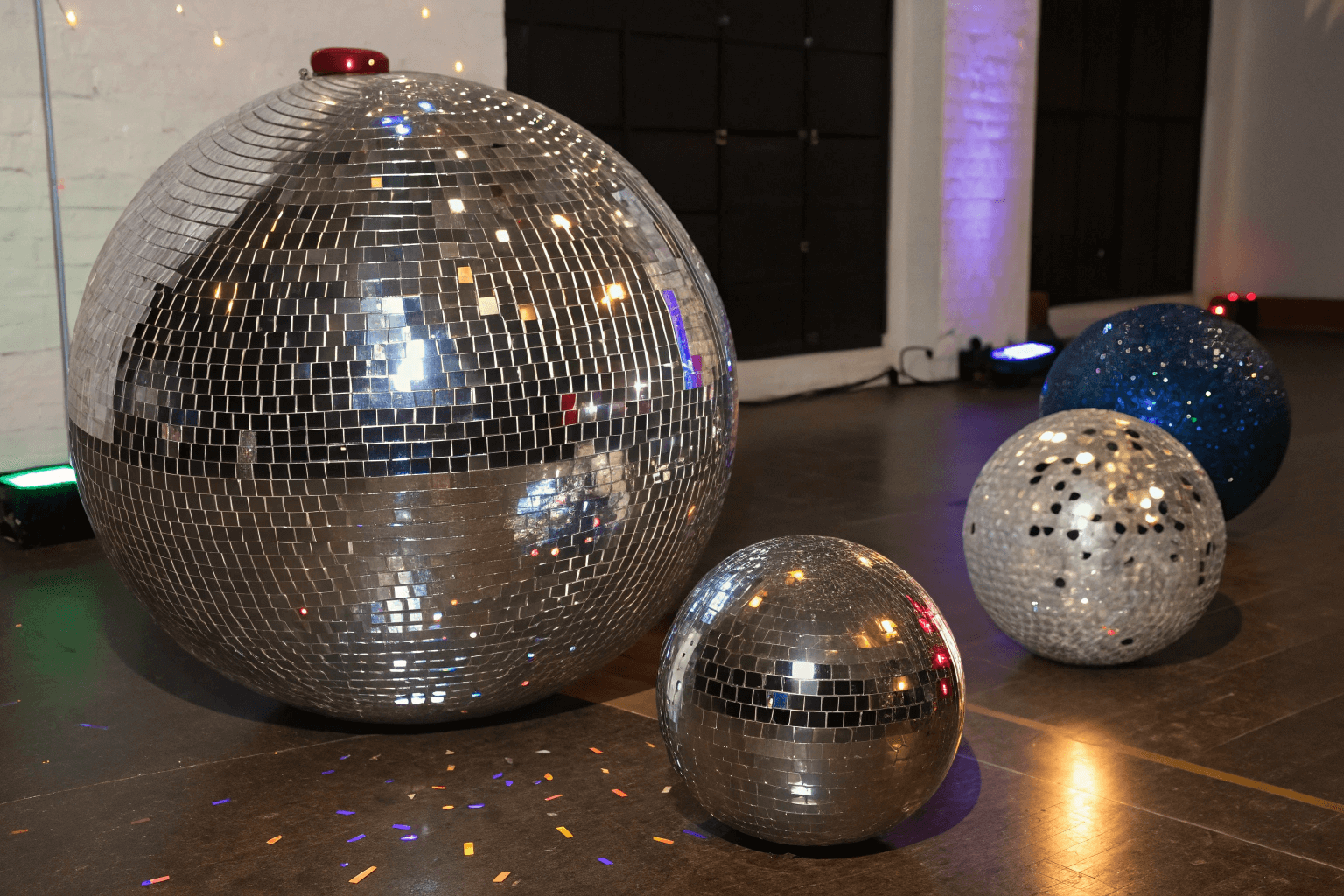
Source Commercial-Grade Mirror Balls, Engineered for Professionals
Peel Strength Tests on FRP Surfaces
Peel strength testing mechanically separates bonded materials at a controlled angle and speed to measure adhesive performance. For FRP surfaces, the 180° and 90° peel tests are standard, providing critical data on bond strength and flexibility under stress.

Understanding the 180° and 90° Peel Test Methods
The 180° peel test, governed by ASTM D 903, is the primary standard for measuring peel strength in bonded materials.
The 90° peel test, specified by ISO 8510-1, is designed for adhesive peel testing on flexible-bonded-to-rigid assemblies.
Both tests operate by holding one material fixed while pulling the other away at a constant speed, recording the force required for separation.
Key metrics include the peak initial force to start peeling and the average peel force per unit width, expressed in N/mm or lb.F/in.
FRP Adhesive Performance and Durability Data
FRP-specific adhesives tested under ASTM D 903 show maximum loads measured in pounds-force per inch (lb.F/in.).
These adhesives offer a tensile strength of 3,800 lb/in² and an elongation capacity of 900% per ASTM D-412.
The bonded assemblies can withstand a service temperature range from -40°F to 180°F (-40°C to 82°C) when fully cured.
Peel tests record forces from 5 newtons for light adhesives up to 200 newtons or more for structural bonds, validating performance for field applications.
Humidity Impact on Mirror Adhesion
Humidity affects mirror adhesion by promoting condensation that weakens the bond or causing hydrolysis in some cured adhesives. Specialized moisture-curing adhesives, like hybrid polymers, use ambient water vapor to form flexible, durable seals. Successful application requires controlling surface temperature relative to the dew point and ensuring proper ventilation behind the mirror.

How Moisture Compromises the Bonding Process
Humidity can undermine adhesion through two key mechanisms. The first is condensation, where water vapor forms a thin film on the substrate. This layer acts as a physical barrier, preventing the adhesive from making direct contact with the surface and drastically reducing the bond’s ultimate strength.
The second is a chemical process called hydrolysis, which affects certain cured adhesives like acrylated urethanes over time. When these materials are exposed to environments with relative humidity consistently above 70% combined with elevated temperatures, the polymer chains can break down from within, leading to adhesive degradation and failure.
Proper surface preparation is the primary defense. This involves calculating the dew point to ensure the substrate temperature stays well above it. For steel surfaces, a differential of at least 5°F (3°C) is required to prevent moisture deposition and the subsequent risk of flash rust, which would compromise the bond.
Adhesives and Protocols for Humid Environments
To combat moisture, specialized moisture-curing adhesives are used. Products like Sikaflex®-545 or Bison Mirror Adhesive harden through a chemical reaction with water vapor in the air, a process called polymerization. This creates a permanently elastic seal with a Shore A hardness around 60, allowing it to absorb movement without stressing the glass.
In wet areas like bathrooms, a critical installation step is maintaining a 2-3 mm ventilation gap behind the mirror. This space allows air to circulate, preventing trapped condensation or water accumulation that can corrode the mirror’s sensitive silver reflective layer from behind.
Application conditions are strictly defined. These adhesives must be applied within a temperature range of 5°C to 40°C. Under standard conditions of 20°C and 65% relative humidity, the typical cure rate is 1-2 mm of depth per 24 hours, meaning full cure for a standard bead can take several days.
The “Zero-Gap” Manufacturing Standard
The ‘zero-gap’ standard refers to the practice of eliminating measurable space between bonded components. In mirror manufacturing, this means achieving a seamless, invisible bond line between the mirror and its substrate, which is critical for structural integrity, aesthetic perfection, and long-term durability in high-stress environments.

The term “zero-gap” is used across several engineering disciplines, each with specific applications. In structural steel, it refers to welded connections in hollow sections. For door systems, it describes high-performance sealing technology. In testing, it defines precise dimensional tolerances for materials. This context shows that “zero-gap” is a principle of precision and continuity, applied differently based on the material and performance requirements.
Defining Zero-Gap for Mirror Adhesion
For mirror adhesion, a zero-gap joint means there is no measurable space between the mirror backing and its mounting surface. This creates a continuous, monolithic bond. The goal is to make the connection line invisible, both to the touch and to the eye.
This standard is non-negotiable for performance. Any gap becomes a point where stress can concentrate. Under thermal changes or physical load, these stress points can initiate cracks, cause the adhesive to fail, or lead to the mirror delaminating from its substrate. Eliminating the gap distributes forces evenly across the entire bonded area.
Aesthetically, a zero-gap finish is essential for high-end architectural and event installations. A visible line of adhesive or a shadow where components meet is considered a major defect. The surface must appear as a single, flawless plane.
The principle mirrors other high-stakes engineering. For example, in structural steel, achieving a true zero-gap for welding requires precise beveling of materials and controlled welding procedures to meet certified strength capacities without creating weak points.
Technical Execution and Quality Protocols
Achieving zero-gap starts with precision in the digital design and cutting phase. CAD models must be exact, and cutting tools like waterjets or CNC routers must execute those designs to sub-millimeter tolerances. This ensures the mirror panel and substrate fit together perfectly before adhesive is ever applied.
The adhesive application is a critical controlled process. The type of epoxy or silicone must be selected for its bonding properties with glass and the substrate. Its viscosity and the volume applied must be calculated to completely fill the microscopic interface without squeezing out and creating visible residue on the mirror face.
Quality control involves multiple checks. Inspectors use angled lighting to reveal any shadow lines that indicate a gap. Tactile checks confirm a smooth transition. For complex multi-panel systems, full pre-assembly at the factory verifies fit and finish before components are shipped to the installation site.
Finally, achieving the standard often requires artisan-level finishing. While automated processes ensure initial precision, skilled craftsmen perform the final cleaning, alignment, and detailing to ensure the bond line is truly invisible and the installation is seamless.
Troubleshooting Falling Tiles in High-Traffic Areas
Falling tiles in busy areas are typically caused by insufficient adhesive coverage and poor substrate preparation. Industry standards mandate 80-95% adhesive coverage, and surfaces must be flat within 1/4 inch over 10 feet. Using the correct Class 2 adhesives and allowing proper curing time are essential for long-term durability.

The Root Causes: Inadequate Adhesion and Substrate Issues
Insufficient adhesive coverage creates hollow spots, which crack under repeated loading and lead to loose tiles.
A substrate that is not flat within 1/4 inch over 10 feet prevents full adhesive contact, compromising bond integrity.
Using a standard adhesive instead of a Class 2 (Improved) type fails to meet the minimum 1.0 N/mm² strength required for porcelain and high-traffic areas.
Premature use of the floor before the adhesive has fully cured prevents it from reaching its design strength, leading to early failure.
Technical Standards and Corrective Protocols
Adhesive coverage must meet NTCA standards: a minimum of 80% for dry indoor areas and 95% for wet areas, outdoors, or with natural stone.
Select adhesives classified as ANSI A118.15 (Improved Modified Thin-Set) for superior bond strength and flexibility in commercial applications.
Ensure tiles have a PEI durability rating of 4 or 5 for heavy commercial traffic and a water absorption rate below 0.5%.
Protect floors from all foot traffic for at least 72 hours after installation and from heavy traffic for a full 7 days to allow proper curing.
Final Thoughts
The strength of an adhesive bond is not a matter of chance but a predictable outcome of specific physical and chemical conditions. A durable bond requires a porous surface for mechanical interlocking, a substrate free from contaminants like outgassing volatiles, and an adhesive chemistry matched to the environmental demands—be it thermal cycling, humidity, or mechanical stress. The data shows that failure, whether a falling tile or a delaminating mirror, almost always traces back to a deviation from these core principles, such as insufficient coverage, incorrect adhesive selection, or poor surface preparation.
For professionals, this means moving beyond generic product recommendations to a specification-based approach. Success hinges on applying the relevant technical standards—whether for peel strength (ASTM D903), outgassing (NASA ASTM E595), or structural glazing (ASTM C1184)—and adhering to the precise protocols they define for coverage, cure time, and environmental control. By treating adhesion as an engineered system rather than a simple material application, you can achieve the reliable, long-term performance required for commercial and architectural installations.
Frequently Asked Questions
What is the best glue for disco ball mirrors?
The search results provided do not contain the technical specifications or engineering standards required to definitively answer this question for a B2B audience. To make an informed decision, you would need technical data sheets from adhesive manufacturers (e.g., 3M, Henkel) detailing shear strength values, service temperature ranges, and substrate compatibility, as well as relevant industry standards like ASTM D4501 for mirror adhesion.
Why are my mirrors falling off in the sun?
Mirrors detach in sunlight primarily due to adhesive outgassing. Heat causes volatile components in the adhesive to vaporize, creating pressure that degrades the bond. For reliable performance in high-temperature optical applications up to 200°C, industry standards like NASA ASTM E595 require adhesives to have a Total Mass Loss (TML) of less than 1.0% and a Collected Volatile Condensable Materials (CVCM) level below 0.1%.
How do you re-tile a disco ball?
Re-tiling involves applying self-adhesive glass mirror mosaic tiles, typically 5x5mm (0.2×0.2 inches) in size, directly onto the cleaned spherical core. For a standard 20-inch (50 cm) diameter ball, you will need approximately 2,400 to 3,600 individual tiles. Apply them in a tight mosaic pattern, working in sections and paying special attention to edges to manage the surface curvature effectively.
Does glue stick better to plastic or foam?
For construction and mirror applications, glue typically forms a stronger and more reliable bond with foam than with many common plastics. Many standard adhesives are explicitly formulated for foam-safe bonds to materials like EPS and XPS, achieving adhesion strengths of 95-120 oz/in (per PSTC-1 standard). In contrast, these same adhesives often will not bond reliably to plastics like polyethylene (PE) or polypropylene (PP) without specialized surface preparation.
How can you stop disco ball mirrors from shedding?
The available search results lack the technical data on quantified prevention methods. One referenced approach involves applying a clear sealant spray over the dried adhesive to help secure the mirrors. For a durable, commercial-grade solution, consulting adhesive manufacturer technical data sheets for products with high peel strength and environmental resistance, or seeking maintenance standards from professional entertainment equipment manufacturers, is recommended.
What adhesive types are used for commercial decor installations?
Standard practice uses pressure-sensitive, solvent-free carpet adhesives for flooring and high-strength structural acrylic or epoxy adhesives for other decor elements. For structural bonds, industry guidelines, such as those from 3M, specify a minimum overlap shear strength of 1,000 psi. Successful application depends on proper substrate preparation, including ensuring concrete is at least 28 days old (ASTM F710) and ambient relative humidity is at or below 80% (ASTM F2170).