

In a market where 75% of customers are more likely to repurchase from brands that use custom apparel, generic products no longer cut it. For brand managers and visual merchandisers, the pressure is on to create unique, on-brand physical assets that drive loyalty and stand out in crowded retail spaces.

This article details how to execute precise OEM branding through custom mirror ball solutions. We cover the technical processes for achieving exact color matches to Delta E tolerances of 1.5 or less, the capabilities for creating custom non-spherical shapes, and the project management frameworks that coordinate multi-store rollouts. You’ll see how these strategies are supported by a growing market, where the sustainable fashion segment alone is projected to expand from $8.1 billion to $33.1 billion by 2033.
Why Global Brands Demand Custom Finishes
Global brands use custom finishes like embroidery, screen printing, and laser etching to build stronger brand identity, increase customer loyalty, and stand out in crowded markets. This demand is supported by significant market growth and technological advancements that make personalization efficient and scalable.

| Market Segment | Projected Value / Growth | Key Driver |
|---|---|---|
| Global Custom Apparel Market | USD 2.45 billion growth (2025-2029) at 8.4% CAGR | eCommerce and print-on-demand services |
| Sustainable Fashion Market | $8.1B (2024) to $33.1B (2033) at 22.9% CAGR | Demand for eco-friendly materials and processes |
| North America Custom Apparel | Expected to reach $1.45 billion by 2032 | Broad demand for personalized, on-brand products |
| Color Matching Industry | $2.3B (2024), growing at 5.6% CAGR | Need for precise OEM branding and consistency |
Building Brand Identity and Customer Loyalty
Custom finishes turn products into wearable brand assets. When customers use branded apparel in daily settings like gyms or stores, it builds a sense of community and aspirational appeal. Businesses that use custom apparel report a 75% higher likelihood of repurchase from recipients, which directly boosts brand loyalty and revenue.
Techniques such as logo imprinting and laser etching serve as effective, long-lasting marketing tools. These methods create permanent brand marks on products used across hospitality, retail, and fashion, ensuring the brand remains visible and associated with quality over time.
Differentiation in a Competitive Retail Landscape
In a saturated market, unique finishes are essential for visual merchandising and upscale brand positioning. Custom color matching, reflective elements, and graphic details help products stand out on shelves, allowing brands to command premium prices and achieve healthier profit margins. This strategy directly counters competition from low-quality, generic alternatives.
Custom manufacturing also supports the use of sustainable materials, aligning with consumer values and a growing market. The sustainable fashion sector is projected to expand from $8.1 billion in 2024 to $33.1 billion by 2033, offering a significant edge for brands that integrate eco-friendly practices into their finishing processes.
Market Growth and Technological Efficiency
The demand for custom finishes is underpinned by strong market growth. The global custom apparel market is projected to grow by USD 2.45 billion from 2025 to 2029, driven largely by eCommerce and print-on-demand services that reduce inventory risk for brands.
Digital printing technologies like direct-to-garment (DTG) and AI-powered design tools enable efficient production with no minimum order requirements. This efficiency reduces overstock waste; in one documented case, a brand cut its overstock by 40%. These technological advances make custom finishes more accessible and scalable for global brands looking to execute unique retail decor and OEM branding at pace.
Custom Color Matching (Gold, Black, Gunmetal)
Achieving precise, consistent metallic finishes like gold, black, and gunmetal requires a controlled, in-house process that matches client samples to industry-standard Delta E tolerances, supported by digital tools for scalable quality control.

How We Achieve Precise Color for Your Brand
We match client-provided samples through a controlled in-house process, typically requiring 2-3 rounds of trials to establish visual tolerance boundaries.
Our process accounts for material-specific challenges, especially for sensitive metallic shades like gold, black, and gunmetal, which are prone to shifts in perception and sheen.
We manage key variables such as temperature, initiator percentage, and air pressure during application to ensure batch-to-batch consistency from the first unit to the last.
The Technical Standards Behind Consistent Finishes
We work to industry-standard Delta E (∆E) tolerances. For critical OEM branding projects, a ∆E of 1.5 is generally acceptable, accounting for both supplier formulation and our processing.
Brands often specify tighter tolerances between 0.50 and 1.50 ∆E2000. For reference, Pantone’s standard for spot colors is 0.50 ∆E00.
We use digital color measurement tools and control charts to numerically verify every batch, ensuring your gold maintains its warmth, your black its depth, and your gunmetal its perfect gray-metallic balance.
Integrating Digital Tools for Scalable Quality
We leverage color software to calculate precise pigment formulas, aiming for ‘first-shot accuracy’ to reduce material waste and accelerate prototyping.
This digital integration allows for virtual color simulation and testing, which is crucial for sustainability as it prevents entire batches from being discarded due to mis-tints.
The system automates quality control checks for raw materials and final products, providing real-time data that integrates with project management for full traceability across multi-store rollouts.
Beyond Spheres: Custom Mold Production
Custom mold production enables the creation of unique, non-spherical shapes for OEM branding and retail decor. This process leverages advanced design software, rapid tooling, and high-performance materials to achieve precise, brand-specific geometries with sub-millimeter accuracy, supporting everything from intricate visual merchandising displays to large-scale architectural features.

From Digital Design to Physical Precision
The process begins with advanced software for virtual prototyping, allowing engineers to optimize custom mold designs before any physical production begins.
This digital simulation reduces iteration time and material waste, which is critical for creating unique retail decor with complex, non-spherical geometries.
For example, BDB’s engineers co-developed a custom numbering system and modular backplate for a hotel’s 8-meter feature wall, ensuring sub-millimeter precision for over 250 unique panels.
Advanced Techniques for Bespoke Shapes
Rapid tooling techniques enable the quick production of bespoke molds, supporting short-run production for brand-specific shapes needed in visual merchandising.
Micro-molding technology is employed to produce intricate, small-scale molds ideal for detailed branding elements, achieving high precision for features under 1mm.
The integration of IoT and AI into production, known as Industry 4.0, allows for real-time monitoring and optimization, enhancing efficiency for scalable OEM mold creation.
Materials and Execution for Brand Integrity
High-performance alloys, such as aluminum and high-thermal alloys, are used to create durable molds that can handle diverse branding materials over repeated production cycles.
This focus on advanced materials improves the sustainability and longevity of molds, which is key for eco-friendly manufacturing in OEM applications.
The final execution relies on a blend of this technical capability and artisan craftsmanship, ensuring that every custom piece, from a mirrored sculpture to a branded art piece, meets architectural-grade standards.
Source Professional Mirror Balls, Engineered for Impact.
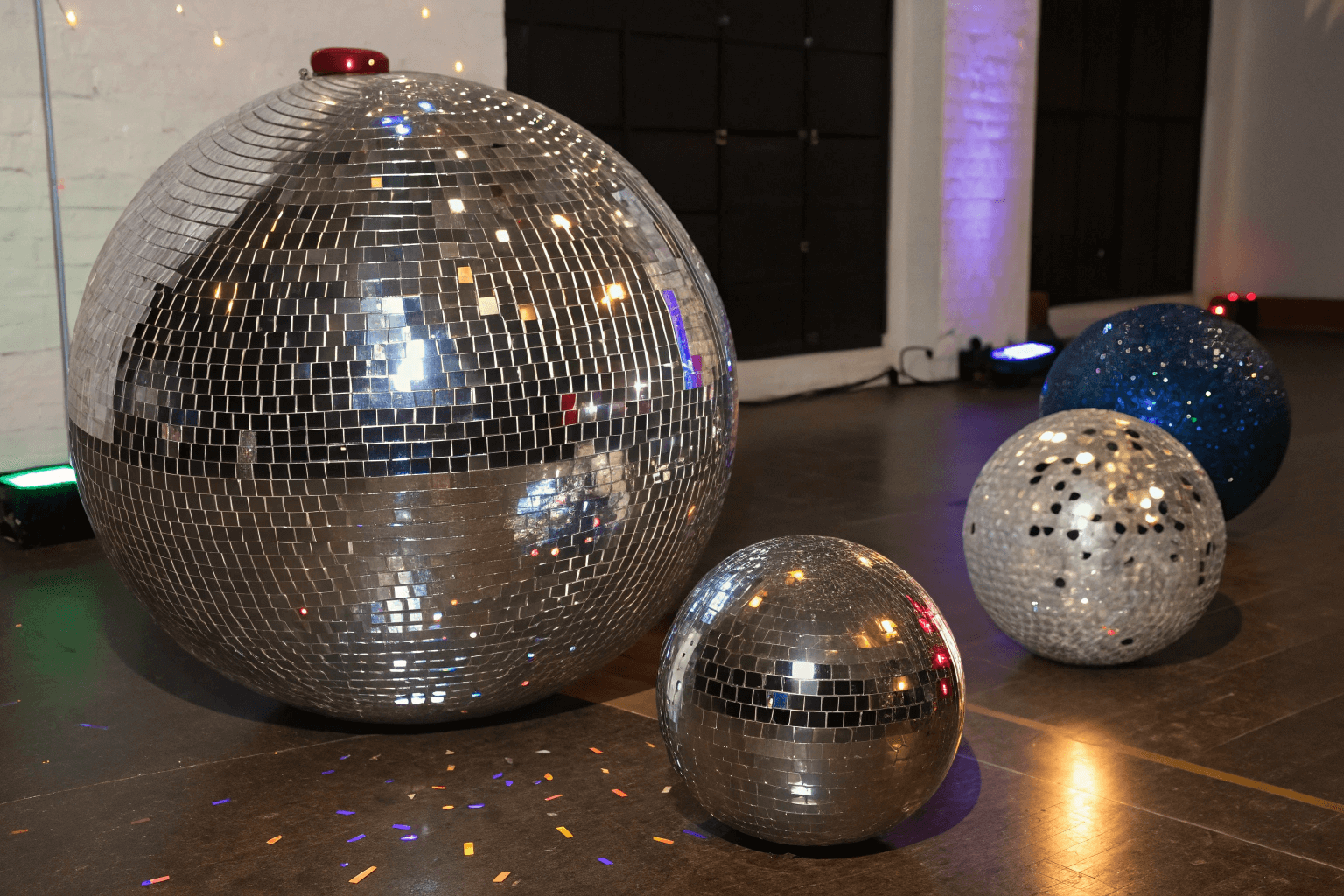
Logo Imprinting and Laser-Etched Tiles
Logo imprinting and laser etching are two primary techniques for applying brand marks to tiles. Silk screen printing is a versatile, cost-effective imprinting method for multi-color logos, while laser etching uses a focused beam to create a permanent, high-precision mark directly in the tile’s surface. For premium, long-lasting branding in retail environments, laser etching is the superior choice due to its durability and resistance to wear.

What Are Logo Imprinting and Laser-Etched Tiles?
Logo imprinting applies brand marks using methods like silk screen printing, where ink is pressed through a stencil onto surfaces like tiles, fabric, or plastic.
Laser etching uses a focused laser beam to vaporize or melt a tile’s surface layer, creating a permanent, shallow mark (0.0254–0.127 mm deep) directly in materials like ceramic, glass, or porcelain.
These techniques are used for custom OEM branding in retail decor, allowing brands to integrate logos directly into architectural and display elements.
Comparing Silk Screen Printing and Laser Etching
Silk screen printing is versatile for multi-color logos and cost-effective for high-volume runs, but the ink can fade or scratch off with abrasion, making it less durable.
Laser etching creates high-contrast, monochromatic marks with exceptional precision for intricate designs; it is permanent and highly resistant to wear, chemicals, and fading.
For premium, long-lasting branding on tiles—such as in high-traffic retail stores—laser etching is the superior choice, while silk screen suits budget-friendly, vibrant displays.
Applications for Brand Managers and Visual Merchandisers
Brand managers use laser etching to execute custom, high-resolution logos with clean edges on various tile types, enabling unique and contamination-free branding for products and spaces.
Visual merchandisers integrate laser-etched tiles as permanent, professional fixtures in retail environments; their durability withstands constant customer traffic better than printed alternatives.
Testing material compatibility is crucial before etching to prevent surface cracks, ensuring the final branded element meets both aesthetic and functional specifications for 2026 projects.
Project Management for Multi-Store Rollouts
Effective project management for multi-store rollouts hinges on a dedicated single point of contact, proactive planning frameworks, and streamlined execution protocols to coordinate complex logistics, custom manufacturing, and tight deadlines across multiple locations.

The Dedicated Account Manager as Your Single Point of Contact
A dedicated Account Manager is assigned to act as your internal advocate and primary project coordinator. They provide technical advice, prepare quotes, and track all production and logistics phases, functioning as the project manager for custom fabrications to ensure alignment from concept to installation.
Proactive Planning and the B2B Professional Program Framework
The complimentary B2B Professional Program enables partners to establish pricing and contacts before project deadlines. Proactive account setup allows for strategic planning, avoiding last-minute pressures during multi-location launches. The program offers tiered B2B pricing for standard items and a collaborative quote process for custom projects.
Execution and Logistics: From Priority Protocols to On-Site Delivery
For tight deadlines, a ‘Priority Production Protocol’ can compress manufacturing timelines, as demonstrated in a case where production was completed in 7 days for a 3-week deadline. Logistics teams manage complex international shipping, including chartered air freight and customs pre-clearance to ensure on-time delivery. Factory pre-assembly and testing, like the full mock-up for an 8-meter hotel lobby wall, mitigate installation risks at multiple store sites.
Sample Prototyping and Approval Workflows
A structured 5-stage process ensures brand consistency from digital concept to physical sample, aligning every detail with guidelines before mass production to minimize errors and support unique retail decor.

The 5-Stage Workflow for Brand-Consistent Prototypes
The process moves from digital concept to physical sample, ensuring every detail aligns with brand guidelines before mass production.
Stage 1 involves creating digital mockups, where visuals are critical as consumers form brand opinions in 0.05 seconds. Stage 2 is physical sample production, where custom prototypes increase purchase likelihood by 59% for retail decor testing.
Stages 3 and 4 focus on multi-round review and final compliance checks, as only 30% of brands have widely used guidelines, yet consistency can drive a 10-20% revenue uplift. The final stage is the production handoff, greenlighting OEM scaling where top brands dominate 80% market share through consistent execution.
Key Metrics and Best Practices for Prototype Success
Aim for defect rates below 2.5% in physical prototypes to ensure quality and brand integrity. Track recognition success through logo and color tests; signature colors can boost brand recognition by 80%.
Allocate over 25% of digital ad spend to social channels for prototype validation via user-generated content. Use personalized experiences in the approval process, as 96% of businesses report sales increases from personalization, aiding merchandiser buy-in.
Integrate feedback tools that support rapid iteration, with target sample turnaround times of 7-10 days from capable factories.
Aligning Prototyping with BDB’s Digital-to-Physical Workflow
BDB’s process integrates directly with this structured workflow, beginning with precise CAD designs for digital prototyping.
The company’s waterjet cutting and artisan craftsmanship ensure physical samples meet the sub-millimeter tolerances required for brand-approved visuals.
BDB’s dedicated account managers act as single points of contact, facilitating the review and iteration stages by coordinating feedback between creative, merchandising, and legal teams.
The ‘Priority Production Protocol’, demonstrated in case studies, enables rapid physical sample turnaround, supporting the 2-4 week iteration cycles brand managers require.
Rigorous factory QC aligns with the final compliance stage, ensuring prototypes are flawless before approval for full-scale OEM production.
Lead Times for Custom Geometric Designs
Lead times for custom geometric designs in manufacturing typically range from 8–16 weeks for standard projects, extending to 20+ weeks for complex designs involving new shapes or intricate branding elements.

Typical Timelines and Process Breakdown
Standard lead times for custom geometric designs range from 8 to 16 weeks, extending to 20 weeks or more for complex projects involving new shapes or intricate branding elements.
The process typically follows a 12 to 16-week sequence: 2-3 weeks for design consultation, 3-4 weeks for prototyping, 3-4 weeks for testing and validation, 1-2 weeks for refinements, and 3-4 weeks for final production.
For retail decor and visual merchandising components, rigorous testing for durability and performance is a non-negotiable phase, adding 3-4 weeks to ensure the product meets commercial standards.
Key Factors That Extend or Compress Schedules
Design complexity is the primary driver: simple modifications add 2-3 weeks, while entirely new geometries require extensive engineering, pushing timelines toward 20+ weeks. Poor design for manufacturability (DFM) can cause significant rework and toolpath delays.
Material specifications impact procurement; sourcing standard materials is quick, but specialty alloys or custom coatings for a unique finish can add 4-6 weeks to the schedule.
Production capacity and order volume affect timing. High-mix, low-volume custom runs face machine changeover delays, and peak demand periods can extend overall schedules.
Rush orders are possible, typically cutting 30-40% off standard timelines (e.g., reducing a 12-16 week project to 8-10 weeks), but incur a cost premium of 25-40%.
Strategies for Efficient Project Planning
Engage your manufacturing partner 6-8 months in advance for complex projects to align on milestones and secure production capacity, improving on-time delivery rates.
Prepare complete and optimized 3D CAD files upfront to enable instant quoting and overlap the design and material sourcing phases.
Optimize part geometry for manufacturability by avoiding features like thin walls or extremely tight tolerances to minimize CNC machining passes and tool changes.
Use parallel processing strategies, such as engaging multiple specialized suppliers for different components, or leverage digital platforms to potentially reduce timelines by 2-3 weeks.
Plan buffers for potential procurement delays, especially for specialty metals or custom finishes commonly used in high-end retail decor projects.
Frequently Asked Questions
Can you make custom shape disco balls?
Yes, BDB specializes in fabricating custom shape disco balls using advanced manufacturing techniques that go beyond DIY methods. Our process begins with a digital-to-physical workflow, where CAD designs are translated into precise cuts using waterjet technology. For complex, non-spherical forms, we employ a combination of precision tooling and artisan craftsmanship to shape substrates and apply mirror facets, ensuring structural integrity and a flawless finish suitable for commercial and architectural use.
What is the MOQ for custom color mirror balls?
The minimum order quantity for custom color mirror balls is flexible and tailored to your project. For our B2B Professional Program partners, we structure MOQs based on the complexity of the color match, the size of the balls, and the production run. We provide transparent quotes that balance feasibility with your volume needs, whether for a limited retail collection or a large-scale event rollout. Direct consultation with your dedicated Account Manager will establish the precise terms for your specific request.
What is the lead time for a global retail rollout?
Lead times for a global retail rollout involving custom OEM products are project-specific. A typical timeline for international manufacturing and logistics ranges from 60 to 90 days. However, through our Priority Production Protocol and optimized supply chain management, we have successfully executed complex, multi-store deliveries in significantly shorter timeframes. We factor in production scheduling, custom finishing, and freight logistics to provide a reliable timeline during the project quoting phase, aiming to meet critical retail launch dates.
Can I add a logo to a disco ball?
Absolutely. Logo integration is a core custom service. We offer several professional methods, including laser etching for a permanent, subtle finish or precise arrangement of mirror tiles to form your logo pattern. For bolder branding, we can incorporate colored glass or metallic finishes within the logo area. Our technical team will advise on the most effective technique based on your logo’s complexity, the ball’s size, and the intended viewing distance to ensure high-impact brand visibility.
Do you offer Pantone matching for mirror glass?
Yes, we provide exact Pantone color matching for custom mirror glass. Our capability extends beyond standard reflective surfaces to include colored interlayers and back-painted finishes that meet precise color specifications. We work with architectural-grade glass suppliers to replicate your brand colors accurately, providing physical samples for approval before full-scale production to ensure the final product aligns perfectly with your design vision.
What are the prototype costs for custom shapes?
Prototype costs vary based on the design’s complexity, size, and required materials. For initial concepts, we often begin with digital renders and, if needed, progress to physical samples using methods like 3D printing or precision-cut mock-ups. Costs for a physical prototype of a custom geometric shape typically start in the range of $2,000 to $15,000, covering engineering, tooling setup, and sample fabrication. This investment is dedicated to perfecting your design and is factored into the overall project plan upon moving to production.
Final Thoughts
For global brands, custom mirror ball solutions are more than decorative items; they are strategic assets. The ability to execute precise color matching, create unique geometric shapes, and apply permanent branding directly transforms a standard product into a powerful tool for visual merchandising and brand storytelling. This level of customization directly addresses the core demands of modern retail: differentiation, customer loyalty, and a cohesive brand experience across all touchpoints.
The success of these projects hinges on a partnership that blends technical precision with robust project management. From the initial color sample to the final installation in a multi-store rollout, a structured workflow ensures brand consistency and operational efficiency. By leveraging digital tools for prototyping and a dedicated single point of contact for coordination, brands can navigate the complexities of custom manufacturing to achieve a unique, high-impact result that stands out in any market.