

A single sourcing mistake can derail an entire project. For procurement managers, vetting a disco ball manufacturer isn’t about finding the cheapest option—it’s about identifying a partner who can deliver precision, durability, and safety at scale. The difference between a successful launch and a costly failure often lies in the details you verify before the order is placed.

This checklist moves beyond basic supplier questionnaires. We’ll break down the critical technical and operational benchmarks you need to assess, from material specifications to factory audits. You’ll learn why the 0.5mm tile gap tolerance is a key quality indicator, how to distinguish between authentic float glass mirrors and substandard PVC alternatives, and why a comprehensive factory audit should verify three specific milestones: digital-to-physical workflow precision, on-site artisan craftsmanship, and final logistical readiness.
The Deceptive Nature of Product Photos
Stock and generic product photos are ineffective for B2B marketing because they fail to accurately represent complex products, reduce consumer engagement, and can introduce demographic bias, ultimately damaging brand trust during procurement vetting.

Why Stock Photos Fail for Technical B2B Products
Stock images cannot accurately depict complex products like robotic systems, making it hard to communicate technical details to diverse audiences.
Consumers view stock material as filler that provides zero information, preferring authentic photos even if stylistically similar.
This inauthenticity damages brand trust in B2B marketing where genuine visuals are essential for procurement vetting.
The Data on Authentic vs. Stock Imagery
Eye-tracking studies show users spend significantly more time on authentic imagery than stock photos, especially when seeking details about a company’s inner workings.
Social media posts with natural photos have engagement rates more than triple those with stock photos, with an overall engagement score 15% higher.
Getty Images reported a 192% increase in searches for ‘real people’ and a 168% increase for ‘diverse women’, highlighting a market shift away from generic stock.
The Hidden Bias and Risks in Stock Libraries
Studies reveal significant demographic bias in stock libraries, with health-related images predominantly featuring light-skinned people in a narrow age range.
Paywalled sites are more likely to include minority groups, forcing budget-limited B2B firms to use mismatched or deceptive imagery.
AI-generated content exacerbates these issues by basing outputs on the same biased databases, perpetuating misrepresentation.
Shell Material: Fiberglass vs. Foam Durability
Fiberglass generally offers superior durability compared to foam as a shell material, particularly in resistance to moisture, mold, pests, fire, and long-term degradation, though foam (especially closed-cell types) excels in structural strength, higher R-value, and moisture resistance in specific applications.

Core Durability Traits: Moisture, Fire, and Longevity
Fiberglass is non-combustible and resists mold and pests, maintaining its insulating properties for decades when installed correctly.
Closed-cell foam provides excellent moisture resistance and acts as a vapor barrier, but its performance is highly dependent on proper installation to avoid shrinkage or gaps.
For high-wear applications like spas or boats, fiberglass-reinforced shells typically last 10 to 20 years or more, offering superior impact resistance compared to many foam-based alternatives.
Structural and Thermal Performance Comparison
Fiberglass offers proven structural longevity and is a standard for large-scale commercial use due to its reliability and low maintenance.
Foam, especially rigid or closed-cell types, provides high compressive strength and adds rigidity to structures, with a higher R-value (approximately 6–7 per inch) compared to fiberglass (approximately 3–4 per inch).
The choice between materials often hinges on project-specific needs: fiberglass is preferred for fire-prone or high-impact environments, while foam is suited for applications where maximizing thermal insulation in a moisture-resistant assembly is critical.
Procurement Considerations for B2B Buyers
Prioritize fiberglass for projects where fire resistance, long-term durability, and lower lifecycle maintenance are key, despite its higher initial cost.
When considering foam, vet the installer’s expertise and require supplier certifications to mitigate risks of improper application that can lead to system failure.
Evaluate supplier specifications for both R-value and relevant safety standards; there is no universal best material—the decision should be based on budget, environmental exposure, and the specific performance demands of the end application.
Tile Gap Tolerance: The 0.5mm Standard
The “0.5mm standard” is not a universal grout joint specification; it’s a quality control benchmark used in B2B procurement to vet tile manufacturing precision. It refers to the maximum allowable tile warpage or lippage before installation issues become likely, helping buyers avoid trip hazards, installation failures, and costly project rejections.

What the 0.5mm Standard Really Means for B2B Sourcing
The ‘0.5mm standard’ is not a universal grout joint specification; it’s a quality control benchmark used in B2B procurement to vet tile manufacturing precision.
It refers to the maximum allowable tile warpage or lippage (height variation between adjacent tiles) before installation issues become likely.
For B2B buyers, this figure is a critical filter: suppliers whose tiles exceed 0.5mm of facial warpage may require significantly wider grout joints to compensate, complicating design and increasing material costs.
This standard helps buyers avoid trip hazards, installation failures, and costly project rejections by ensuring material quality aligns with professional installation requirements.
Official ANSI Standards vs. Practical Sourcing Specifications
Official ANSI A108.02 standards specify minimum grout joint widths, not a single 0.5mm rule. For rectified tiles over 15 inches (380mm) in a running bond pattern, the average joint should be 3.2mm (1/8″).
Required joint width increases with tile warpage. A tile with 1mm of warpage needs a joint approximately 5mm wide to maintain a flush surface.
Lippage tolerance is tied to joint width. For standard joints between 1.6mm and 6.4mm, the maximum allowable lippage is 0.8mm plus the tile’s warpage, often totaling around 1.6mm.
Substrate flatness is equally critical. Standards require no more than 3.2mm deviation over a 3-meter (10-foot) span to ensure a proper tile installation base.
Applying the Tolerance Standard in Your Supplier Vetting Process
Require potential suppliers to provide certified tile warpage specifications per ANSI A137.1. Typical warpage ranges from 0.8mm to 2.4mm; any figure over 0.5mm should trigger a review of required joint widths.
Use the 0.5mm benchmark as a pass/fail criterion for high-precision projects. For tiles intended for tight-joint installations, reject samples or batches where warpage exceeds this tolerance.
Calculate the real-world grout joint needed: the joint width should be at least three times the tile’s facial dimension variation. A supplier’s 1mm warpage spec dictates a minimum 3mm joint, impacting the final aesthetic.
Inspect for lippage in sample installations. Lippage exceeding 1.6mm creates a tangible trip hazard and is a common reason for project rejection, directly affecting your client’s satisfaction and your firm’s liability.
Source Professional-Grade Mirror Balls, Direct from the Factory

Mirror Quality: Float Glass vs. PVC sheets
Float glass is the only material that meets international standards for professional mirrors, offering superior optical clarity and durability. PVC sheets lack established standards, optical quality, and compatibility with high-quality silvering processes, making them unsuitable for professional applications.

Float Glass: The Standard for Optical Clarity and Durability
Float glass is produced using the float process, which results in superior optical clarity, minimal visual distortion, and precise thickness tolerances.
It is the only material that meets stringent international standards for mirror applications, including ASTM C1036 Type I for transparency, EN 572 for optical and mechanical properties, and ISO 16293 for durability and surface smoothness.
Quality is graded from Q1 (highest quality for premium mirrors) to Q4, with rigorous factory testing for blemishes, reflectance, and environmental resistance to ensure a flawless, long-lasting finish.
PVC Sheets: Why They Are Not Suitable for Professional Mirrors
No established industry standards or technical specifications exist for PVC sheets used as mirrors, indicating they are not a recognized material for professional applications.
PVC lacks the inherent optical quality and surface smoothness of float glass, leading to visual distortions, poor reflectivity, and an inferior final appearance.
The material is incompatible with the high-quality silvering processes used for mirrors and lacks the durability and environmental resistance required for commercial or architectural use.
The Practical Impact on Your Sourcing Decision
For B2B buyers, specifying float glass is non-negotiable for any project where image clarity, professional appearance, and product longevity matter.
Using PVC sheets can lead to customer complaints, product returns, and damage to your brand’s reputation due to subpar visual quality and rapid degradation.
A reliable manufacturing partner will transparently use and verify float glass, providing documentation of compliance with standards like ASTM C1036 as part of their quality control.
Internal Rigging: The Through-Rod Advantage
Through-rod rigging is a high-performance solid stainless steel rod system for sailboat standing rigging. It offers superior stiffness for precise sail shape control, higher break strength for safety, and lower weight aloft to improve boat stability and handling compared to traditional wire cables.
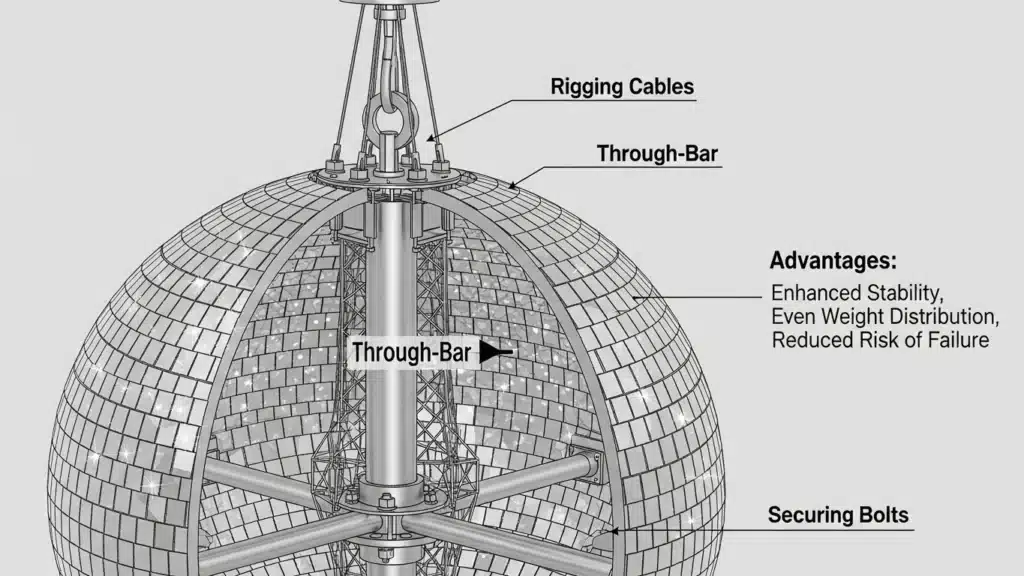
What is Through-Rod Rigging and Why It’s Superior
Through-rod rigging is a high-performance system using solid, high-tensile stainless steel rods instead of traditional wire cables.
Its primary advantages are minimal stretch for precise sail shape control, a 50-60% higher break strength for safety, and significantly lower weight aloft to improve boat stability and handling.
The smaller diameter of the rods reduces aerodynamic drag, a critical factor for racing and performance cruising yachts.
Technical Specifications and Sourcing Considerations
Key materials are Nitronic 50 or 316 stainless steel, with fittings cold-headed or swaged to precise tolerances for brands like Navtec or BSI.
There are two main configurations: discontinuous (segments terminate at spreaders) is common for its practicality, while continuous (full-length rods) offers peak performance but is more complex to install.
When vetting a supplier, confirm their capability for custom CNC rod-heading, request material certifications, and understand the typical 15-20 year service life with annual inspection requirements for fatigue.
Application and Value for Professional Buyers
This technology is a hallmark of high-performance yachts from builders like J/Boats and Hinckley, where the investment directly translates to competitive advantage.
For a B2B buyer, specifying through-rod rigging elevates a project’s quality and resale value, but requires a partner with specialized engineering and installation expertise.
The premium cost, often 2-3 times that of a standard wire replacement, must be weighed against the long-term gains in performance, safety, and reduced maintenance over the system’s lifespan.
Factory Audit: Quality Control Milestones
A comprehensive factory audit for B2B sourcing verifies a supplier’s quality control system through three critical milestones: the digital-to-physical workflow for precision, on-site artisan craftsmanship and assembly, and final inspection with logistical readiness. This process ensures products meet exact specifications and delivery schedules.

| Audit Milestone | Key Verification Focus | Procurement Impact |
|---|---|---|
| Digital-to-Physical Workflow | CAD integration with cutting tech (e.g., waterjet) for sub-millimeter accuracy. | Ensures custom project specifications are met from design to first cut. |
| Artisan Craftsmanship & Assembly | Observation of skilled manual work and verification of pre-assembly tests. | Guarantees fit and finish, eliminating costly on-site installation issues. |
| Final Inspection & Logistics | Rigorous final check against specs and activation of shipping protocols. | Mitigates risk of delays, customs issues, and non-compliant shipments. |
The Digital-to-Physical Workflow: Precision from CAD to Cutting
The audit begins by verifying the factory’s digital-to-physical workflow, a critical step for custom projects. This involves checking the integration of CAD software with precision cutting technologies like waterjet cutting to ensure sub-millimeter accuracy in every panel, as demonstrated in the Berlin Hotel Lobby project where over 250 unique mirrored panels were fabricated.
On-Site Artisan Craftsmanship and Assembly Verification
A key audit milestone is observing the ‘Artisan’s Touch’ phase, where automated precision meets human skill. Auditors assess the craftsmanship in tasks machinery cannot replicate and verify pre-assembly tests. For example, BDB conducted a full pre-assembly of the modular wall system at their factory before shipping, guaranteeing fit and eliminating on-site installation issues.
Final Inspection and Logistical Readiness Protocols
The final audit stage focuses on the last line of defense: rigorous final inspection against project specs and the activation of logistical protocols. This includes checking ‘Priority Production Protocols’ for tight deadlines, as used for the Australian music festival, and ensuring all customs and shipping documentation is prepared in parallel with production to meet non-negotiable delivery schedules.
Compliance Documentation (SGS/UL)
SGS and UL are Nationally Recognized Testing Laboratories (NRTLs) accredited by OSHA. Their marks certify that a product has been tested and meets specific safety standards for market access, mitigating legal and financial risks for B2B buyers.

What SGS and UL Marks Mean for Your Products
SGS and UL are Nationally Recognized Testing Laboratories (NRTLs) accredited by OSHA. Their marks certify that a product has been tested and meets specific safety standards for market access.
Certification involves initial product evaluation, factory inspections, and ongoing surveillance to ensure continued compliance. For B2B buyers, these marks are non-negotiable proof of a supplier’s commitment to safety and regulatory diligence.
They mitigate legal and financial risks by ensuring products are fit for sale in target markets like the US, Canada, and the UAE.
Key Standards for Electrical and Electronic Goods
UL 2849 is the critical standard for e-bike and e-MTB electrical systems and batteries, focused on fire safety.
UL/CSA 62368-1 is the mandatory hazard-based safety standard for audio/video and IT equipment in the US, Canada, and UAE.
The UL 61010 Series covers standards for laboratory and measurement control equipment, while the UL 60745 Series applies to hand-held motor-operated electric tools.
SGS Technical Documentation Review is a service to verify that all supplier documentation, from circuit diagrams to test reports, is complete and compliant before procurement.
The Factory Audit and Documentation Process
The process starts with selecting the correct standard during product development and preparing full technical documentation. A certified lab then performs product testing against the standard’s requirements.
For a listing mark, the factory itself is audited. Initial inspections verify manufacturing controls, followed by unannounced quarterly audits.
Successful certification allows the product to bear the NRTL’s mark, such as the SGS North America Listed Mark. Maintaining certification requires the factory to pass ongoing audits and use approved components from other NRTLs, creating a verifiable chain of compliance.
Frequently Asked Questions
How do I find a reliable disco ball manufacturer?
Focus on suppliers with proven track records in your specific market. Key manufacturers include Dongguan Zibo Trade Co., Ltd. and Foshan Great Full Hardwares Company Limited, both with 4.9/5.0 review scores and rapid response times, ideal for bulk orders in the global event market. For custom or premium needs, Guangzhou Planet Inflatables Ltd. offers scalable production, while Omega Mirror Products in the USA specializes in handcrafted glass-facet disco balls. Always verify capabilities through reviews, response metrics, and sample testing.
What are the major quality red flags in a bulk manufacturing order?
Watch for suppliers lacking measurable quality objectives and weak incoming quality control (IQC) for raw materials. Uncontrolled production processes without documented instructions or in-process checks (IPQC) lead to inconsistent output. Poor traceability systems make defect containment difficult, and inadequate control over nonconforming products risks shipping flawed goods. A critical red flag is the failure to analyze quality data for trends, which prevents continuous improvement. Always audit these areas directly during a factory visit.
Why is a fiberglass core considered mandatory for certain B2B applications?
In industrial sectors like utility, chemical processing, and power generation, fiberglass cores are non-negotiable due to their unique properties. They offer superior corrosion resistance against harsh chemicals, a strength-to-weight ratio that is up to 45% lighter than equivalent steel, and essential non-conductivity for electrical safety. These factors ensure long-term reliability, compliance with safety regulations, and lower total ownership costs despite a potentially higher initial investment.
How can I verify if a mirror is made of real glass or plastic (acrylic)?
Use simple physical tests. The fingernail test is reliable: glass feels cold with no gap behind the surface, while acrylic feels warm and your nail may touch a soft backing. Glass is roughly twice as heavy as a same-sized acrylic piece and remains rigid, whereas acrylic flexes. Acrylic also scratches more easily and can warp under heat. For procurement, always request samples and perform these tests; visual inspection of the cut edge and a tap test for sound can provide further confirmation.
What is the average lead time for an order of 1,000 units?
There is no universal average, as lead time depends entirely on product complexity, industry, and supplier capacity. It is calculated as Manufacturing Time + Procurement Time + Shipping Time. For example, in food manufacturing, a 1,000-unit order might take 26 days total, while in automotive it could be 32 days. To get an accurate estimate, you must obtain a detailed production schedule from your specific manufacturer, accounting for their current backlog, material availability, and chosen shipping method.
Do factories provide their own pre-shipment inspections?
Typically, no. Factories perform internal quality checks, but impartial pre-shipment inspections (PSI) are conducted by independent third-party firms like SGS, Bureau Veritas, or Intertek. These neutral inspectors verify quality, quantity, packaging, and compliance against agreed standards using statistical sampling methods. For B2B buyers, especially in North America and Europe, mandating a third-party PSI in the supplier contract is a standard risk mitigation practice to prevent defective shipments and ensure supply chain transparency.
Final Thoughts
Vetting a disco ball manufacturer is about more than just finding a supplier who can glue mirrors to a sphere. It’s a detailed process of verifying a partner’s capability to deliver on precision, durability, and safety. From ensuring the mirrors are genuine float glass to confirming the internal rigging can handle years of rotation, each checklist item directly impacts the final product’s performance and your project’s success.
The most reliable partners are those who welcome scrutiny. They provide authentic factory photos, transparently discuss material choices like fiberglass cores, and have documented quality control milestones and third-party certifications ready for review. Your due diligence in these areas is what separates a dazzling, long-lasting installation from a procurement headache filled with callbacks and complaints.