

A single piece of improperly secured decor can trigger a premises liability lawsuit with a minimum coverage requirement of $1 million per incident. For event organizers and venue managers, this isn’t just a safety issue—it’s a direct financial exposure that can void insurance and lead to catastrophic costs.

This article breaks down the real costs and contractual obligations behind hanging decorative assets. We’ll examine the specific insurance requirements venues transfer to organizers, the consequences of safety code violations, and how documented processes like rigging audits can provide evidence to lower your liability premiums.
The Financial Risk of Improperly Hung Decor
Improperly secured decor can trigger premises liability lawsuits, void venue insurance, and lead to direct financial penalties. Organizers are typically held responsible for all repair costs and must carry substantial liability insurance, often with minimum limits of $1 million per incident.
| Risk Category | Typical Requirement / Consequence | Financial Impact |
|---|---|---|
| Insurance Coverage | Proof of general liability insurance naming the venue as an additional insured. | Policy limits of $1–5 million, depending on event size. |
| Property Damage | Client responsible for all restoration costs from wall or floor damage. | Full invoicing for labor and materials (e.g., paint repair, tape residue removal). |
| Safety & Code Compliance | Decor must meet NFPA 701 flame resistance standard; qualified rigging labor required. | Fines, event shutdowns, and voided insurance for noncompliance. |
| Liability for Injury | Premises liability claims from falling objects due to negligence. | Minimum coverage of $1M per person for injury/death; lawsuit settlements. |

Direct Liabilities and Insurance Requirements
Venues transfer risk to event organizers through strict contractual and insurance requirements. Clients must provide a certificate of insurance proving general liability coverage, typically with limits between $1 and $5 million. This policy must name the venue as an additional insured party for the event’s duration.
If decor damages the venue’s walls, floors, or structures, the client is invoiced for all restoration costs. This includes labor for paint repair or removing adhesive residue from tapes and hooks. Many venues also require a non-refundable damage deposit for high-risk events, with the client bearing full financial responsibility for any costs exceeding that deposit.
Standard minimum insurance policy limits for events are substantial: $1,000,000 per person for bodily injury or death, $2,000,000 aggregate if two or more persons are involved, and $100,000 for property damage. These requirements quantify the direct financial risk assumed by the organizer.
Compliance Failures and Amplified Costs
Violating safety and building codes significantly escalates financial exposure. Using decor that fails the NFPA 701 standard for flame resistance is a direct code violation. This can lead to immediate event shutdowns by fire marshals and result in fines.
Negligence in securing overhead installations, particularly in spaces with high ceilings or during adverse weather, establishes grounds for premises liability claims if objects fall and cause injury. The property owner’s duty to inspect and ensure safety can make them a target for lawsuits, but the liability and costs are typically passed to the event organizer through contract clauses.
Failing to use qualified rigging labor or to obtain pre-approval for hanging methods can void the venue’s or the client’s insurance coverage. In this scenario, the organizer becomes personally liable for all damages, without the protection of an insurance policy. The financial impact extends beyond direct repair costs to include lawsuit settlements, dramatically increased insurance premiums in the future, and lost revenue from canceled events.
General Liability Insurance and “Duty of Care”
Commercial General Liability (CGL) insurance, based on standard ISO forms, is the primary policy that protects venue owners from lawsuits arising from their duty of care. It covers legal costs and damages for accidental bodily injury or property damage that occurs on the premises or from completed operations, with standard policy limits like $1 million per incident.
| Policy Component | Standard Form / Limit | Key Function for Duty of Care |
|---|---|---|
| ISO CGL Form (CG 00 01 10 01) | Standard five-section policy form | Defines coverage triggers (Coverage A for bodily injury/property damage from an “occurrence”) that respond to breaches of duty. |
| Occurrence Limit | $1,000,000 per occurrence | Maximum payout for a single incident arising from a negligent act or condition. |
| General Aggregate Limit | $3,000,000 per policy period | Total cap for all covered claims (bodily injury, property damage, personal/advertising injury) in one year. |
| Duty to Defend | Supplementary payments (outside limits) | Insurer pays for legal defense, investigations, and court bonds from the moment a lawsuit is filed. |
| Umbrella/Excess Policy | Kicks in after $1M CGL limit | Provides additional layers of financial protection for catastrophic claims exceeding primary policy limits. |

How CGL Insurance Defines and Covers the Duty of Care
A venue owner’s legal obligation to ensure reasonable safety for guests and third parties is known as the “duty of care.” The standard ISO CGL policy form (CG 00 01 10 01) addresses this duty directly through its core coverage provisions.
Coverage A for Bodily Injury and Property Damage Liability is triggered by an “occurrence,” which the policy defines as an accident. This includes continuous or repeated exposure to harmful conditions. A negligent act that breaches the duty of care, such as failing to clean a wet floor leading to a slip-and-fall, constitutes such an occurrence and activates coverage.
Upon a lawsuit, the insurer’s “duty to defend” is a critical component. The insurance company must provide and pay for attorneys, investigations, and court bonds. These defense costs are typically paid as supplementary payments, meaning they are in addition to the policy’s liability limits, preserving the full limit for settlements or judgments.
Policy exclusions help define the boundaries of insurable risk. For example, the medical payments coverage (Coverage C) typically excludes intentional acts. This clarifies that a deliberate breach of duty is not an insurable accident under the CGL policy, separating covered negligence from non-covered intentional wrongdoing.
Policy Limits, Structure, and Real-World Risk Management
The financial structure of a CGL policy is built around specific limits. A common requirement for contractors—and a prudent standard for venues—is a limit of $1 million per occurrence and a $3 million general aggregate limit for all claims during the policy period. The aggregate is the total amount the insurer will pay for covered claims in one year.
CGL policies are typically written on an “occurrence” basis. This means the policy in effect when an incident happens will respond to claims for that injury, even if the claim is filed years later when the policy has expired. This is crucial for latent injuries that may not be immediately apparent.
While defense costs are initially unlimited, they cease once the applicable liability limit (e.g., the $1 million per occurrence limit) is exhausted by a settlement or court judgment. For risks that could exceed these primary limits, an umbrella or excess liability policy is essential. It provides additional coverage after the underlying CGL’s limits are reached, often with a small retention if no underlying policy exists.
Effective risk management for a venue involves transferring risk through contractual requirements. Ensuring that all rigging contractors, decorators, and product suppliers carry adequate CGL insurance with these standard limits is a fundamental step. This practice helps protect the venue from bearing the full financial burden of a third party’s negligent act.
Documenting the “Safe Rigging SOP”
A Safe Rigging Standard Operating Procedure (SOP) is a documented system based on OSHA and ASME standards. It mandates regular inspections—daily visual checks and annual certified reviews—of all slings, hardware, and lifting devices. Proper documentation, including load tags and inspection logs for items like chain slings, is required to prove a 2:1 safety factor was maintained and that a competent person verified equipment was defect-free before use.
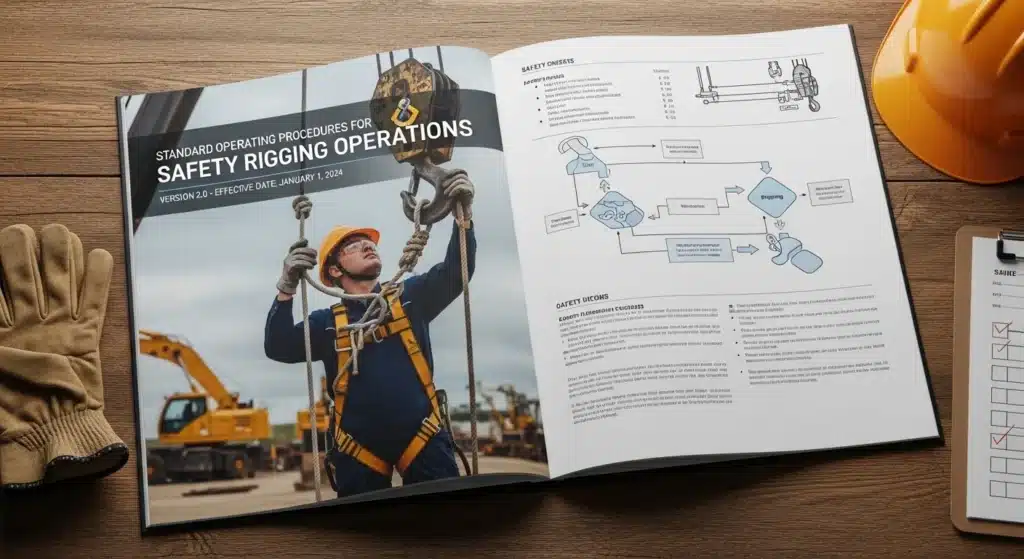
The Mandatory Inspection Framework
OSHA regulations (CFR 1926.251, 1910.184) require three inspection types: initial, frequent, and periodic.
Frequent inspections are visual and functional checks performed daily or before each shift by a competent person.
Periodic inspections are documented, in-depth examinations performed annually by a qualified person, as specified in ASME B30 standards for specific equipment.
Equipment like chain slings, metal mesh slings, and below-the-hook lifting devices must have individual, documented inspection records.
Critical Documentation for Compliance and Safety
Every piece of rigging hardware must have a legible load tag on its hook throat stating its Safe Working Load (SWL).
The SOP must log inspections, proving adherence to the minimum 2:1 safety factor for wire rope and synthetic slings.
For lifts over 10 tons, documentation must verify the involvement of a Level II qualified rigger.
Records must show defective equipment was immediately removed from service and destroyed, not just set aside.
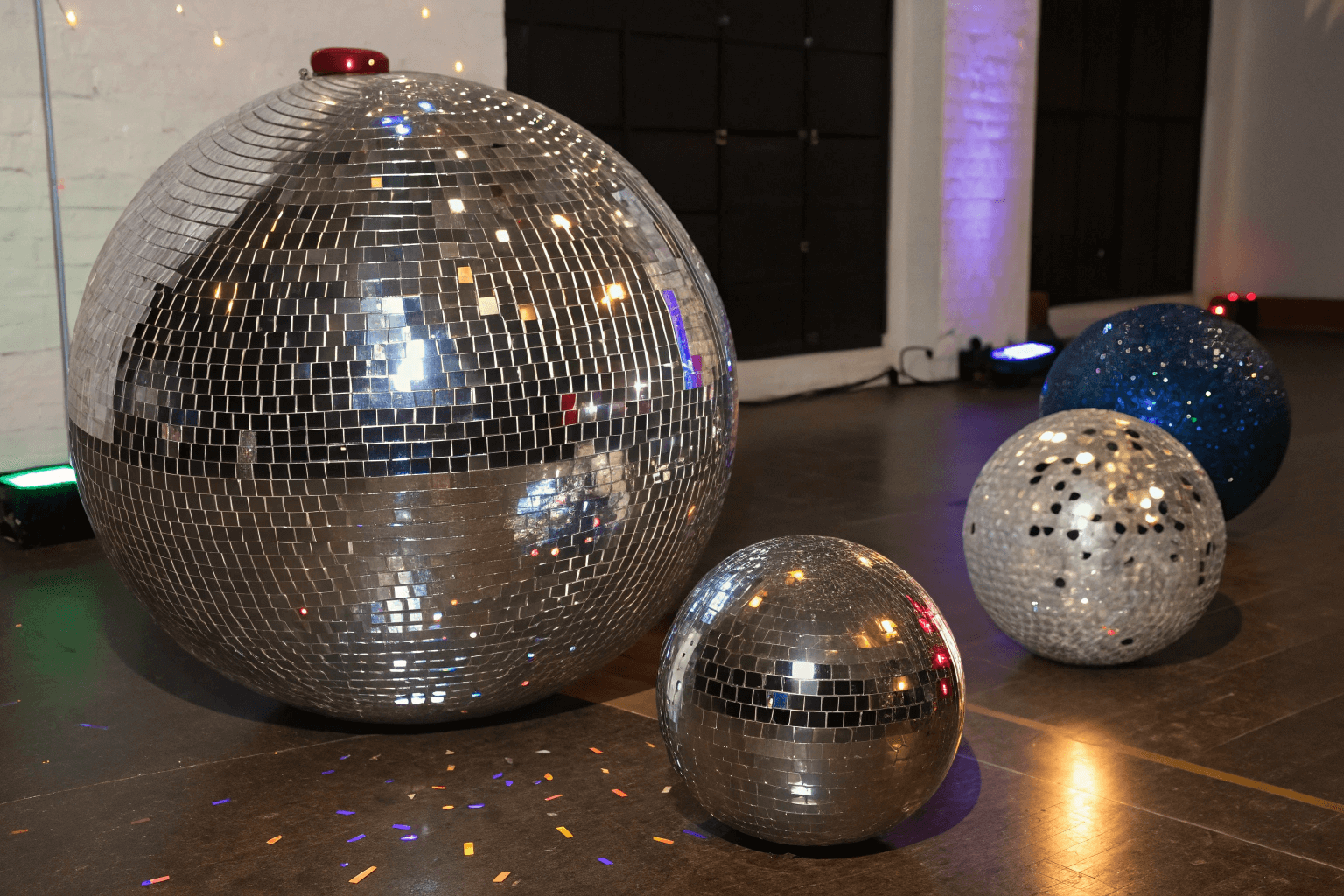
Source Professional Mirror Balls, Not Party Favors.
Third-Party Certification for High-Value Installs
Third-party certification involves an independent, accredited body verifying that an installer’s processes or a product’s performance meets strict industry standards. For high-value installations, this provides objective proof of competence, shifts liability risk, and is often mandated in professional specifications to guarantee safety and durability.

How Certification Shifts Liability and Meets Specifier Demands
Certification provides verifiable, objective proof of compliance with industry standards, moving beyond subjective claims of being ‘qualified’. It offers a clear, auditable record that an installer or product has met a defined benchmark.
This process significantly reduces liability for project owners and their insurers. By minimizing installation errors and the need for costly rework, certification lowers the risk of project failure and associated claims. It transfers a portion of the risk from the owner to the certified entity.
Specifiers, such as architects using documents like AIA MasterSpec®, can mandate specific certifications directly in project specifications. For example, requiring NACC certification for glazed assemblies in Division 01 ensures all bidding contractors meet the same uniform benchmark for quality and competence.
The credibility of the certification itself is backed by accreditation under standards like ISO/IEC 17065. This means the certifying body is itself independently audited for competence and impartiality, ensuring the certification mark carries weight.
The Certification Process: From Assessment to Ongoing Compliance
The process typically begins with an initial assessment of the organization’s quality management systems, facility inspections, and on-site evaluations of work. This foundational review ensures the applicant has the proper procedures and capabilities in place.
For installers, schemes like the Flexi-Orb Certification for EV charge points involve costs between £1900-£2200 and may require membership in other approved trade bodies as a prerequisite. This creates a layered system of verification.
Product certification, such as the UL Certification Mark, requires periodic production inspections to ensure ongoing compliance. This isn’t a one-time approval; it involves continuous surveillance to confirm the product continues to meet model building code requirements.
Different certifications validate specific aspects of performance. ACCA QI Certificates verify HVAC system performance post-installation, while BBA Certification validates long-term product durability and structural support for components like lintels, covering both initial quality and in-service performance.
Why Architects Prefer Self-Certified Safe Products
Architects and specifiers do not prefer self-certified products for critical safety applications. Industry standards and liability concerns drive a clear preference for third-party verified documentation, such as Health Product Declarations (HPDs) and Environmental Product Declarations (EPDs), to ensure transparency and mitigate risk.

The Inherent Risks of Manufacturer Self-Certification
Safety Data Sheets (SDS) are voluntarily written by manufacturers with no routine government auditing, creating a transparency gap. This lack of oversight means the information’s completeness and accuracy rely solely on the manufacturer’s discretion.
Self-certified claims can exclude ingredients under trade secret protections, preventing a full assessment of material safety. This omission is a significant barrier for architects who need to understand potential health hazards for building occupants.
Without independent verification, there is no standard benchmark, making it difficult to compare products or validate performance claims objectively. This inconsistency forces professionals to make decisions based on potentially incomplete or biased information.
The Industry Standard: Third-Party Verified Transparency Tools
Architects prioritize tools like Health Product Declarations (HPDs) and DECLARE labels, which require full material disclosure against established standards. These tools provide a consistent format for identifying ingredients of concern, moving beyond generic safety assurances.
Environmental Product Declarations (EPDs) must be verified by an accredited third party to be considered valid for specification. This verification process audits the life cycle assessment data, ensuring the environmental impact claims are credible and comparable across products.
These tools move beyond self-reporting, providing a consistent, auditable framework for assessing product safety and environmental impact. They form the basis for meeting green building certification requirements and fulfilling an architect’s professional duty of care.
Incident Response: What to do if Hardware Fails
A proper incident response plan for hardware failure involves immediate containment, systematic analysis, and coordinated recovery to minimize liability and downtime. This process, modeled on frameworks like NIST SP 800-61r2, requires isolating the affected component, documenting the failure’s root cause using standards like CWE, and implementing corrective actions before restoring operations.
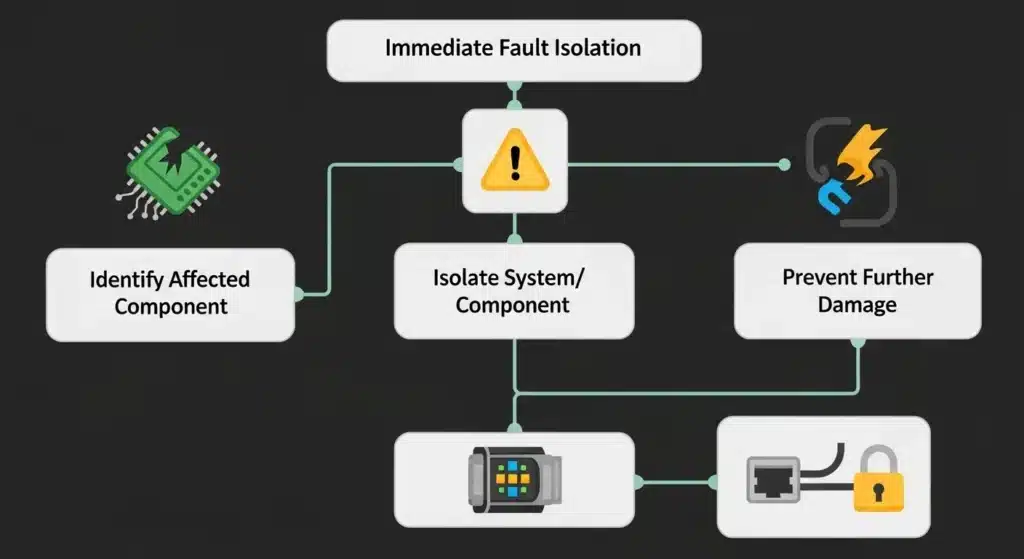
The Incident Response Lifecycle for Hardware Failures
A structured response is critical for managing liability. The process should follow the NIST SP 800-61r2 incident handling lifecycle: Preparation, Detection & Analysis, Containment, Eradication, and Recovery.
Immediate containment involves physically or logically isolating the failed hardware component. This step prevents cascading failures or potential safety hazards in a decorative installation.
Eradication requires identifying and addressing the root cause. Common causes include manufacturing defects, cataloged as CWE-1195, or design flaws in power and thermal systems, identified as CWE-1206.
The final recovery phase involves restoring systems only after implementing and verifying fixes. This may include dynamic reconfiguration of components as outlined in guidelines like ED IR-04 to ensure stability.
Documenting and Reporting for Insurance and Liability
Thorough documentation is essential for insurance claims and limiting legal exposure. Start by cataloging the failure using specific weakness identifiers like CWE-1199 for circuit design flaws or CWE-1197 for integration errors. This standardized evidence supports formal risk assessment.
Implement automated reporting procedures as mandated by standards like ED IR-06(01). This ensures timely notification to internal teams, insurers, and other relevant third parties.
Coordinate with the hardware supply chain, as outlined in IR-06(03), to report any manufacturing defects. This coordination is key to securing support for part eradication and replacement.
Maintain detailed records of the entire response timeline, actions taken, and all communications. This log demonstrates due diligence and can support potential premium adjustments during subsequent rigging audits.
Reducing Premiums through Rigging Audits
Insurance premiums are based on risk. A formal rigging audit provides documented evidence that a venue or production company has a controlled, safe process. This proof of reduced incident likelihood can lead to significant premium reductions, as insurers reward demonstrable risk management.

Rigging audits directly reduce insurance premiums by quantifiably lowering incident rates through systematic risk management. The documented 40-85% reduction in rigging-related incidents demonstrates measurable liability reduction that insurers recognize. Compliance with established standards (ASME, OSHA) during audits ensures venues meet baseline safety requirements, while advanced lift planning verification—testing load calculations and equipment capacity margins before execution—eliminates preventable failures. This layered approach transforms rigging from a high-risk operational area into a controlled, documented process, justifying premium reductions through reduced claims history and demonstrated safety culture.
How Audits Quantify Risk for Insurers
Insurers base premiums on historical claims and perceived future risk. Audits provide the hard data to change this calculation. Documented compliance with standards like OSHA 1910.184 and ASME B30 series proves a baseline safety commitment.
Research shows companies using comprehensive lift planning and audit software see rigging incident reductions of 40-85%. This is a powerful metric for underwriters. Major construction firms report 60-85% reductions in near-miss events after implementing software with clash detection and load path optimization. Petrochemical companies have documented 40% fewer rigging-related incidents through platforms that verify load weights and equipment capacity margins before a lift.
Audit reports that include load path analysis, equipment capacity verification, and personnel positioning assessments show proactive, not reactive, risk management. Comprehensive platforms evaluate crane capacity, ground conditions, weather, and personnel positioning simultaneously, with scenario modeling to identify optimal risk profiles.
The Audit Process: From Inspection to Premium Review
A full audit involves inspecting all hardware—slings, motors, points—against established standards. Regulations like OSHA 1910.184, ASME B30.9, B30.20, B30.26, and ANSI Z359 require periodic, documented inspections on all rigging hardware and lifting devices every 12 months minimum, with more frequent checks in severe service conditions.
Advanced audits use software to simulate lifts, checking crane capacity, ground conditions, and weather factors before work begins. This multi-factor risk assessment identifies potential failure modes before they occur on site.
The output is a formal report meeting standards such as OSHA Subpart CC and ASME P30.1-2019, which serves as evidence for your broker during policy renewal. This documentation should include automated lift plans, safety checklists, and compliance tracking.
Presenting this documented safety culture and low incident rate allows your broker to negotiate for preferred risk status and lower premiums. The audit report provides the concrete proof needed to demonstrate that rigging operations are a controlled, low-risk process, directly justifying a reduction in liability premiums.
Final Thoughts
The financial and legal risks of hanging decorative assets are significant and often underestimated. From premises liability lawsuits and voided insurance to direct repair costs and regulatory fines, the potential consequences of improper installation are severe. The core issue is that venues and insurers view unsecured decor not as a minor aesthetic choice, but as a major liability exposure. The strict requirements for insurance certificates, damage deposits, and compliance with fire and safety codes are direct responses to this risk.
Managing this risk effectively requires a shift from improvisation to documented procedure. Relying on self-certified products or informal methods is insufficient. The path to safety and lower costs lies in adopting verifiable systems: implementing a formal Safe Rigging SOP with mandated inspections, seeking third-party certification for critical installations, and using independently verified product documentation. Proactive measures like rigging audits provide the concrete evidence needed to demonstrate control over these risks, which can directly lead to reduced insurance premiums. Ultimately, the cost of proper planning and verification is far lower than the price of a single failure.
Frequently Asked Questions
What insurance is required for hanging event decor?
Venues and event organizers typically need Commercial General Liability insurance to cover risks like decor falling and causing injury or property damage. Standard policies require a minimum of $1,000,000 per occurrence and $2,000,000 in aggregate coverage. Additional coverage for fire and automobile liability is also common.
Who is liable if a disco ball falls?
Liability typically falls on the venue owner and the event organizer. To mitigate this risk, the mounting structure must be engineered to support a point load of at least 10 times the ball’s weight. A secondary safety cable must be used, and installation should only be performed by qualified personnel following local construction codes.
How do you certify a fabric installation as safe?
Safety certification for canopies and fabric structures primarily involves fire resistance. In the U.S., materials must be tested and certified to meet either NFPA 701 for indoor public spaces or CPAI-84 for tents and outdoor canopies. Certification must come from an independent, accredited laboratory, and labels should be visibly affixed to the material.
What does ‘duty of care’ mean for overhead decorations?
Duty of care is a legal obligation to ensure decorations do not create a fire hazard or obstruct safety systems. Key requirements include using flame-retardant materials certified to standards like NFPA 701, limiting combustible decor to 30% of a wall or ceiling area, and ensuring no obstruction of sprinklers, alarms, or exits. Pre- and post-installation inspections are required.
What standards apply to disco ball rigging?
Rigging for heavy decor like disco balls must comply with several industry standards. These include ANSI ES1.18-2022 for event rigging, ANSI E1.2-2012 for trusses, and OSHA 1910.184 for hardware. All components must have clear load ratings, and systems should use G80 alloy chain hoists. A qualified rigger must oversee a job hazard analysis and visual inspections before use.
What do building codes say about decorative hangings?
The International Fire Code (IFC) is the primary reference, limiting combustible decorative hangings to 10% of the specific wall or ceiling area they are attached to, provided the materials meet flame propagation standards like NFPA 701. Exceptions allow for greater coverage in fully sprinklered spaces like auditoriums (up to 75%) and certain residential units (up to 50%).