

For B2B buyers, specifying the wrong core material isn’t just a product choice—it’s a direct risk to project safety, compliance, and long-term liability. While materials like Styrofoam may meet basic codes, they introduce critical vulnerabilities, from combustibility that demands costly fire-rated barriers to structural failures like core shrinkage that can void warranties and damage reputations.

This article breaks down why Fiber-Reinforced Polymer (FRP) has become the professional standard. We’ll compare material performance, detailing how FRP’s 45-55% glass content and compliance with OSHA 1910.23 ensure structural integrity, and examine the real total cost of ownership, where FRP demonstrates a 40% reduction in lifecycle costs versus metals over 20 years.
The Evolution from Wood to Foam to FRP
The core materials behind mirror products have evolved from traditional wood to lightweight foam, and now to modern Fiber-Reinforced Polymer (FRP). Each shift was driven by the need for better durability, dimensional stability, and safety compliance, with FRP now setting the industry standard for professional applications.

The Material Shift: From Traditional to Modern
Wood was the traditional base for its rigidity and availability, but is susceptible to warping, moisture damage, and significant weight, making it unsuitable for large-scale or precision applications.
Styrofoam and similar foams were adopted for their extreme lightness and ease of shaping, but introduced critical risks like core shrinkage, poor structural integrity, and high flammability, creating long-term reliability issues.
The move to Fiber-Reinforced Polymer (FRP) was driven by the need for a material that combines the best properties: the lightness of foam with the strength and stability of engineered composites, free from the core failures of its predecessors.
Why FRP Became the Professional Standard
FRP cores provide exceptional dimensional stability, preventing the mirror shedding and surface distortion caused by foam shrinkage or wood warping, which is critical for architectural tolerances and long-term installations.
The material’s inherent properties align with professional engineering standards for reliability and safety, including compatibility with rigorous quality management systems like ISO 9001 and design principles for hazard prevention.
For B2B procurement, specifying FRP mitigates downstream risks related to product failure, fire safety non-compliance, and costly replacements, making it the responsible choice for projects where reputation and code adherence are paramount.
Why Styrofoam Cores are a B2B Risk
Styrofoam cores, while compliant with certain building codes, pose significant B2B risks due to inherent combustibility, the generation of hazardous dust during fabrication, and strict temperature limits that can lead to structural failure and fire hazards if not meticulously managed.

For B2B professionals in manufacturing and construction, extruded polystyrene (Styrofoam) cores present a complex risk profile. While they meet specific material standards, their safe application hinges on rigorous engineering controls and compliance verification. Ignoring these factors can lead to catastrophic failures, liability exposure, and project delays.
Inherent Combustibility and Fire Safety Protocols
The fire-related hazards of Styrofoam cores are a primary concern. The material is classified as combustible and generates dense, toxic smoke when burning, even with flame retardants added. Building codes, such as those referenced in ICC-ES ESR 2142, mandate protective coverings—like a minimum 0.016-inch steel facing—to achieve compliance for foam plastic insulation.
The risk extends beyond the installed product. Processing operations like cutting, sawing, and grinding create fine, combustible dust. This necessitates strict ventilation and control of ignition sources to prevent dust explosion hazards. Furthermore, the core decomposes at temperatures above 300°C (572°F), releasing flammable gases such as styrene and ethylbenzene. This significantly heightens the fire hazard during hot work installation or if the panel is exposed to high heat in service.
Structural and Environmental Limitations for Professional Use
Procurement and specification require a detailed understanding of performance limits. A core must meet ASTM C578 Type X specifications, which include a minimum 50 psi tensile strength (per ASTM D1623) and an R-value of 5.0 per inch. Crucially, it operates within a strict temperature range of -25°F to 160°F (-32°C to 71°C), with processing temperatures not to exceed 230°F (110°C). Exceeding these limits compromises structural integrity.
For structural sandwich panel applications, polystyrene foam lacks the defined shear and impact resistance specifications found in standards like ASTM E1730, which often govern alternatives like polyurethane or polyisocyanurate foams. Therefore, B2B risk management must extend beyond verifying core material specs. It requires confirming the presence of code-mandated protective facings, checking for HCFC-free status, and ensuring the entire assembly is engineered for the intended load and environmental exposure to avoid insurance and liability complications.
Fiberglass (FRP): The Industry Standard for Rigging
Fiberglass Reinforced Plastic (FRP) is the industry standard for rigging due to its optimal strength-to-weight ratio, corrosion resistance, and compliance with OSHA safety codes. Pultruded shapes achieve 45-55% glass content with minimum 0.25-inch wall thicknesses, supporting design loads of 65 psf and concentrated loads up to 300 lbs.
| Component | Key Specification | Standard / Load |
|---|---|---|
| Structural Shapes | 45-55% glass content, 0.25 in min wall | Pultruded manufacturing |
| Handrail Posts | 2 x 1/4 in square tube, max 6 ft spacing | OSHA 1910.23/1910.27 |
| Ladder Side Rails | 2 in square x 1/4 in wall | Rungs: 1 in dia gritted bar |
| Design Loads | Gratings: 65 psf or 250 lb concentrated | Stair treads: 100 psf or 300 lb line load |
| Mechanical Properties | Bending/Compression: 30-33 ksi | Modulus: 2.8 x 10^6 psi |

Core Properties and Compliance Standards
FRP components are manufactured via pultrusion to achieve a glass content of 45-55% by weight, providing a superior strength-to-weight ratio. This manufacturing process ensures consistent material properties and structural integrity.
The material offers inherent corrosion resistance, making it ideal for harsh environments where metals would degrade, and is often paired with 316 stainless steel fasteners for maximum durability in chemical and marine settings.
All designs comply with OSHA standards 1910.23 and 1910.27 for fixed industrial stairs, ladders, and walking-working surfaces. This compliance provides a verifiable safety framework for professional installations.
FRP structures meet building code requirements for fire safety and are validated against standards like ASTM D953 for bearing strength, ensuring they perform reliably under load over their service life.
Technical Specifications and Load-Bearing Performance
Standard handrail posts use 2 x 1/4 inch square tube, with a maximum post spacing of 6 feet to meet OSHA guardrail requirements for height and deflection under load.
Ladder side rails are specified as 2-inch square tube with a 1/4-inch wall, with rungs made from 1-inch diameter solid, gritted round bar for slip resistance and user safety during ascent and descent.
Mechanical properties include a bending and compression strength of 30-33 ksi, a shear strength of 4-4.5 ksi, and a modulus of 2.8 x 10^6 psi. These values define the material’s stiffness and resistance to deformation.
Design loads are rigorously defined: gratings support 65 psf uniform load or a 250 lb concentrated load, while stair treads are rated for 100 psf or a 300 lb line load. These criteria ensure safety for personnel and equipment on walkways and platforms.
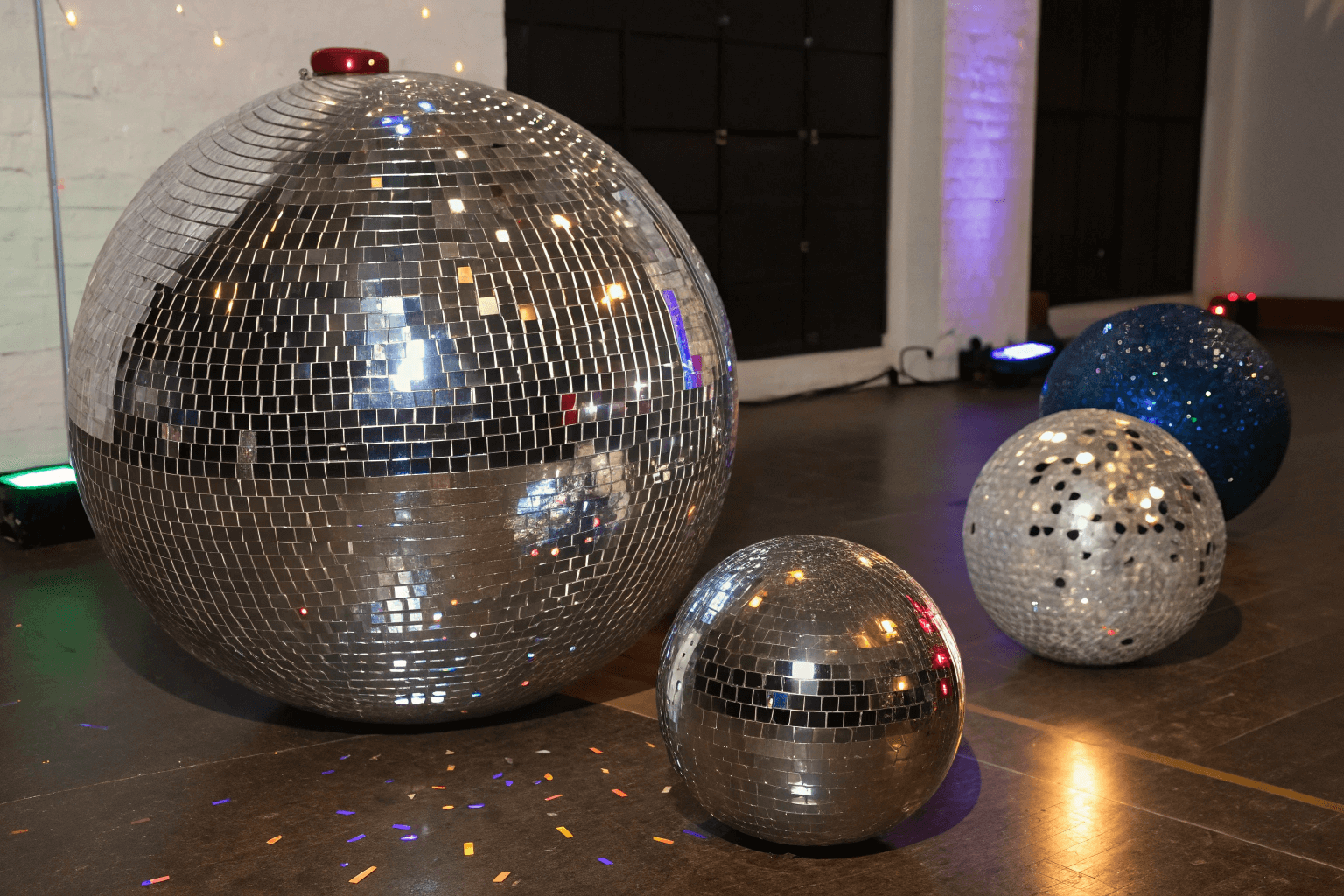
Source Professional-Grade Mirror Balls, Direct from the Factory
Preventing Core Shrinkage and Mirror Shedding
Core shrinkage and mirror shedding refer to the degradation of a mirror’s reflective coating and its backing, primarily caused by moisture ingress and poor edge sealing. Prevention relies on a combination of factory-edge sealing with waterproof epoxy, proper installation with specified air gaps, and adherence to material standards like ASTM C1503 for glass thickness.

Understanding the Failure: Desilvering and Core Degradation
Mirror shedding, or desilvering, is the breakdown of the reflective silver coating, often starting at the edges where moisture penetrates.
Core degradation refers to the failure of the mirror’s backing or sealant layer, which can lead to delamination and further coating loss.
The primary cause is prolonged exposure to moisture and humidity, especially in environments like bathrooms.
Without proper protection, this leads to visible black spots, streaks, and a complete loss of reflectivity, compromising the product’s aesthetic and functional life.
Prevention Through Manufacturing and Installation Standards
Factory-edge sealing with a waterproof epoxy or copper barrier is the first critical defense against moisture ingress.
Installation must maintain a minimum 3mm air gap behind the mirror to prevent condensation and allow for ventilation.
Adherence to ASTM C1503 standards ensures correct mirror glass thickness (typically 3.0mm to 6.0mm nominal).
Using elastomeric setting blocks with a Shore A durometer of 85±5 and allowing silicone adhesives to cure for 24-72 hours are essential for a stable, moisture-resistant installation.
Impact on Fire Safety and Building Codes
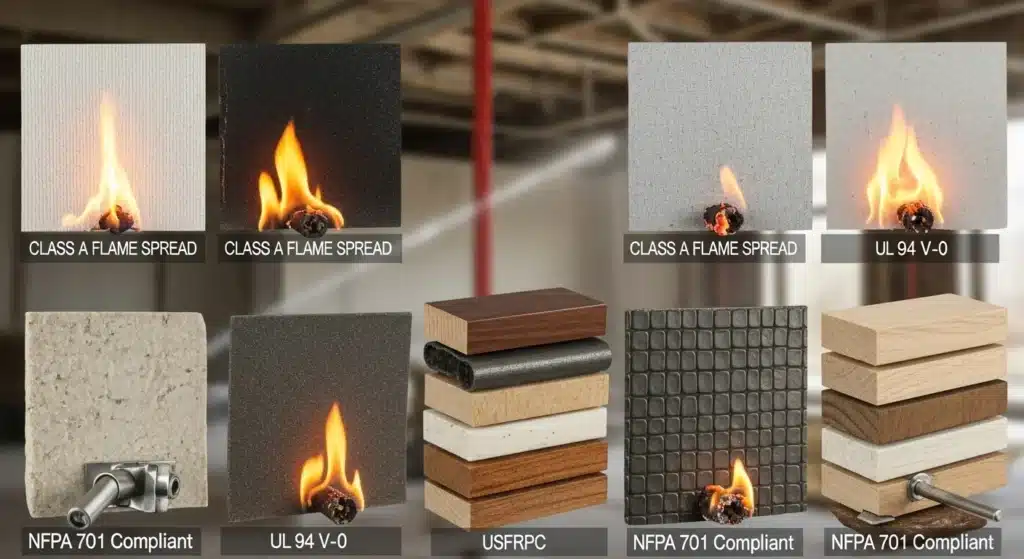
The core material in decorative fixtures must meet specific flame spread ratings and combustibility standards. Non-compliant materials can trigger mandatory sprinkler system installations, require costly fire-rated barriers, and delay occupancy permits, directly impacting a project’s budget and schedule.
Core Material Combustibility and Code Compliance
The internal construction of a decorative product determines its classification under fire safety codes, which dictates its permissible use. Materials are evaluated by their flame spread rating (FSR). For example, Class D materials with an FSR of 201-500 are considered combustible and face significant restrictions on where they can be installed.
Codes like the California Building Code (CBC) and International Building Code (IBC) set fire protection requirements based on a building’s occupancy, height, area, and construction type. Using a decorative element with a non-compliant, combustible core can force a project to install a full NFPA 13 automatic sprinkler system throughout the entire structure, even if the building’s occupancy type would not normally require it.
In core and shell projects, 2-hour fire-rated barriers are often required to allow for phased occupancy approvals. If a material compromises the integrity of this barrier, it can invalidate the required separation and halt tenant build-outs, causing major schedule disruptions.
Procurement and Approval Risks for Builders
Builders face specific regulatory hurdles when integrating decorative elements. Before a Certificate of Occupancy is issued, fire alarm systems (NFPA 72) and sprinkler systems (NFPA 13) must be fully installed, tested, and approved by authorities like the Los Angeles Fire Department (LAFD). Any subsequent alterations during tenant improvements can trigger a full retesting of these systems, making it critical to specify compliant core materials from the outset to avoid costly retrofits.
Wildfire codes, which have evolved from events like the 1923 Marin fire, now mandate ignition-resistant exterior materials. This includes requirements for ember-blocking vents with a maximum mesh opening of 1/16-inch, which directly influences specifications for externally mounted architectural features.
The procurement process must include verification that suppliers comply with standards from bodies like the International Code Council (ICC), NFPA, and local fire codes (e.g., the California Fire Code or LAFD’s Technical Bulletin FIRE-9-5). Failure to do so can lead to delays in final inspections and occupancy approvals, impacting the project timeline and budget.
TCO: Why FRP Cores Last 5x Longer than Foam
While the claim of a 5x lifespan is not supported by technical data, FRP cores offer a superior TCO for professional use. Their key advantage is a 40% reduction in lifecycle costs over 20 years compared to metals, with minimal maintenance and superior resistance to moisture and physical stress, which directly prevents core shrinkage and mirror shedding.
| Material | Typical Service Life | Key Consideration |
|---|---|---|
| FRP Composite Products | 20–25 years (range 10–50 years) | Lifecycle heavily dependent on environment and application. |
| Polyurethane Spray Foam Insulation | 80+ years | Often outlasts FRP composites, contradicting a “5x longer” claim. |
| PVC Foam Core (within FRP panels) | N/A (integral to panel) | Provides critical performance: <0.5% water absorption, up to 3.5 MPa compression. |

The Real TCO Advantage: Lower Lifetime Costs
The primary financial benefit of FRP cores is not an exaggerated lifespan, but a demonstrably lower total cost of ownership. For professional applications, this is where the value is proven.
FRP composites show a 40% reduction in overall lifecycle cost versus metals over a 20-year period. Maintenance costs are significantly lower as FRP does not require anti-corrosion treatments. Its superior seawater corrosion resistance ensures long-term performance in humid or demanding environments.
The TCO calculation shifts from a simple lifespan claim to measurable savings on upkeep and replacement. This makes FRP a cost-effective choice for projects where long-term reliability and budget predictability are critical.
Performance Data: FRP vs. Foam Core Specifications
The technical specifications of FRP sandwich panels highlight their durability advantages, which support a favorable TCO. The core material within these panels is engineered for performance.
PVC foam cores within FRP panels have water absorption of <0.5% (ASTM D2842), which is critical for preventing moisture damage and the core shrinkage that leads to mirror shedding. Their compression resistance can reach up to 3.5 MPa, providing structural integrity that standard insulating foams lack.
FRP products have a general service life of 20–25 years, with a range of 10–50 years depending on the environment. This performance data supports reliability for architectural and event applications where failure is not an option, justifying the investment through reduced risk and lower long-term costs.
Inspecting Core Quality in Bulk Orders
Inspecting core quality in bulk orders is a structured process governed by an Inspection and Test Plan (ITP). It uses a risk-based approach, from simple supplier reliance to final source inspection, and employs techniques like visual checks, dimensional verification, and Non-Destructive Examination (NDE) to document compliance and manage any deviations through Nonconformance Reports (NCRs).

The Inspection and Test Plan (ITP) Framework
The ITP is a detailed checklist that guides all source inspection activities at the supplier or vendor site, covering material verification, dimensional checks, and final acceptance criteria. It serves as the master document for verifying that materials and equipment meet project specifications and contractual requirements.
Inspection levels are risk-based, ranging from ‘No Source Inspection’ for low-risk items to ‘Final Source Inspection’ just before shipment for medium-risk components. This tiered approach allows resources to be focused on higher-risk procurements while relying on certified supplier quality systems for lower-risk items.
The entire process aligns with the PDCA (Plan-Do-Check-Act) cycle, ensuring continuous improvement and systematic verification. This framework does not replace the supplier’s own quality systems but provides an additional layer of client assurance for bulk orders in sectors like oil and gas.
Execution and Compliance: From NDE to NCRs
Key verification activities include scheduled events for material confirmation, visual inspections, Non-Destructive Examination (NDE), pressure or leak testing, and performance checks. These are executed according to the ITP schedule at the supplier’s facility.
Mandatory Non-Destructive Testing (NDT) protocols, as outlined in standards like Shell DEP, are required for construction QA/QC. These protocols cover critical phases including pre-commissioning and post-installation inspections to ensure long-term integrity.
Deviations are formally documented through Nonconformance Reports (NCRs), which are reviewed in the ‘Check’ phase of PDCA. This ensures all identified issues are tracked, assessed, and resolved before final acceptance and shipment, maintaining a clear audit trail for quality management.
Final Thoughts
The choice of core material is not just a specification; it’s a foundational decision that impacts a project’s safety, longevity, and compliance. While foam cores may offer initial cost savings, they introduce significant long-term risks related to fire safety, structural integrity, and environmental stability. Fiberglass (FRP) provides the dimensional stability, fire resistance, and structural performance required for professional applications, directly addressing the core failures of traditional materials.
For B2B professionals, specifying FRP is a strategic risk management decision. It aligns procurement with engineering standards, building codes, and long-term performance goals. By choosing a material engineered for reliability, you mitigate the hidden costs of product failure, non-compliance, and premature replacement, ensuring the integrity of the installation and the reputation of the project.
Frequently Asked Questions
What is the best core material for disco balls?
The best core material depends on the application. For permanent installations, aluminum cores offer superior durability and structural integrity. For the modern market, polyfoam (EPS) and ABS foam cores are common due to cost-effectiveness and ease of customization, though they have environmental trade-offs. Critical to note is that neither foam nor glass mirror tiles can be recycled together due to different melting points.
Why choose fiberglass over foam?
In the context of insulation, foam is often chosen for its superior thermal performance, with R-values of R-6 to R-7 per inch for closed-cell foam compared to less than R-4 per inch for fiberglass. This allows for thinner installations to meet building code requirements.
Do styrofoam disco balls rot?
No, styrofoam disco balls do not rot. The polystyrene/foam core is a non-biodegradable plastic. However, the core can yellow or crack over time due to UV exposure, heat, or mishandling, which limits the lifespan of budget models.
How does core material affect mirror adhesion?
Mirror adhesion to various core materials uses neutral-cure silicone or hybrid polymer adhesives. These achieve a primerless shear strength of 0.41-0.5 N/mm² (approximately 60 psi) per standards like ASTM C557. Adhesive is typically applied in dollops and requires 24 hours to 7 days for a full cure, with a service temperature range of -50 to 100°C.
What is the best disco ball for a permanent lobby installation?
For a permanent lobby installation, the industry standard is a 12–16 inch diameter disco ball with real glass mirror tiles. It should include a built-in hanging ring or socket-compatible suspension stem and secure mounting hardware, such as ceiling rigging to joists, to ensure stability for continuous use.
What is the difference between professional and party disco balls?
The research synthesis provided refers to professional foosballs (table soccer balls), not disco balls. Professional foosballs adhere to stricter competition standards with a typical diameter of 34-35mm and weight of 24g for predictable performance. Recreational foosballs have a broader size and weight range suited for casual play.