

Choosing the wrong glass cleaner isn’t just about streaks—it’s a direct threat to the structural integrity and lifespan of your decorative assets. Common cleaners like ammonia and vinegar can cause the protective silver backing in a mirror to delaminate in as little as three hours, leading to permanent black edges and costly replacements.

This article breaks down the chemistry of safe cleaning for real glass and mirrors. We’ll explain why a pH-neutral formula (around 7 ± 0.5) is the gold standard, how deionized water prevents mineral spots, and the proper application methods to avoid damage. You’ll learn the technical specifications that matter, from surface tension under 30 mN/m to compliance with standards like IPC-TM-650, ensuring your cleaning protocols protect your investment.
The Fragility of Mirror Backing (The “Silvering”)
Mirror ‘silvering’ is a multi-layer coating where a 99.999% pure silver film provides over 97% reflectivity. This soft, reactive layer is protected by a thin copper layer and a ~100 nm silicon dioxide overcoat, but remains fragile. Exposure to moisture, oxygen, or abrasive cleaners can breach these defenses, causing irreversible tarnishing and delamination.

Anatomy of a Mirror: The Multi-Layer Protective Stack
The reflective surface of a mirror is a precisely engineered stack of materials. The foundation is a substrate of clear float glass, typically 6 mm thick for standard mirrors.
A layer of 99.999% pure silver is chemically deposited onto this glass. This ultra-pure silver provides the primary reflection, achieving over 97% reflectivity in visible light. To protect this critical layer and prepare it for sealing, a thin copper layer is applied over the silver to enhance adhesion for the protective paint that follows.
The rear is sealed with two coats of backing paint, with the outer coat being lead-free. On the front, facing the user, a critical silicon dioxide (SiO2) dielectric overcoat, approximately 100 nm thick, is applied. This transparent layer is the first line of defense, shielding the silver from direct atmospheric exposure.
Why the Silver Layer is Inherently Vulnerable
The very properties that make silver an excellent reflector also make it fragile. Ultra-pure silver (99.999%) is soft and highly reactive. It is prone to tarnishing, forming silver sulfide upon exposure to humidity and airborne sulfur compounds, which permanently dulls the reflection.
The protective SiO2 overcoat, while effective, is extremely thin—only about 100 nm. It is vulnerable to abrasion from rough cleaning cloths or pads. Once compromised, the silver beneath is exposed. Industry standards like EN 1036 set a minimum reflectance threshold (>83%), but unprotected or damaged silver can degrade far below this level.
Oxidation and tarnishing cause a permanent loss in reflectivity. A high-quality mirror can drop from over 90% reflectivity to below 80% when compromised, appearing as dark spots or a general, irreversible haze across the surface.
Why Ammonia and Vinegar are Corrosive to Mirrors
Ammonia and vinegar corrode mirrors by attacking the protective backing layers and the metallic silvering. Ammonia reacts with the copper layer in traditional mirrors, accelerating oxidation and causing the silver to peel away. Vinegar’s acetic acid degrades the paint seal, allowing moisture and oxygen to reach and tarnish the silver. These reactions lead to permanent black edges and delamination.

The Chemical Attack on Traditional Mirror Backing
Traditional mirrors use a thin copper layer to bond the reflective silver to the glass. While effective for adhesion, this copper acts as a catalyst for corrosion when exposed to certain chemicals.
A 10% ammonia solution can cause the paint on a standard mirror to delaminate in just 3 hours. The ammonia reacts with the copper, accelerating its oxidation. This process breaks the bond between the silver layer and the glass, leading to failure.
Vinegar, which contains acetic acid, attacks the protective paint edges and the backing itself. It breaks down the barrier that seals the silver from the environment, compromising the mirror’s integrity.
This chemical attack, combined with ambient humidity, leads to ‘black edge’ desilvering. Moisture and oxygen penetrate the compromised seal, causing the reflective silver layer to tarnish and permanently degrade from the edges inward.
Corrosion Resistance and Validated Cleaning Protocols
Copper-free mirror designs offer significantly better resistance. These mirrors use a direct silver passivation layer and multi-layer epoxy topcoats. In testing, they show no paint delamination even after 120 hours of continuous immersion in ammonia.
High-end, corrosion-resistant mirrors are validated through rigorous testing. They can achieve over 300 hours in Copper-Accelerated Acetic Acid Salt Spray (CASS) tests and 720+ hours in Neutral Salt Spray (NSS) tests. These benchmarks simulate years of exposure to harsh bathroom humidity and contaminants.
Manufacturer Standard Operating Procedures (SOPs) and industry standards like GSA FSS DDM-0411c explicitly prohibit the use of ammonia and vinegar-based cleaners. This mandate is in place to preserve the structural and aesthetic integrity of the mirror over its lifespan.
For long-term durability, especially in high-moisture areas like steam zones, cleaning protocols must use pH-neutral solutions. This practice is essential to maintain the mirror’s IP44-rated waterproof backing and prevent the chemical reactions that cause corrosion.
pH-Neutral Cleaners: The Gold Standard for Decor
pH-neutral cleaners, with a balanced formula around pH 7, are the safest choice for decorative surfaces. They effectively remove dirt and grime without the corrosive damage caused by acidic or alkaline cleaners, protecting sensitive finishes on mirrors, glass, marble, and sealed wood.
| Property | Specification / Value | Significance for Decor |
|---|---|---|
| pH Range | 7 ± 0.5 (Ideal); typical ranges 6.5-8.5 | Prevents etching of mirror silvering, marble, granite, and sealed wood finishes. |
| Surface Tension | <30 mN/m | Enables solution to penetrate and lift grime from tiny crevices without aggressive scrubbing. |
| Key Standard | IPC-TM-650 Method 2.6.3.7 | Validates ionic cleanliness and residue-free performance, ensuring no film is left behind. |
| Environmental Profile | Zero VOCs, Biodegradable, Green Seal GS-37 compliant | Safe for indoor use on diverse surfaces like luxury vinyl tile and glazed porcelain with minimal impact. |

The Science of Safety: Why pH 7 Protects Surfaces
A pH-neutral cleaner operates within a chemically balanced range, typically between pH 6.5 and 8.5. This neutrality is inert to sensitive substrates, meaning it doesn’t initiate corrosive chemical reactions. This is the core defense against the damage caused by common alternatives.
Acidic cleaners like vinegar or alkaline ones containing ammonia can permanently etch surfaces. On mirrors, they attack the delicate silver backing. On natural stone like marble or granite, and on the protective seals of wood finishes, they cause dulling, clouding, and degradation. A neutral pH formula avoids this entirely.
Professional-grade cleaners are often buffered. This means their formulation includes components that actively resist changes in pH. As the cleaner dissolves oily residues or encounters slight contaminants, the buffering agents maintain that stable, safe pH level throughout the cleaning process, guaranteeing consistent, non-damaging performance.
The low surface tension, specifically under 30 millinewtons per meter (mN/m), is a critical physical property. For comparison, deionized water has a surface tension of about 72 mN/m. This lower tension allows the cleaning solution to wet surfaces more completely, penetrating into microscopic pores and crevices to surround and lift away grime, reducing the need for mechanical force that could scratch delicate finishes.
Specifications and Standards for Professional Use
In industrial validation, cleanliness is quantified. Standards like IPC-TM-650 Method 2.6.3.7 measure ionic contamination left on a surface after cleaning. Passing this test proves that a pH-neutral cleaner removes soils without depositing conductive residues that could attract moisture or cause long-term damage, a critical factor for preserving the integrity of decorative surfaces.
Optimized application parameters, derived from sectors like precision electronics cleaning, highlight efficiency. A typical spray wash configuration might use a 15% concentration of cleaner at 150°F (65.5°C) with spray pressures between 70 and 80 PSI. These conditions maximize cleaning power through thermal energy and mechanical action while the neutral chemistry ensures material safety.
The technical data sheet for a product reveals its consistent quality. Attributes like a specific gravity around 1.036, zero VOC content, and compliance with environmental standards such as Green Seal GS-37 are not just marketing points. They confirm a formulation that is stable, safe for indoor air quality, and designed with a reduced environmental footprint.
For maintaining decor and flooring, these specifications translate directly to safe, effective care. The combination of neutral pH, low surface tension, and biodegradable, low-toxicity chemistry makes these cleaners suitable for a wide array of sensitive materials—from glazed porcelain and decorated concrete to luxury vinyl tile and sealed natural wood—ensuring they are cleaned without compromising their appearance or finish.
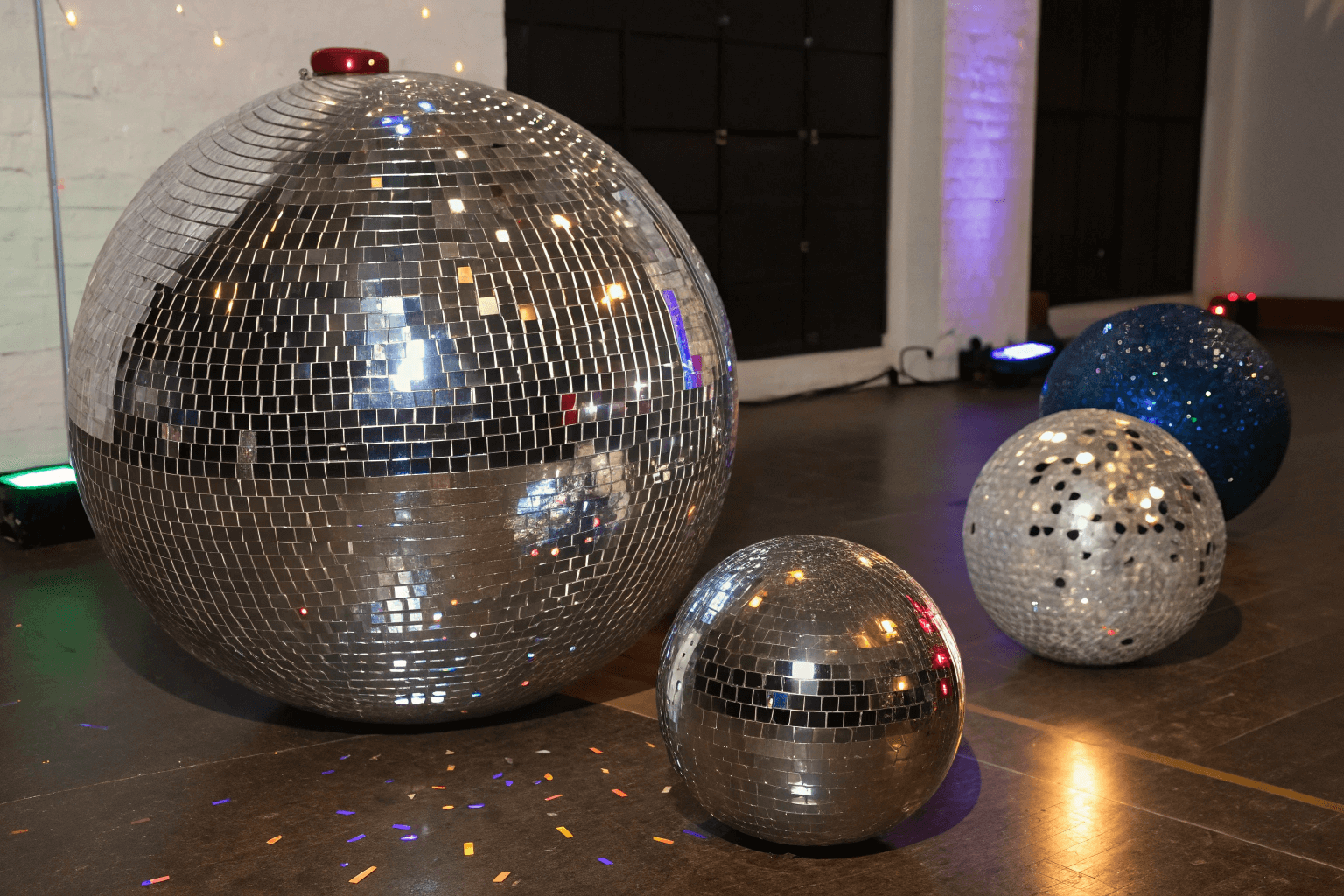
Source Commercial-Grade Mirror Balls, Engineered for Professionals
Deionized Water vs. Tap Water: Preventing Mineral Spots
Deionized water prevents mineral spots by removing dissolved ions like calcium and magnesium through an ion-exchange process. Tap water leaves these minerals behind, which crystallize as visible white spots when the water evaporates. For professional cleaning, especially on mirrors and optical surfaces, using deionized water is essential for a spot-free finish.

The Chemistry of Spot Formation: Why Tap Water Leaves Residue
Tap water contains dissolved mineral ions, primarily calcium and magnesium cations, which contribute to its ‘hardness’. When this water evaporates from a surface, these dissolved ions are left behind and crystallize into solid mineral deposits.
These deposits appear as white spots or scale, which are difficult to remove and can etch or obscure the glass surface over time. The underlying process is a precipitation reaction where soluble ions in the water become insoluble solids upon drying.
How Deionized Water Systems Work to Achieve Spot-Free Results
Deionization systems use ion-exchange resins to remove charged mineral ions, replacing them with hydrogen and hydroxyl ions that form pure H2O. This process achieves extremely low Total Dissolved Solids (TDS) and minimal electrical conductivity, which are key performance metrics for sensitive applications.
Two main system types are used. Two-bed systems, with separate cation and anion tanks, are cost-effective for high-volume production. Mixed-bed systems, which combine resins in a single tank, provide ultra-high purity and are often used as a final ‘polishing’ step for the most demanding spot-free requirements.
For reliable operation, these systems require pretreatment—such as sediment and carbon filtration—and periodic resin regeneration with acid and caustic solutions. This engineering approach ensures the water contains minimal hardness minerals, allowing it to dry without leaving the white spots or scale associated with tap water.
Application Methods: Mist vs. Microfiber Wipe
The best method for cleaning mirrors involves applying a pH-neutral cleaner with a fine mist to avoid oversaturation, then gently wiping with a clean, high-quality microfiber cloth. This combination prevents streaking, minimizes chemical contact with the fragile backing, and leverages microfiber’s superior dirt and moisture capture without abrasive scrubbing.

The Mist Application: Precision and Control
A fine mist from a spray bottle distributes cleaner evenly without creating large, running droplets that can seep behind the frame or silvering.
This method uses significantly less liquid than pouring or heavy spraying, reducing the risk of water damage and limiting the time the chemical is in contact with the mirror surface.
The goal is to lightly dampen the surface for wiping, not to soak it. Two to three pumps from a standard spray bottle are typically sufficient for a standard bathroom mirror.
Microfiber Wiping: The Final Polish
High-quality microfiber cloths can remove over 99% of bacteria and particles with water alone, making them highly effective with mild cleaners and reducing the need for harsh chemicals.
The optimal moisture level for effective cleaning is achieved by wringing the cloth until it is just damp, not wet, to prevent streaking and excess moisture transfer.
Use a gentle, linear wiping motion in one direction. Avoid circular scrubbing, which can spread residue and create micro-scratches on the glass surface over time.
Removing “Fog” and Haze from Aged Glass
Fog and haze inside double-pane windows are caused by seal failure, which allows moisture and mineral deposits to form between the panes. Restoration involves injecting cleaning solutions like a 10% vinegar mixture through the seal, followed by a pure alcohol rinse and forced-air drying, all performed with specialized tools to avoid damaging the glass.

What Causes Interior Fog and Haze
The fog or haze you see inside a window is almost always due to a broken seal on an insulated glass unit (IGU), commonly known as a double-pane window. When this edge seal fails, outside air and moisture seep into the space between the two panes of glass.
Once inside, the moisture condenses on the cooler interior glass surfaces, creating the visible fog. If left untreated, this water can evaporate and leave behind mineral deposits like calcium and lime. These deposits create a permanent white haze or can even etch the glass surface, which is much harder to remove than simple condensation.
It’s important to distinguish this from surface scratches or residue from manufacturing, which are on the outside of the glass and require completely different cleaning methods.
The Professional Defogging Process and Tools
The restoration process is a precise, in-situ repair designed to clean between the panes without removing the entire window unit. It starts by creating small access points, typically by poking holes in the bottom edge seal or using existing drainage channels. Specialized blunt-tip needles, at least 4 inches long and 14-gauge or thinner (like 18-21 gauge), are used to penetrate the seal without drilling into the glass itself, which is critical for tempered glass.
A cleaning agent is then injected to dissolve the deposits. A 10% vinegar solution is effective for breaking down calcium and lime. For a large window, this may require about half a gallon of solution to adequately coat the interior surfaces. The solution is left to dwell and react with the deposits.
After the cleaning cycle, a pure (100%) alcohol rinse is injected. The alcohol displaces the remaining water and vinegar residue and, because it evaporates rapidly, significantly speeds up the drying process. About a quarter gallon of alcohol might be used for a large window.
The final and crucial step is forced-air drying. A low-pressure air source, such as an aquarium pump, is connected to blow dry air into the cavity. This ensures all moisture is evacuated, preventing new condensation from forming immediately after the repair. The process must include an exit path for the air to avoid building up pressure that could damage the seals further.
This method addresses the root cause of the haze—the mineral deposits and moisture—and restores clarity, avoiding the high cost and disruption of a full window replacement.
Cleaning Safety Data Sheets (SDS) for Commercial Sites
A Safety Data Sheet (SDS) is a mandatory, standardized document for any hazardous chemical used in a workplace. For commercial cleaning, it provides workers and managers with critical information on chemical hazards, safe handling, emergency procedures, and disposal. Compliance with regulations like OSHA’s Hazard Communication Standard is legally required to ensure a safe working environment.
| Regulatory Framework | Key SDS Sections | Primary Purpose |
|---|---|---|
| OSHA HCS (US), COSHH (UK) | Sections 1-3, 4-11, 12-16 | Hazard communication & safe work procedures |

The Mandatory 16-Section SDS: A Regulatory Blueprint
The Safety Data Sheet is not a suggestion but a legal requirement. In the United States, OSHA’s Hazard Communication Standard (29 CFR 1910.1200) mandates that employers have an SDS for every hazardous chemical present in the workplace, including all professional-grade cleaning products. This document must be readily accessible to all employees during their work shifts.
The Globally Harmonized System (GHS) of Classification and Labelling of Chemicals provides the standardized 16-section format used worldwide. This structure organizes information logically: Sections 1 through 3 cover product and supplier identification, hazard classification, and ingredient composition. Sections 4 through 11 detail the immediate and protective measures, including first-aid, fire-fighting, accidental release procedures, handling and storage, exposure controls, and the physical and chemical properties of the substance. The final sections, 12 through 16, address ecological information, disposal considerations, transport details, regulatory data, and other relevant information.
In the United Kingdom, the Health and Safety Executive (HSE) enforces similar requirements under the Control of Substances Hazardous to Health (COSHH) regulations. The core obligation remains the same: employers must obtain the SDS from their chemical supplier, maintain an up-to-date copy, and ensure workers know how to access and use the information it contains to perform their jobs safely.
Implementing SDS Protocols: From Storage to Spill Response
For facility managers and cleaning contractors, the SDS is the foundational document for creating site-specific safety protocols. Sections 4 (First-Aid Measures) and 8 (Exposure Controls/Personal Protection) are directly used to train workers on recognizing symptoms of overexposure and selecting the correct personal protective equipment, such as chemical-resistant gloves, goggles, or respirators.
Operational safety is built from Sections 7 (Handling and Storage) and 10 (Stability and Reactivity). These sections inform critical procedures for proper chemical storage—such as keeping containers tightly closed in a cool, well-ventilated area away from incompatible materials—and warn of conditions to avoid, like mixing with certain other chemicals.
Preparedness for incidents relies on Section 6 (Accidental Release Measures). This part of the SDS provides the technical basis for spill response plans, detailing appropriate containment methods, cleanup materials (e.g., inert absorbents), and personal precautions. Furthermore, Section 13 (Disposal Considerations) guides the proper management of chemical waste, ensuring compliance with environmental regulations and preventing improper disposal.
An effective SDS program requires active management. Suppliers are obligated to provide an updated SDS whenever a product’s formulation changes significantly. Employers must review these updates and integrate the new information into their training programs and safe work practices to maintain continuous compliance and workplace safety.
Final Thoughts
The science behind mirror construction makes it clear: the reflective silver layer is inherently fragile. Common household cleaners like ammonia and vinegar are chemically incompatible with this delicate system. They accelerate corrosion, leading to permanent damage like black edges and delamination that no amount of cleaning can reverse. For long-term clarity and value, these harsh chemicals should be avoided entirely.
The most effective and safest approach combines the right chemistry with the right technique. Using a pH-neutral cleaner protects the mirror’s sensitive backing and other decorative surfaces. Applying it as a fine mist and wiping with a clean microfiber cloth minimizes chemical exposure and physical abrasion. For a truly spot-free finish, especially in professional settings, finishing with deionized water prevents mineral deposits. This method isn’t just about cleaning; it’s about preserving the integrity and reflectivity of the glass for years to come.
Frequently Asked Questions
Can I use Windex on a disco ball?
The answer depends on the material. For classic disco balls with mirrored glass facets, a non-ammonia Windex formula is likely safe. However, many modern balls use acrylic or polycarbonate, which can be damaged by certain chemicals. Always check the manufacturer’s cleaning instructions first. Avoid ammonia-based cleaners on any mirrored surface to prevent corrosion.
What is the best pH-neutral glass cleaner?
The industry standard for a safe, pH-neutral glass cleaner is a formula with a pH between 6.5 and 8.0. Specific products, like some commercial concentrates, measure precisely at pH 6.8. This neutrality ensures effective cleaning on glass, mirrors, and reflective surfaces like Plexiglas without leaving streaks or damaging sensitive coatings.
How do I remove mineral spots from mirrors?
For facility managers, remove mineral (hard water) spots by applying a mild acidic cleaner to wet glass. Agitate the solution for 30 to 60 seconds to break down the deposits, then rinse thoroughly with deionized water. Dry immediately with a clean, lint-free microfiber towel. For stubborn spots, 0000-grade oil-free steel wool can be used gently per industry guidelines.
What are safe cleaning chemicals for disco balls?
Use a soft cloth with a non-toxic, multi-purpose household cleaner like Simple Green for general wiping. Avoid corrosive chemicals, abrasives, ammonia, alcohol, or solvents, as these can permanently damage the reflective silvering on the glass panels. For commercial venues, cleaning the external surface every 20 days is a recommended baseline.
Why is my mirror ball foggy?
A foggy appearance is typically caused by condensation. When the mirrored surface is colder than the surrounding humid air, water droplets form and scatter light. This is common in venues with temperature shifts or high humidity. Anti-fog coatings that promote water sheeting instead of beading can prevent this, maintaining over 90% light transmission.
How should disco balls be cleaned in a commercial venue?
Unplug the ball before cleaning. Wipe the external surface with a soft, dry cloth at least every 20 days. Increase frequency in damp, smoky, or dusty environments. Never use alcohol, solvents, or ammonia-based products. The ball should never be touched while it is rotating or under power. This routine preserves the mirror finish and ensures safe operation.