

Jewelry e-commerce conversion rates are critically low, averaging between 0.88% and 1.46%. The primary culprit is often a failure to capture the product’s sparkle and detail online, which is a primary driver of purchase decisions. This gap between the in-store experience and the digital shelf is where sales are lost.

This article explores how strategic use of mini mirrors and reflective surfaces in your displays can bridge that gap. We’ll cover the science of sparkle, practical placement strategies to avoid glare, and how to choose between minimalist statements and geometric arrays. You’ll learn how professional presentation that captures micro-reflections can improve conversion rates by 33% to 94%, and why over 70–80% of lighting complaints in stores relate to uncontrolled glare that these techniques can solve.
Micro-Reflections: Matching Jewelry Sparkle
Capturing the precise sparkle of jewelry through micro-reflections is a critical conversion driver, as professional photography that highlights these details can improve e-commerce conversion rates by 33% to 94%.

The Science of Sparkle: Why Light Matters for Conversion
Jewelry e-commerce conversion rates are critically low, averaging between 0.88% and 1.46%, making professional product presentation non-negotiable. This low rate is expected because jewelry purchases are highly considered decisions where customers research extensively.
High-quality photography that captures sparkle and detail is a primary conversion driver, with studies showing it can improve conversion rates by 33% to 94%. The goal is to replicate the in-store experience where light interacts with facets, creating the micro-reflections that trigger an emotional response and purchase intent.
Strategic Display: Using Mirrored Surfaces to Amplify Light
Mirrored ornaments and display bases act as controlled light sources, bouncing ambient or focused LED light back onto the jewelry from multiple angles. This technique solves the common product page problem of flat, single-angle shots by creating the illusion of a multi-faceted light studio in a simple setup.
For retailers, using unique, high-quality mirrored components from partners like BDB allows for differentiated displays that command premium pricing and avoid competing solely on cost. Mirrored bases in tabletop displays enhance sparkle by reflecting light, adding elegance while remaining versatile for rearrangements.
Execution for Maximum Impact: Angles, Scale, and Material
Placement is key: position reflective surfaces (like small disco balls or geometric shapes) to catch and redirect light precisely onto the jewelry’s main facets. For photography, proper angling is essential; position accent lights at a 35-degree angle or use a 30° front angle for rings and earrings to avoid direct glare while illuminating evenly.
Scale the reflective elements appropriately; smaller pieces like 1-2 inch mini mirror balls work for rings and earrings, while larger installations or 6-12 inch tabletop balls can frame necklaces or statement pieces. Ensure all decorative bases use non-abrasive, safe materials like velvet, leatherette, or microfiber to protect fine jewelry finishes, turning the display into a functional part of the product experience.
Placement Strategies: Above or Beside Hero Items?
The choice between placing items above or beside hero pieces is a core visual merchandising decision. Above placement uses vertical space to create depth and highlight premium items, while adjacent placement groups complementary products at eye level to encourage cross-selling. Both strategies aim to enhance product appeal and guide customer focus without creating a cluttered display.
| Strategy | Key Products | Primary Use Case |
|---|---|---|
| Above Hero Items (Elevated) | Necklaces on tiered stands, rings on risers, sets on multi-height pedestals | Visual Merchandising, High-Conversion Jewelry Boutiques |
| Beside Hero Items (Horizontal) | Bracelets on bars, earrings on organizers, rings in rows beside features | Retail Sales Optimization, Boutique Displays |

Above Hero Items (Elevated Placement)
This strategy uses vertical space with tiered stands or risers to create visual depth and guide the eye upward. It is ideal for highlighting premium items like necklaces, where longer pieces are placed at the back with shorter ones layered in front. The industry practice involves elevating key pieces on pedestals or varying stand heights to create dynamic appeal in high-end boutique displays.
Positioning complementary items above hero pieces leverages vertical space to draw attention to premium collections. This method is common for necklaces, with longer pieces positioned at the rear and shorter ones layered in front, creating a cascading effect that emphasizes detail and value.
Beside Hero Items (Horizontal/Adjacent Placement)
This approach groups complementary products at eye level on horizontal bars, trays, or rotating stands to encourage cross-selling. It places hero items in hot zones like the center or top-right, with adjacent spots reserved for related items like sets or items grouped by price point. This maintains product accessibility and supports visual storytelling without creating a cluttered display.
Placing items beside hero pieces facilitates comparison and encourages additional purchases by showcasing related products. By organizing items horizontally, retailers can create a logical flow that guides the customer through a curated collection, making it easier to visualize combinations and sets.
Preventing Glare: Managing High-Intensity LED Spotlights
Glare from high-intensity spotlights is a major challenge in jewelry retail, often detracting from product brilliance. Effective control requires a balance of optical solutions like honeycomb grids and precise positioning to maintain sparkle while eliminating visual discomfort.

The Core Problem of Glare in Jewelry Displays
Glare is the most common complaint in jewelry store lighting, accounting for over 70–80% of lighting-related issues. This visual discomfort stems from direct, uncontrolled light from high-intensity LEDs, which can overwhelm customers and obscure the very details meant to be highlighted.
The core technical conflict lies in the need for narrow, precise beam angles—typically between 10° and 24°—to create the desired sparkle and contrast on gemstones and metals. This focused light is essential, but it often produces stray light that causes harsh reflections on glass cases, polished surfaces, and the jewelry itself.
Technical Solutions for Glare Control
Several technical methods exist to manage glare, each with distinct trade-offs for jewelry applications. Honeycomb anti-glare grids are a leading solution for track spotlights; they physically block high-angle stray light without reducing the primary beam’s intensity or requiring a larger fixture, preserving the crisp beam needed for sparkle.
Deep reflector cups offer another approach by containing light within a recessed design, but their bulk often makes them impractical for the flexible, adjustable track systems common in boutiques. Frosted lenses diffuse light to soften glare, but this comes at a significant cost: a loss of contrast, color vibrancy, and the sharp sparkle that defines luxury jewelry, making them unsuitable for high-CRI displays.
Adjustable shields or barn doors provide targeted blocking for specific angles but can be visually intrusive and limit the aiming flexibility crucial for dynamic displays. Beyond hardware, proper angling is a critical, low-tech solution. Positioning accent lights at a 35-degree angle to the display, or using a 30° front angle for items like rings and earrings, helps avoid direct glare into the customer’s eyes while ensuring even illumination across the product.
Implementation and Best Practices
Successful glare management integrates specific optics with careful setup. Anti-glare optics, such as the deep recessed lenses found in PAR30 spotlights, are designed to direct light precisely onto the product while minimizing spill in highly reflective environments like glass display domes.
The fixture’s adjustability is key. Using magnetic track lights or mini LED pole lights with gooseneck arms allows for fine-tuning the position to minimize shadows and unwanted reflections on metal and glass surfaces. This precise control is as important as the light source itself.
Any glare-control method must be paired with a high-quality light source to be effective. Combining solutions like honeycomb grids with high-CRI (90–97) LEDs and flicker-free drivers ensures that color accuracy and product brilliance are enhanced, not compromised. For a boutique environment, this combination provides a discreet, effective lighting solution that maintains the clean, premium aesthetic essential to luxury retail.
Source Commercial-Grade Mirror Balls, Factory Direct
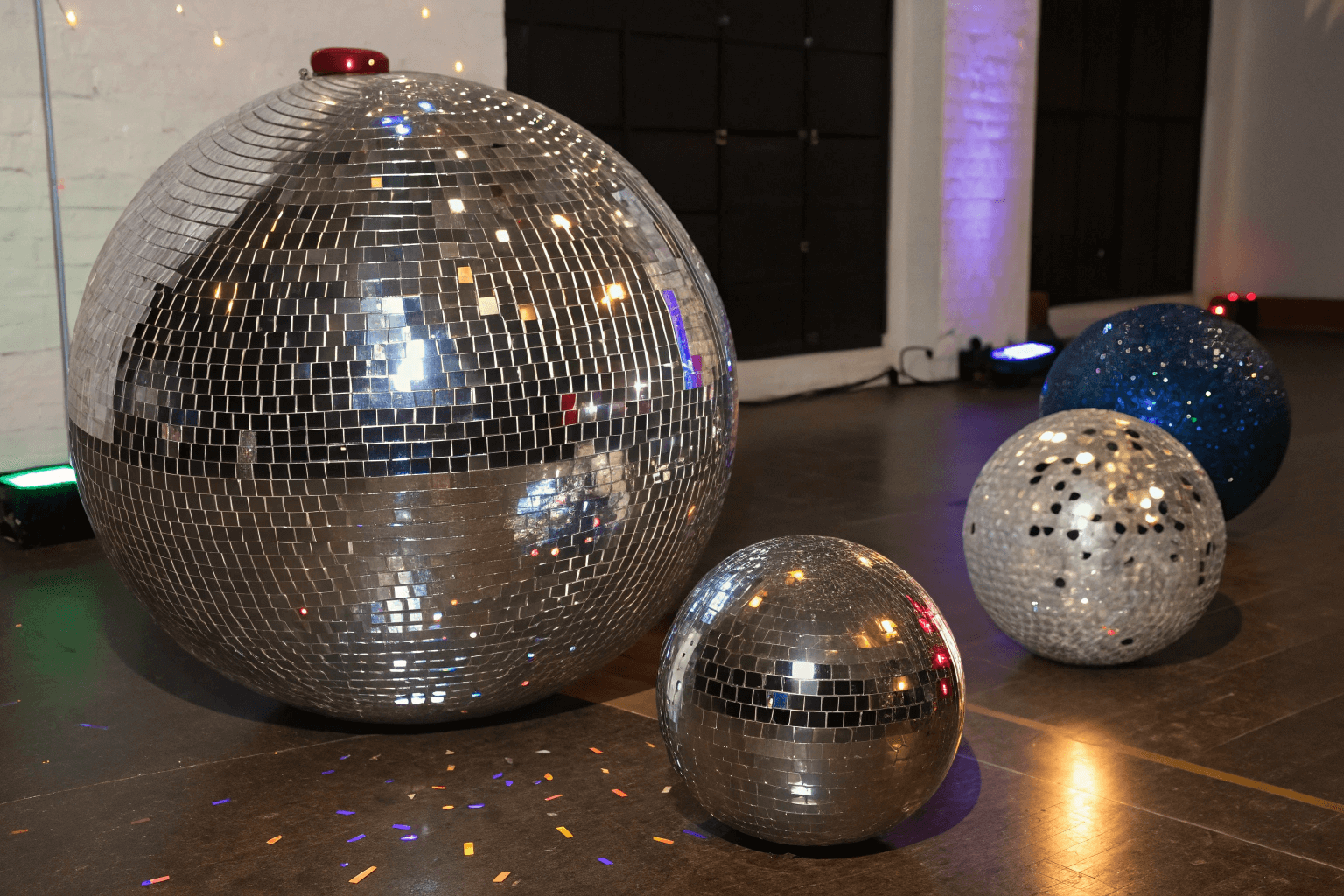
The Minimalist Aesthetic: Single-Ball Statement vs. Arrays
Minimalist jewelry displays using single balls or geometric arrays create bold focal points and dynamic visual interest, proven to enhance perceived value and customer engagement for high-conversion e-commerce and boutique showcases.

The Single-Ball Statement
A single prominent ball or orb creates a bold, sculptural focal point in high-end jewelry displays. This approach emphasizes negative space to draw immediate attention to one luxury piece, such as a ring or pendant.
It reduces visual clutter to enhance perceived value and exclusivity, aligning with high-conversion display strategies for product photography. This method is ideal for highlighting a signature item, conveying a sense of luxury and singular focus that resonates in high-end boutique decor.
Geometric Arrays and Clusters
Arrays use multiple spheres arranged in grids or clusters to create dynamic, minimalist displays. This method showcases product variety, like bracelets or collections, while maintaining a clean aesthetic.
The structured visual interest boosts customer engagement and conversion without overwhelming viewers, making it versatile for e-commerce photography. It allows photographers and retailers to present a cohesive product line, demonstrating range within a unified visual theme.
Choosing the Right Approach for Your Display
Select a single-ball statement to highlight a signature piece and convey luxury and focus. This strategy is particularly effective for high-end boutiques aiming to emphasize the craftsmanship and exclusivity of a hero item.
Opt for geometric arrays when presenting a collection or product line to demonstrate variety within a unified theme. Retailers often use this approach for broader visual merchandising, as it can effectively showcase multiple items like a bracelet set or necklace series.
Consider your brand’s aesthetic and the specific jewelry item. The choice impacts the narrative; a single statement suggests rarity, while an array suggests curated selection. Both methods leverage minimalist principles to reduce visual noise, a key tactic in a market where professional photography can improve conversion rates by 33-94%.
Safe Materials: Ensuring Non-Abrasive Decorative Bases
The foundation of any effective jewelry display is the use of non-abrasive materials that protect delicate items from scratches. Key materials like clear acrylic, velvet, leatherette, and premium microfiber or suede are industry standards, chosen for their ability to showcase jewelry safely in both retail and photographic settings.

The Foundation of Jewelry Safety
The primary purpose of a display base is to showcase jewelry without causing damage. Materials must be non-abrasive to prevent scratches on precious metals and delicate gemstones.
Choosing the right base material is a critical decision for both retail environments and professional photography, directly impacting the perceived value and condition of the items.
Clear Acrylic: The Invisible Support
Clear acrylic is favored for its exceptional clarity and strength, allowing jewelry to be the sole visual focus. It blends into the background in displays and photos.
It is a durable, lightweight material commonly used for earring displays, necklace stands, and locking cases. High-quality, polished clear acrylic is manufactured in the US for these applications.
Soft Textiles: Velvet and Leatherette
Velvet provides a soft, elegant surface ideal for rings, bracelets, and earrings. It is available in standard colors like black, with custom options for larger orders, and is used on busts, ramps, and trays.
Leatherette (faux leather) offers a luxurious, non-abrasive finish in colors such as black, white, and cream. It is often paired with wood bases for T-bars and ring displays, combining durability with visual appeal.
Premium Finishes: Microfiber and Suede
Microfiber and suede variants offer a premium, gentle texture for high-value items. These materials are used in ring displays, necklace busts, and comprehensive showcase sets.
An example is a cream microfiber paired with a walnut wood base, often found in multi-piece display sets designed for glass retail cases, ensuring both safety and a high-end presentation.
Reusable vs. Seasonal Display Components
The most effective jewelry display strategy combines a robust, reusable modular base with lightweight, easily swapped seasonal accents. This hybrid model provides structural stability for daily operations while enabling quick, impactful updates for holidays and promotions, aligning with modern retail needs for flexibility and cost-effectiveness.

The Core Advantage of Modular, Reusable Systems
Reusable components are a key trend in jewelry display design, focusing on long-term value and flexibility. Modular showcases with interchangeable panels or shelves allow for easy reconfiguration to highlight new product lines or adapt to seasonal themes.
This approach is cost-effective for visual merchandising teams, as it reduces the need for frequent, complete overhauls. The flexibility and mobility of these systems are particularly beneficial for small retailers and multi-location brands seeking adaptable solutions.
Implementing Thematic, Seasonal Updates
Seasonal components are typically implemented through targeted thematic adjustments rather than full display replacements. Common strategies include updating packaging to match festive colors, such as red and green for Christmas or pastel tones for spring.
Creating dedicated ‘Thematic Zones’ within a store, like a ‘Wall of Love’ for Valentine’s Day featuring heart-shaped pendants, can effectively capture seasonal sentiment. This method allows retailers to refresh their visual merchandising while maintaining a cohesive brand identity and core display architecture.
Strategic Integration for Retail Agility
The most effective strategy combines a robust, reusable modular base with lightweight, easily swapped seasonal accents. This hybrid model provides the structural stability needed for daily operations while enabling quick, impactful updates for holidays and promotions.
For B2B partners, this approach aligns with a manufacturing philosophy that values precision and partnership, offering tailored solutions that solve specific retail challenges. Investing in a versatile display system from a direct manufacturing partner ensures access to technical expertise and reliable logistics for both core and seasonal needs.
Creating “Insta-Worthy” Close-ups for Social Media
High-quality close-up photography is a critical conversion driver for jewelry e-commerce. Detailed shots that showcase craftsmanship directly address purchase uncertainty, build consumer confidence, and can justify premium pricing. With the jewelry industry facing low online conversion rates, professional macro photography is one of the most impactful strategies for improvement.

Essential Gear and Camera Settings for Sharp Detail
A macro lens is non-negotiable for capturing fine details like gemstone facets and metal textures. It reveals the craftsmanship and quality that customers value, helping them appreciate the product’s true worth.
Use a tripod and manual focus to ensure absolute sharpness and prevent blur. Stabilizing your camera is essential for pinpoint accuracy on small items.
Set your camera to a low ISO to minimize digital noise and maximize image clarity. Keeping ISO low preserves detail and color integrity.
Employ a narrow aperture (high f-stop) to maximize depth of field, keeping the entire piece in focus. This ensures every part of the jewelry, from front to back, is sharp and clear.
Mastering Light and Composition for Maximum Impact
Use soft, diffused lighting from a light tent or softbox to eliminate harsh glare on reflective surfaces. Over 70–80% of jewelry lighting complaints relate to glare, making controlled, soft light essential.
Avoid on-camera flash, which creates unflattering hotspots and deep shadows. Continuous LED lighting or strobes with adjustable intensity offer better control.
Frame multiple detail shots, including clasps, hallmarks, and unique design elements, to tell a complete story. Capturing these angles provides a comprehensive view that builds trust with online shoppers.
Choose simple, non-distracting backgrounds like white seamless paper or black velvet to make the jewelry the hero. The piece should always be the star of the image, with props and backgrounds serving only to enhance it.
Optimizing Images for Social Media and E-commerce
Shoot in high resolution to allow for digital zoom, letting online shoppers inspect details as if in person. This capability is essential for replicating the in-store experience and can lead to a significant boost in engagement.
Capture a variety of angles to provide a comprehensive view and build consumer confidence. Offering multiple perspectives can improve conversion rates by giving customers all the visual information they need.
Ensure your final images are optimized for fast loading on platforms like Instagram and Shopify without sacrificing quality. Fast-loading, high-quality images improve user experience and keep potential customers engaged.
Detail shots that highlight craftsmanship directly address purchase uncertainty and can justify a premium price. In an industry where conversions are highly considered decisions, these images provide the tangible proof of quality that shoppers seek.
Frequently Asked Questions
How can I use disco balls to display jewelry?
Disco balls enhance jewelry displays by reflecting light to create dynamic sparkle, highlighting gems and metals. Use mini disco balls (4-12 inches) as table centerpieces with jewelry arranged around them, or suspend larger balls (7-24 inches) above cases to cast moving light. For a functional display, consider disco ball-shaped jewelry boxes that open to reveal pieces inside. Cluster small balls on shelves or integrate them with florals for themed setups. For photography, pair them with dahlias or monochrome backdrops to emphasize sparkle on high-end items.
What are the best props for jewelry photography?
Effective props include display stands, natural materials, and reflective surfaces that complement without overwhelming the jewelry. Use necklace stands, ring holders, and display hands to present pieces naturally. Incorporate rocks, stones, or concrete blocks to add height and texture. Wooden trays bring a rustic feel, while marble adds sophistication. Reflective surfaces like acrylic blocks or mirrors amplify sparkle. The key is balance—the jewelry should always be the star, with props enhancing composition without creating unwanted shadows or reflections.
Are mini mirror balls suitable for watch displays?
Yes, mini mirror balls (1-5 inches in diameter) are ideal for watch displays. Their small, reflective surfaces add glamour without overpowering the product. Opt for non-lit, reflective versions to highlight watches using ambient light, avoiding glare from internal LEDs. These balls are portable and can be placed on tabletops or nestled among displays. They differ from large, rotating venue balls by being static or slowly rotating, making them perfect for boutique aesthetics and detailed product photography where subtle sparkle is desired.
How do I clean tiny mirrors for close-up jewelry photos?
Clean tiny mirrors with a soft microfiber cloth. First, dust gently to remove particles. For smudges, use a slightly damp cloth with water, a mild soap solution, or diluted vinegar (1:1 with water). Wipe in light circular motions, avoiding abrasive pads or harsh chemicals that can scratch the surface. Dry immediately with a lint-free cloth to prevent streaks. For acrylic mirrors, use anti-static cleaners and avoid getting water on the edges to prevent corrosion. Regular dusting maintains clarity for sharp, detailed close-up shots.
What decor is non-distracting for luxury jewelry displays?
Non-distracting decor focuses on minimalism and strategic enhancement. Use minimalist displays with only a few signature pieces per case to convey exclusivity. Employ strategic LED lighting to highlight sparkle without harsh glare. Incorporate risers or tiered displays at varying heights (125-185cm from eye level) to create visual interest. Mirrored bases in tabletop cases reflect light and add elegance. Opt for geometric or asymmetrical layouts instead of rigid grids to create a modern, balanced visual flow that keeps the jewelry as the central focus.
What are the best sizes for tabletop mirror balls in a store?
For jewelry store tabletops, small mirror balls (6-12 inches in diameter) are ideal. They provide subtle sparkle without overwhelming the display surface or the jewelry itself. These sizes are commonly used in boutiques and for product photography. For larger tables or more prominent visual impact in high-end boutiques, medium balls (14-20 inches) offer balanced reflection and can serve as a focal point without dominating the space. The choice depends on the table size and the desired level of decorative emphasis.
Final Thoughts
The strategic use of mini mirrors and reflective surfaces is more than a decorative trend; it’s a functional tool that directly addresses the core challenge of jewelry retail and e-commerce: capturing light and sparkle. From managing glare with precision optics to choosing between a single statement piece or a geometric array, each decision contributes to a display that enhances the product’s inherent beauty and perceived value. The goal is always to create an environment—whether physical or photographic—that builds confidence and drives the customer from consideration to purchase.
Ultimately, a successful display strategy balances aesthetics with practicality. It combines the visual impact of mirrored accents and thoughtful placement with the foundational need for safe, non-abrasive materials and adaptable, reusable systems. By focusing on these details—the quality of light, the safety of materials, and the flexibility of the setup—retailers and photographers can create compelling presentations that not only showcase jewelry but also tell its story, justifying premium positioning and fostering a connection that translates into sales.