

A single loose mirror tile isn’t just a cosmetic flaw—it’s a direct liability risk. Under premises liability laws, a store can be held responsible for injuries from hazards like falling glass, even if staff didn’t directly see the problem, leading to lawsuits and significant costs.

This article explains why standard adhesives often fail, detailing how temperature changes can cause a mirror’s bond strength to drop below 500 psi and lead to sudden ‘pop-off.’ We’ll cover the legal framework for retail safety, the science behind adhesive failure, and the specific quality controls—like specialized spherical testing—that prevent shedding and protect your business.
The Liability of Loose Glass in Retail Spaces
Retailers have a legal duty to maintain safe premises. Loose or broken glass creates a physical hazard that can lead to customer injuries from cuts or falls. Under negligence laws, a store can be held liable if it fails to conduct reasonable inspections and promptly address these hazards, potentially facing lawsuits for medical costs and other damages.
| Legal Concept | Key Principle | Implication for Retailers |
|---|---|---|
| Premises Liability | Duty of reasonable care for safe premises (e.g., CA Civil Code § 1714) | Mandates regular inspections, hazard cleanup, and employee training. |
| Constructive Knowledge | Liability if a hazard existed long enough to be found via reasonable inspection. | A loose glass panel can create liability even if staff didn’t directly see it. |
| Elements of Negligence | Duty, breach, causation, and damages must be proven. | Failing to secure a cracked display case (breach) that causes a cut (causation) leads to liability for damages. |
| Building Code Compliance | Local codes set commercial safety standards for glass installations. | Damaged or loose glass risks citations, forced closures, and insurance problems. |

The Legal Framework of Premises Liability
Retail property owners and operators are legally obligated to exercise reasonable care to keep their premises safe for customers. This duty is often codified in state laws, such as California Civil Code § 1714. The core of a legal claim for an injury from loose glass is a negligence action, which requires proving four specific elements.
First, the store must have had a legal duty of care to the injured person. Second, the store must have breached that duty—for example, by failing to secure a loose glass panel on a shelf or ignoring a visibly cracked door. Third, this breach must be the direct cause of the injury. Finally, the injury must have resulted in quantifiable damages, such as medical expenses, lost wages, or pain and suffering.
A critical concept is “constructive knowledge.” A retailer can be held liable if a hazard like a loose pane of glass existed for a period long enough that it should have been discovered through routine, reasonable inspections. This means liability isn’t limited to hazards staff actually saw; it extends to those they should have found. Furthermore, local building codes mandate specific safety standards for commercial glass installations. Non-compliance due to damaged or improperly secured glass can trigger citations, forced business closures, and complications with property insurance.
Identifying and Mitigating Common Glass Hazards
Common glass hazards in retail environments are varied but predictable. They include chipped or sharp edges on glass doors, cracked display case panels, unsecured glass shelves, and debris from broken ornaments or light fixtures. A breach of the legal duty of care occurs when staff ignore these visible defects or when the store’s inspection protocols are insufficient to identify hazards like a loosely mounted mirror.
Effective mitigation requires a proactive approach. This involves using properly secured shelving and displays, ensuring all glass is installed according to code, maintaining adequate lighting to spot hazards like glass shards, and implementing immediate cleanup procedures for any broken glass. From a risk management perspective, a robust program includes regular inspection checklists, training employees to recognize and report hazards, and establishing prompt repair protocols to keep aisles and common areas safe.
How Temperature Fluctuations Cause Mirror “Pop-off”
Mirror ‘pop-off’ occurs when temperature changes cause the mirror, adhesive, and mounting surface to expand or contract at different rates. This mismatch creates shear stress that can exceed the adhesive’s bond strength, leading to sudden detachment. Rapid cooling is especially problematic, creating internal thermal gradients that warp the glass and amplify stress on the bond.

The Physics of Differential Thermal Expansion
The primary cause of mirror detachment is a mismatch in the Coefficient of Thermal Expansion (CTE) between the mirror substrate, adhesive, and mounting surface.
Common mirror glass expands at a rate of roughly 8 to 9 parts per million per degree Celsius (ppm/°C). Many structural adhesives, however, have CTEs ranging from 20 to 100 ppm/°C.
When the temperature changes, these materials expand or contract at different rates. This generates shear stress directly at the bond line where they meet.
If this accumulated stress exceeds the adhesive’s tensile or shear strength—which is often less than 500 pounds per square inch (psi)—the bond fails catastrophically, causing the mirror to ‘pop’ off.
Data on Thermal Gradients and Optical Distortion
Rapid cooling is a critical risk factor. Research indicates a mirror’s surface figure error can increase by seven times during a rapid cooldown, such as moving from an 83°F environment to a 72°F one.
This process creates internal thermal gradients. The outer zones of the mirror cool and contract faster than the core, inducing a wavefront error of approximately 1/2-wave.
In optical systems, temperature-induced variations in magnetic force can cause optical deflection angles to shift by ±0.5° across an extreme temperature range from -20°C to 70°C.
Documented mitigation strategies include using low-expansion materials like Zerodur, implementing symmetric cooling with fans on both sides, and employing insulation or low-emissivity shrouds to slow the rate of temperature change.
Research Summary
Temperature fluctuations cause mirror “pop-off” primarily through differential thermal expansion between the mirror, adhesive, and mounting substrate, which leads to mechanical stress buildup. For optical mirrors, rapid temperature changes create internal gradients that distort the figure. For example, warmer centers versus cooler edges cause temporary optical errors, amplifying distortion up to seven times during cooling as outer zones shrink faster than the core. This is worse in non-equilibrated states, where uneven heat transfer can induce wavefront errors of about 1/2-wave, stressing bonds until they fail.
For mounted mirrors in safety or retail applications, the physics involves CTE mismatch. Glass or metal mirrors expand and contract at rates around 8-9 ppm/°C, while adhesives like epoxies vary from 20-100 ppm/°C. This difference generates shear forces that can “pop” mirrors off if they exceed the bond strength, which is often under 500 psi. While standards like MIL-C-675C and ISO 9211-3 ensure coating durability at high temperatures, mounting failures often trace back to unaddressed thermal gradients. Mitigation requires strategies like symmetric cooling and the use of low-CTE materials to allow the assembly to equilibrate without distortion.
Testing Adhesive Bond Strength in 2″ Spheres
Testing adhesive bond strength on 2-inch spheres is a specialized, non-standard method used to simulate real-world stress on curved surfaces like disco balls. It assesses how adhesives perform under the unique thermal and mechanical loads of a spherical geometry, which standard flat-lap tests cannot accurately predict.

The Purpose of a Non-Standard Spherical Test
Standard tests like ASTM D1002 for lap-shear joints use flat samples, which do not replicate the stress distribution on a curved mirror tile.
A 2-inch sphere provides a controlled, representative model for the thermal expansion, contraction, and point-load stresses experienced by adhesives on products like disco balls and mirrored sculptures.
This test helps manufacturers like BDB predict long-term durability and prevent failures such as tile shedding in finished goods.
Implementing the Test in a Manufacturing Workflow
The test involves applying adhesive to a 2-inch spherical substrate under controlled conditions that mimic the factory’s climate and curing processes.
Engineers measure the force required to cause adhesive failure, creating a benchmark for batch quality and supplier approval.
Results inform the selection of adhesives and application protocols for BDB’s custom fabrication projects, ensuring architectural-grade results.
It’s important to note that “Testing Adhesive Bond Strength in 2″ Spheres” is not an established industry standard. Major specifications like ASTM, ISO, or MIL-STD do not recognize spherical test specimens for adhesive bond strength evaluation. The common geometries in standards include flat lap joints, peel strips, and conical or cylindrical specimens for specific applications like rubber-to-metal bonding.
If this method is referenced, it likely represents a proprietary or niche testing approach developed for specific custom fabrication needs, such as for mirrored spheres, rather than a widely adopted protocol.
Source Commercial-Grade Mirror Balls, Direct from the Factory
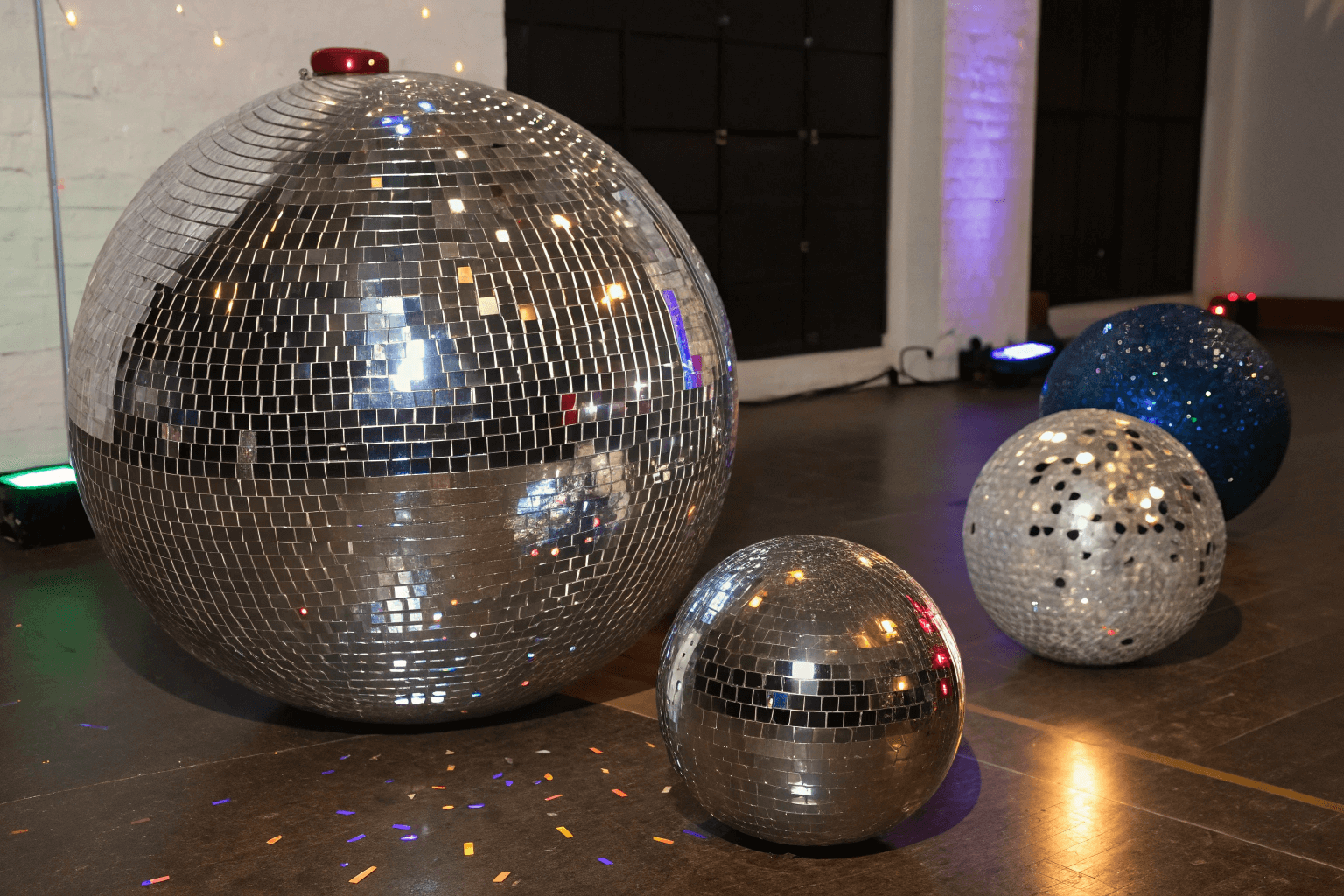
Why Cheap Foam Cores Shrink and Shed Tiles
Foam shrinkage is a normal material property, but cheap cores fail when manufacturing defects cause excessive movement. EPS foam should shrink 0-0.3%, while spray polyurethane foam should stay under 2%. Defects like improper steam pressure, rapid cooling, or poor mold design can cause shrinkage to spike to 25%, breaking the adhesive bond and shedding surface tiles.

The Science of Normal vs. Defective Shrinkage
EPS foam exhibits a typical post-molding shrinkage of 0% to 0.3%, a predictable property constrained by material stress.
Spray polyurethane foam (SPF) has a defined maximum shrinkage of 2% under normal conditions for medium-density closed-cell foam.
Excessive shrinkage, like documented cases of 25% in SPF, is a defect caused by process deviations, not inherent to the foam type.
Root causes include overly long steam heating, excessive temperatures, rapid cooling, insufficient feed material, and inadequate mold locking force.
Air diffusion into the foam structure accelerates at higher storage temperatures, around 60°C, contributing to dimensional change over time.
How Process Failures Lead to Tile Shedding
Proper manufacturing requires an optimal steam pressure and a controlled cooling speed to prevent water damage and residual stress.
Mold design must compensate for shrinkage; industry practice is to enlarge EPS molds by approximately 0.2%.
Deviating from specified chemical pressures (around 1000 psi) and application temperatures (105–125°F for SPF) leads to unstable foam formation.
Inadequate control of volatile matter content and improper warehouse storage prevent the material from stabilizing, which can take 11–18 weeks per DIN EN 1603.
When shrinkage exceeds the adhesive’s elastic limit, it creates gaps at the substrate interface, causing tiles, decking, or shingles to detach and shed.
The “Fingerprint” Test: Glue Cleanliness in Manufacturing
The ‘Fingerprint’ Test uses cyanoacrylate (superglue) fuming to reveal invisible contaminants on surfaces. In manufacturing, if residual glue or oils are present, they polymerize into visible white deposits during the test, signaling poor cleaning that can cause adhesive bonds to fail, tiles to shed, or glass to detach.

What the Forensic Test Reveals About Your Surface
Cyanoacrylate vapor polymerizes at approximately 120°C on latent residues like amino acids and oils, forming white ridges. This same chemical reaction occurs with uncured adhesive or leftover cleaning agents on a manufacturing surface.
A perfectly clean surface will show no polymer growth. Visible white fibrous deposits or beads indicate contamination, which creates a weak boundary layer. This layer is a primary cause of bond failure and material shedding in finished products.
This test validates cleaning efficacy. It aligns with protocols like those from the FDA, where the standard for a reliable bond is that no detectable residue should remain after surface preparation.
Implementing Controlled Fuming for Quality Assurance
For reliable results, controlled-humidity fuming cabinets—such as the Sandridge or MVC5000 models—are used. Operating under an ISO 17025 scope ensures repeatable conditions and prevents overdevelopment, which can mask true contamination levels.
Optimal visualization often uses a sequence like cyanoacrylate fuming followed by a Basic Yellow 40 dye stain. The treated surface is then examined under forensic light in the 415-485 nm range to maximize contrast for inspection and documentation.
For permanent installations, such as architectural walls or facades, passing this test before final bonding is a critical quality checkpoint. It helps prevent future failures like glass detachment or tile shedding in high-traffic areas, mitigating significant liability.
Liability Insurance and Glass Hazard Prevention
Insurance for glass hazards covers costs from breakage due to installation errors or thermal stress, with typical limits from $100,000 to $2 million per incident. Prevention is mandated by safety standards like ANSI Z97.1 and CPSC 16 CFR 1201, which require the use of tempered or laminated glass in high-risk areas to prevent serious injuries from sharp shards.
| Aspect | Key Data | Implication |
|---|---|---|
| Insurance Policy Limits | $100,000–$2M per occurrence; aggregate 2–3x higher | Defines the financial coverage ceiling for a single breakage event. |
| Insurance Deductibles | $1,000–$10,000 | The out-of-pocket cost the policyholder must pay for a claim. |
| Thermal Shock Claims | ~35% of glass breakage liability cases | A major risk driver, often from inadequate glazing systems. |
| Replacement Cost Example | ~$115,000 for 20 fractured curtain wall panels | Illustrates the high potential cost of a significant failure. |
| Primary Safety Standards | ANSI Z97.1 & CPSC 16 CFR 1201 | Mandate safety glazing in hazardous locations to prevent lacerations. |

Understanding Glass Breakage Liability Insurance
This specialized insurance protects against financial losses from glass breakage. Coverage typically includes incidents during installation, handling, or in-service use. Common causes are installation errors, such as improper mounting, and thermal stress from inadequate glazing systems.
Policy limits usually range from $100,000 to $2 million for a single occurrence. The aggregate limit, or the total coverage available over the policy period, is often two to three times higher. Deductibles for these policies commonly fall between $1,000 and $10,000, which directly affects the out-of-pocket cost when filing a claim.
Thermal shock is a significant concern, accounting for roughly 35% of glass breakage liability cases. The financial impact can be substantial. For instance, replacing 20 thermally fractured curtain wall panels can cost around $115,000, covering both materials and specialized labor.
Mandatory Safety Standards for Hazard Prevention
Safety standards are legally enforced to prevent glass from causing severe injuries like lacerations. ANSI Z97.1 sets the minimum performance criteria for safety glazing materials used in hazardous locations. These include doors, sidelites, and windows near areas with pedestrian traffic.
At the federal level, CPSC 16 CFR 1201 mandates safety glazing performance to reduce injuries from human impact. Both standards require glass to either withstand impact or break in a safe manner. When it breaks, it must fragment into small, blunt pieces that minimize the risk of deep cuts.
The primary compliant glass types are tempered and laminated. Tempered glass is heat-treated to crumble into small, dull pieces. Laminated glass consists of layers bonded with a plastic interlayer, so fragments adhere to it rather than falling away. Building codes strictly enforce the use of these certified materials in specified high-risk locations to protect public safety and reduce liability exposure.
Maintenance Checklists for High-Traffic Displays
Effective maintenance for high-traffic displays relies on scheduled checklists. Daily visual and content checks catch immediate issues, while weekly cleaning and monthly inspections address dust, electrical wear, and environmental seals. Seasonal tasks adapt to weather changes, with a focus on critical components like LED modules and power supplies to prevent failures.

The Core Logic of Scheduled Maintenance
Proactive monitoring prevents cascading failures in interconnected systems like LED modules, power supplies, and cooling fans. Without regular checks, a single point of failure can disrupt the entire display.
High-traffic and exposed environments accelerate wear from dust, moisture, and physical obstructions, demanding regular intervention. This constant exposure makes a structured schedule non-negotiable for reliability.
The engineering focus is on preventing common failure points: pixel burnout from electrical issues, overheating from fan failure, and water damage from seal degradation. Targeting these areas directly extends the display’s operational life.
Maintenance logs are essential for tracking performance trends and predicting component lifespan, moving from reactive fixes to preventative care. This data-driven approach helps plan replacements before a critical failure occurs.
A Practical Frequency-Based Protocol
Daily checks include a visual inspection for pixel defects, irregular brightness, and color consistency, plus verification of content playback and environmental obstructions. This quick routine ensures the display is functioning correctly for the public.
Weekly tasks involve cleaning the display surface with a soft brush or low-pressure blower and checking the power supply for voltage irregularities or warning lights. This prevents dust buildup from affecting brightness and catches early electrical problems.
Monthly inspections require testing seals and joints for moisture intrusion, examining all cables and connections for fraying, and ensuring cooling fans and temperature controls are operational. These checks defend against environmental damage and overheating.
Seasonal maintenance adapts to the environment: checking for snow or ice damage in winter, clearing leaves in fall, performing a deep clean for debris, and updating software or firmware. This cycle prepares the display for changing weather conditions and keeps its software secure.
Final Thoughts
The issue of “mirror-shedding” is not a simple matter of aesthetics or minor maintenance. It’s a significant safety and liability risk rooted in material science, manufacturing quality, and legal responsibility. Whether it’s a loose glass panel in a retail display or a tile detaching from a decorative sphere, the failure point is often the adhesive bond. This bond must withstand not just gravity, but the constant stress of thermal expansion, environmental contaminants, and substrate movement.
The implications are clear: cutting corners on adhesive selection, surface preparation, or core material quality is a direct investment in future failure. For property managers and manufacturers, this translates to preventable injuries, costly lawsuits, insurance claims, and reputational damage. The solution requires a shift from reactive fixes to a proactive, engineered approach—specifying the right materials, implementing rigorous quality control like the fingerprint test, and adhering to a disciplined maintenance schedule. In the end, the mandatory use of quality adhesive isn’t just about keeping mirrors in place; it’s about keeping people safe and businesses protected.
Frequently Asked Questions
Why do disco ball mirrors fall off?
Mirrors fall off primarily due to insecure mounting hardware. Undersized split rings on motor spindles can open under the ball’s weight, and inadequate safety cables can fail to secure the ball to the structure. For example, an 80-inch glass disco ball can weigh around 540 lbs, creating significant stress on these mounting points.
What is the best glue for mirror balls in shops?
For retail environments, use weather-resistant adhesives with UV-stabilized and waterproof properties. These are specified for bonding mirror film or acrylic facets to high-density foam cores, which should be 1–2 inches thick for rigidity and dent resistance in high-traffic areas.
Are glass disco balls safe for stores?
Glass disco balls are not inherently safe for commercial stores. They are heavy, with a 20-inch ball weighing about 6.4 lbs, and pose a risk of glass shard injuries if tiles break. Professional installation with reinforced hardware is required. Acrylic alternatives are recommended as a lighter and safer option for public spaces.
How do you prevent mirror shedding?
Prevent shedding by selecting mirrors that meet ASTM C1503 or EN 1036 standards. Apply a neutral-cure silicone edge sealant in 10mm-wide beads spaced 100-150mm apart, leaving a minimum 3mm wall gap. For high-humidity areas, use safety film or epoxy backings for additional edge protection.
How do you fix a disco ball with missing tiles?
Replace missing tiles by individually reattaching them with a strong adhesive like epoxy. For safety, inspect and discard balls with cracked or loose fragments. Ensure the overhead fixture can support at least 10 times the device’s weight; for instance, a 3 kg ball requires a ceiling point load capacity of 30 kg.