

If you’re a B2B buyer in the decor space, you’re likely caught between volatile raw material costs squeezing your margins and a market shifting towards online channels that bypass traditional wholesale. The disposable decor model is a profit trap, with raw material price swings of 19-43% and market growth forecasts reduced by -1.5% due to stringent regulations.

This article provides a strategic alternative. We’ll analyze the ROI of shifting to durable, high-end decorative assets like professional-grade mirror balls. You’ll see how this move bypasses systemic cost traps, enables premium markups of 200-300%, and can directly lower e-commerce return rates—which currently erode about 21% of an order’s value. We’ll break down the lifetime cost analysis, branding strategy, and how to build a luxury rental portfolio that transforms inventory from a cost center into an appreciating asset.
The “Disposable Decor” Profit Trap
The disposable decor market is constrained by volatile raw material costs, stringent regulations, and low growth, compressing wholesale profits. A strategic shift to durable, professional-grade inventory offers a path to stable, high-margin revenue by avoiding these systemic traps.

The Hidden Costs of Volatility and Regulation
Disposable decor margins are squeezed by raw-material price swings, with pulp and polymer costs rising 19-43% during peak periods. For example, tissue manufacturing costs spike within that range, and fiber-based tableware makers are directly exposed to pulp volatility.
Stringent plastic regulations in Europe and North America are reducing market growth forecasts by -1.5%, adding compliance costs and complexity for producers. Harmonized labeling and extended-producer-responsibility schemes increase operational burdens.
This environment creates a competitive trap where spot-market dependent suppliers face compressed profits, while vertically integrated manufacturers gain an advantage by controlling their supply chains and insulating themselves from price shocks.
Market Stagnation and Channel Pressure
The disposable tableware market is growing at a modest 1.46% to 5.62% CAGR, a stark contrast to the -1.7% decline in broader furnishings wholesaling. This slow growth squeezes profitability in an already challenging sector.
Hypermarkets dominate sales, but online direct-to-consumer channels are growing at 13.45% CAGR, eroding traditional wholesale markups and profitability. This shift bypasses wholesalers, while mergers among large producers intensify competitive pressure.
Demand is highly seasonal, peaking around holidays and events, which challenges consistent sales, inventory management, and reliable financial forecasting for wholesalers. These fluctuations are compounded by the underlying raw material and regulatory costs.
The Strategic Alternative: Durable, Professional-Grade Inventory
For B2B partners like retailers and event pros, shifting focus from disposable decor to durable items like commercial-grade mirror balls bypasses these profit traps. This move aligns with markets for collectibles and durable goods, which can hold or appreciate in value.
Premium, reusable inventory avoids raw material volatility, regulatory bans on single-use plastics, and the race-to-the-bottom pricing of commoditized seasonal goods. Similar to premium glass, which offers better long-term value despite higher upfront cost, durable decor reduces lifetime ownership expenses.
This builds a stable, high-margin portfolio with reliable resale and rental value, turning decorative assets into long-term investments rather than recurring cost centers. Branding this inventory as “Professional Grade” can further enhance perceived value, driving purchase likelihood and supporting premium pricing strategies.
Analyzing Markup Potential: Premium vs. Standard
The choice between standard and premium pricing strategies defines profitability. Standard pricing uses a simple 100% markup for predictable 50% retail margins, while premium pricing leverages brand value and quality to justify markups of 200-300% or more, targeting higher-end markets.
| Pricing Model | Key Metric & Margin | Primary Markets |
|---|---|---|
| Standard (Keystone) | Wholesale = Retail / 2 (100% markup); 50% retail margin | General Retail, Wholesale Distribution |
| Premium (Value-Based) | 200-300% markup from wholesale | Luxury Retail, Designer Brands, High-End Wholesale |

Standard Pricing (Keystone Method)
This method sets the wholesale price at half the final retail price. It results in a 100% markup from wholesale to retail, providing retailers with a predictable 50% margin on resale.
The keystone approach is the simplest and most common model for standard products. It offers stability and ease of calculation, making it the baseline for general retail and wholesale distribution.
Premium Pricing (Value-Based / Luxury Markup)
Premium pricing applies significantly higher markups, often 200% to 300% or more. This strategy is justified by factors like brand exclusivity, superior quality, and enhanced customer perception rather than just cost.
Moving beyond simple cost-plus calculations, this model focuses on product differentiation to command elevated retail prices. It is the standard in luxury retail, designer brands, and high-end wholesale where perceived value is the primary driver of profit.
Reducing Return Rates via Material Quality
Superior material quality directly lowers e-commerce return rates by addressing defect-related returns, which account for up to 80.2% of cases. This strategy reduces processing costs averaging $10-$20 per item and protects the 21% of an order’s value typically eroded by returns.

How Material Defects Drive Returns and Costs
Industry-wide e-commerce return rates range from 16.9% to 24.5%. Material defects and damage are a primary cause, responsible for up to 80.2% of these returns.
In apparel, poor fabric quality leads to sizing inconsistencies, driving 30-40% of returns. For home goods and furniture, shipping damage from inadequate materials is a major factor.
The financial impact is significant. Processing a single return costs between $10 and $20, and returns overall erode about 21% of an order’s value.
Strategic Quality Controls for B2B Partners
Implementing supplier quality gates to target a supplier return rate below 2%—ideally 0%—prevents defective materials from entering inventory. This avoids stock-outs and preserves partner relationships.
For professional-grade products like architectural mirrors and event decor, rigorous quality control and superior packaging are non-negotiable to prevent the damage that causes most returns.
B2B partners should track key metrics like Return Rate and monitor healthy exchange rates of 20-30% to identify material-related issues before they impact client projects.
The Direct ROI of Premium Materials for Your Business
Investing in superior material quality directly boosts conversion rates by 20-30% by building customer trust and reducing the friction of returns.
For retailers and wholesalers, moving away from low-quality, disposable decor to curated, high-perceived-value collections breaks the price race and supports premium pricing.
The lifetime cost of cheap materials far exceeds the upfront investment in premium glass and components, especially when factoring in reverse logistics, lost sales, and brand reputation damage.
Source Commercial-Grade Mirror Balls, Direct from the Factory
Branding your Inventory as “Professional Grade”
Branding inventory as “Professional Grade” enhances perceived value, trust, and profitability for wholesalers targeting CFOs and business owners, supported by data showing consistent professional branding drives revenue growth of 10-23% and increases purchase likelihood by up to 80%.

How Professional Branding Drives Wholesale Revenue
Consistent professional branding across inventory touchpoints can increase revenue by 10-23%. A one-point lift in brand awareness or consideration metrics correlates to an approximate 1% sales increase. Brands that maintain a consistent presentation outperform inconsistent competitors by 3.5x in market visibility.
Building Trust and Purchase Intent with Business Buyers
80% of buyers are more likely to purchase from a recognizable, professionally branded company. 82% of purchasing decisions are based on trust in the brand, which is critical for securing repeat wholesale business. Labeling inventory as “Professional Grade” can leverage an 80% lift in brand recognition from a consistent visual identity.
Implementing a High-Conversion Branding Strategy for Inventory
Allocate approximately 9.4% of revenue to branding and marketing to achieve a strong ROI, aligning with global investment trends. Test “Professional Grade” positioning on high-margin inventory first to track conversion lifts against baseline performance. Achieve brand familiarity by ensuring your inventory branding appears across 5-7 distinct touchpoints to build buyer recall.
Resale Value of Heritage-Quality Mirror Balls
Heritage-quality mirror balls, built with superior materials and craftsmanship, can hold or appreciate in value over time, transforming business inventory from a cost center into a potential appreciating asset. This contrasts sharply with the steep depreciation of mass-produced, disposable decor.

What Makes a Mirror Ball a Heritage-Quality Asset
Heritage-quality refers to items built to last generations, not just a single season. For mirror balls, this means superior materials like high-grade, thick glass with flawless mirroring, robust internal frames, and professional-grade motors.
Unlike disposable decor, these pieces are engineered for repeated professional use, which forms the foundation for their long-term value. The concept is analogous to vintage machine-made marbles or well-maintained pinball machines, where condition and construction quality are primary value drivers.
Market Evidence: How Comparable Collectibles Hold Value
Well-maintained pinball machines from the 1990s onward often hold or appreciate in value, with modern solid-state machines commanding higher prices due to broad appeal and valuable components. For example, restored machines from the ’90s can retail between $5,000 and $10,000+.
Vintage machine-made marbles demonstrate strong resale at auction, with mint examples from makers like Christensen Agate fetching $900 to $1800 based on rarity and condition. These markets show that durability, craftsmanship, and provenance create a thin but valuable secondary market, avoiding the steep depreciation of mass-produced goods.
The Strategic Advantage for Your Business Inventory
Stocking heritage-quality mirror balls transforms inventory from a cost center into a potential appreciating asset. This quality allows you to market pieces to high-end clients for purchase or as premium rental items, creating multiple revenue streams.
It provides a buffer against market downturns; if you need to liquidate, well-made pieces have a resale market, whereas cheap decor becomes worthless. Building a portfolio of such assets supports branding as a ‘luxury rental’ provider and mitigates the lifetime cost of continually replacing inferior products.
Building a “Luxury Rental” Portfolio for Events
A luxury rental portfolio shifts the business model from high-volume, low-margin disposables to high-value, repeatable assets. This strategy aligns with the professional event segment’s need for reliable, tour-grade elements that perform consistently under pressure, directly improving ROI.

Why a Luxury Portfolio Beats Disposable Decor
A luxury rental portfolio shifts the business model from high-volume, low-margin disposables to high-value, repeatable assets. Premium, commercial-grade items like mirror balls command higher rental fees and attract clients for high-end events, directly improving ROI. This strategy aligns with the professional event segment’s need for reliable, tour-grade elements that perform consistently under pressure.
Core Assets for a High-Value Event Inventory
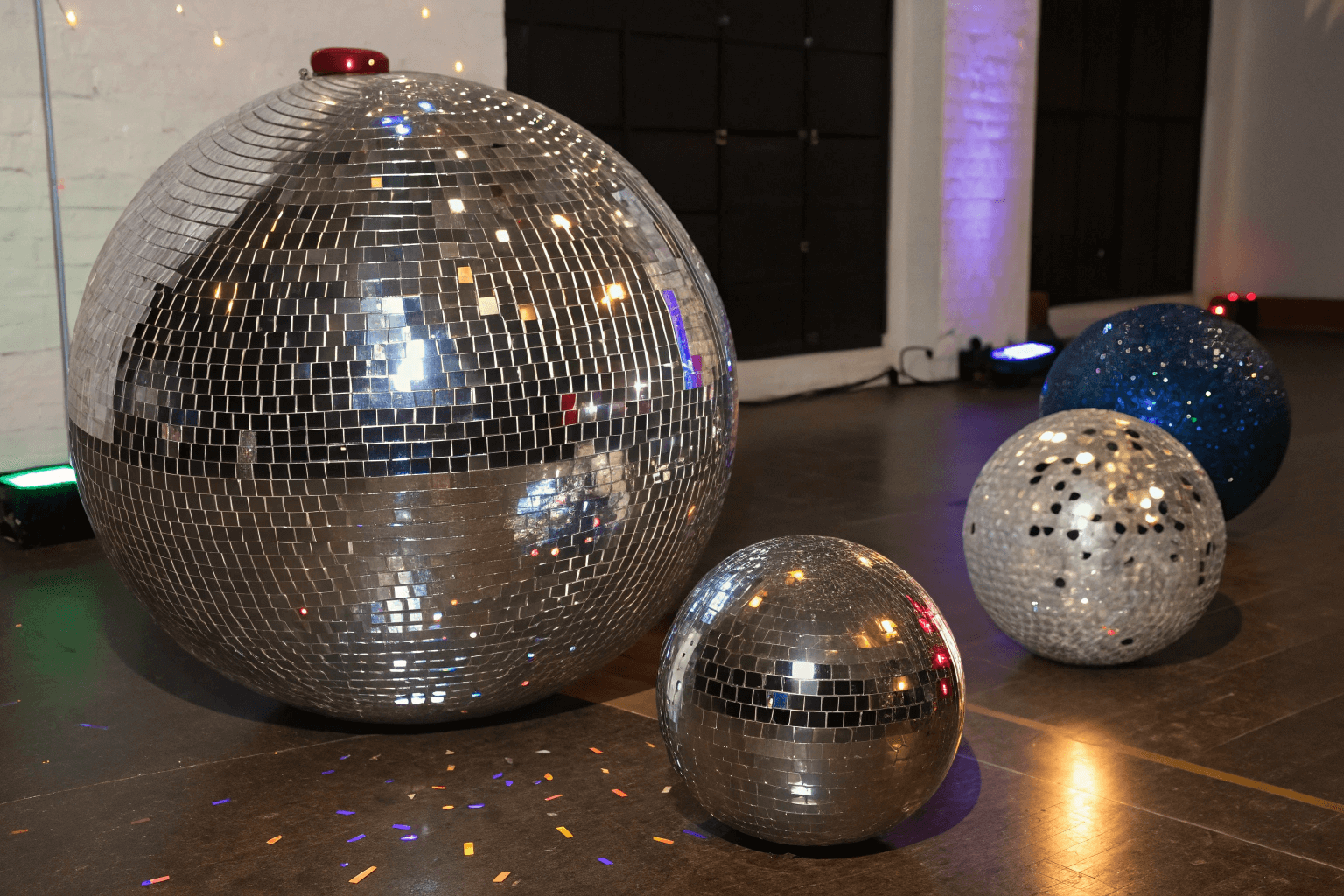
The foundation is a curated collection of commercial-grade mirror balls, the industry workhorse available in sizes from 10cm to 200cm. Essential supporting equipment includes reliable motors with load capacities from 5kg to 500kg to ensure safe and professional operation. For maximum impact and premium pricing, incorporate unique, high-perceived-value items like smoked grey ornaments or bronze geometric shapes.
Logistics and Partner Strategy for Scalable Growth
Establishing a direct manufacturing partnership secures tiered B2B pricing, dedicated account management, and priority access to inventory, which is critical for managing event schedules. A proven partner can handle complex logistics, including expedited production and international freight pre-clearance, ensuring assets arrive on-site ahead of tight deadlines. This operational reliability protects the rental company’s reputation and allows for scaling the portfolio to meet demand from weddings, festivals, and corporate events.
The Lifetime Cost of Cheap vs. Premium Glass
The lifetime cost of glass includes durability, energy efficiency, maintenance, and replacement frequency, not just the purchase price. While cheap glass has a lower upfront cost, premium glass often delivers a better return on investment over time through superior durability and efficiency, especially in high-traffic commercial or event settings.

The True Price of Entry: Upfront Costs vs. Long-Term Investment
Basic clear float or annealed glass typically costs $3–$5 per square foot, representing the lowest initial outlay.
Premium options like tempered, low-E, or laminated glass start at $8–$12 per square foot and can reach $12–$42, depending on features like safety, clarity, and thickness.
This initial price gap is the ‘disposable decor’ trap: cheap glass offers immediate budget relief but commits you to a cycle of higher future expenses.
Breaking Down the Lifetime Cost Equation
Lifetime cost includes durability, energy efficiency, maintenance, and replacement frequency, not just the purchase price.
Cheap, non-tempered glass breaks 4x more easily, leading to frequent, costly replacements in high-traffic commercial or event settings.
Premium low-E glass adds about $1.80–$2.10 per sq ft to manufacture but can save $0.50 per sq ft annually on energy, with consumer payback through lower utility bills.
Custom fabrication (e.g., shapes, holes) adds 20–40%, and professional installation can double material costs, making durability even more critical for ROI.
The Professional’s ROI: A Quantitative Scenario for Event & Design Use
For a 100 sq ft installation (like a feature wall or multiple large mirror balls) over a 10-year professional lifespan, cheap glass often costs more.
A model factoring in a 5% annual breakage risk for cheap glass versus 1% for premium, plus energy savings, shows total costs can be nearly equal or favor premium.
While bulk orders reduce per-unit costs for all glass types, the premium’s edge in durability, safety, and client appeal protects your margins and reputation.
For CFOs and procurement managers, the ROI on premium glass is clear in reduced downtime, lower replacement logistics, and enhanced rental or resale value for assets like heritage-quality mirror balls.
Frequently Asked Questions
Are expensive disco balls worth it for business?
No, expensive disco balls are generally not worth it for business use. They offer minimal proven ROI compared to low-cost alternatives. Wholesale prices for standard disco balls start at $4.10 per unit from manufacturers like those on Alibaba. For events or venues, the visual appeal is important, but budget is better allocated to high-ROI marketing tactics like digital ads or email campaigns, which have proven returns. A cost-effective strategy is to purchase in bulk for testing, as even 100 units cost less than $500, a negligible amount compared to total event budgets.
What is the resale value of professional disco balls?
There is no available hard data on the resale value of used professional disco balls. Search results provide wholesale prices for new items, such as $306.25 for a 24-inch professional model, but do not cover the secondary market. Resale value depends heavily on condition, size, and the specific market (e.g., event rentals, DJs). While professional-grade balls are durable, their profitability upon resale cannot be quantified without specific market data from platforms like eBay or Facebook Marketplace.
Marketing premium mirror balls involves targeting high-end clients like event planners, nightclubs, and upscale decorators. The key is to emphasize superior quality, durability, and light performance compared to cheap PVC alternatives. Strategies include positioning products as professional-grade for DJs and lighting professionals, targeting high-ROI markets like weddings and luxury events, and distributing through B2B wholesale platforms such as Faire and Alibaba. Highlighting features like high-quality glass tiles, compatibility with professional motors, and custom options helps justify higher price points and better margins.
How can decor wholesalers reduce return rates?
Decor wholesalers can reduce return rates, which average 8-10% for home goods, through several proven strategies. Improving product descriptions with detailed specs and 360° views addresses mismatched expectations. Adjusting return policies, such as charging for returns on low-margin items or defaulting to exchanges over refunds, can protect profitability. Implementing anti-fraud measures to combat ‘serial returners’ and focusing on superior packaging to prevent shipping damage are also effective. For CFOs, even a small reduction in return rates can yield significant ROI in a large market.
What are typical profit margins for event decor?
Profit margins for event decor in wholesale typically range from 15% to 50%. General wholesale products often see margins of 15-30%, while specific decor categories like homeware can achieve 45-50%. Premium or niche items, such as wedding decor, may reach higher margins. These figures represent gross profit margins before operating expenses. The business model is crucial; wholesalers rely on high volume at lower per-unit margins, while retailers apply a 30-50% markup on wholesale costs.
Is there a quality difference between wholesale and retail products?
There is no direct data confirming a systematic difference in inherent quality between wholesale and retail products. The primary distinction lies in the business model: wholesalers sell in bulk at lower prices with 15-30% margins, focusing on volume and supply chain efficiency. Retailers sell individual units at higher prices with 30-50%+ markups, incurring costs for marketing, curation, and customer service. Retailers may add value through branding and selection, but this doesn’t necessarily mean the core product is of higher quality than its wholesale counterpart.
Final Thoughts
The data points to a clear financial advantage for wholesalers who shift their focus from disposable decor to durable, professional-grade assets. While the upfront cost is higher, this strategy directly addresses the core profit traps of the disposable market: raw material volatility, regulatory pressure, and low growth. It replaces a model of recurring costs and compressed margins with one built on stable, high-margin revenue from rental, resale, and premium sales.
This isn’t just about selling a different product; it’s about transforming your business model. By branding inventory as “Professional Grade,” leveraging premium pricing, and building a luxury rental portfolio, you turn decorative items into appreciating assets. The result is a more resilient, profitable operation that serves the high-value needs of event professionals and retailers, moving beyond the race-to-the-bottom competition of the disposable market.