

For retail managers, decorative installations are often seen as a cost center—a line item for ambiance with no clear financial return. This perspective misses the critical business case: when analyzed through a Total Cost of Ownership (TCO) lens, strategic decor becomes a measurable investment in driving foot traffic and sales.

This article breaks down the real value of visual installations like mirror balls. We’ll examine how they function as a destination to pull customers inside, quantify the traffic lift and social media impact, and provide a concrete TCO framework for budgeting. You’ll see how targeted decor campaigns can lead to a measurable percentage increase in store visits and why modular, reusable systems offer a better long-term value than fixed installations.
Decor as a Foot-Traffic Driver
Strategic decor acts as a foot-traffic driver by creating a compelling, unique in-store destination that pulls customers off the street. It transforms a store from a point of sale into a memorable experience, encouraging visits for social sharing and exploration, which directly increases dwell time and conversion opportunities.

The Psychology of Destination Creation
Decor shifts a store’s role from a transactional space to an experiential anchor within a retail environment. This transformation is foundational to driving foot traffic.
Unique installations create visual magnetism, acting as a silent billboard that captures attention from passersby and disrupts routine shopping patterns. This visual pull is the first step in converting a casual observer into a store visitor.
This strategy leverages novelty and spectacle to generate word-of-mouth and intentional visits, where the decor itself becomes a primary reason for the store visit. The installation moves from being a background element to the main attraction.
Quantifying the Traffic Lift: From Concept to Conversion
Effective installations are engineered for visibility and engagement, often placed in storefront windows or as central features to maximize curb appeal and draw. Placement is a critical variable in the traffic equation.
Increased foot traffic directly correlates with longer average dwell time; customers engaged by an installation spend more time in-store, increasing exposure to products. This extended dwell time creates more opportunities for conversion.
Case studies from retail design firms show targeted decor campaigns can lead to a measurable percentage increase in store visits, which serves as the foundational metric for calculating campaign ROI. This quantifiable lift shifts decor from a cost center to a measurable investment.
Research Context: Data Limitations for Technical Audits
The available research data provides marketing-level retail insights, not the technical engineering specifications required for a rigorous B2B audit. The information covers generic optimization principles and high-level metrics but lacks the granularity needed for technical validation.
Specifically, the search results do not contain material specifications like ASTM or ISO standards, engineering measurements such as PSI ratings or decibel levels, technical comparison data, or physics-based performance metrics. This gap prevents a credible audit based solely on this data.
To build a technically sound case for decor as a foot-traffic driver, data from retail design engineering guides, materials science sources, quantified case studies with before/after metrics, and industry whitepapers would be necessary. These sources would provide the hard numbers and standards required to move from conceptual appeal to engineered performance.
The “Instagrammability” Factor: Attracting Gen Z Shoppers
Instagrammable retail design uses visually striking, interactive elements like glittering walls or unique props to encourage shoppers to take and share photos. This user-generated content acts as free, peer-endorsed advertising, reducing traditional marketing costs. For retailers, it’s a strategy to attract younger demographics who discover brands and make purchase decisions heavily influenced by social media.

Defining the Instagrammable Retail Experience
The core objective is to create visually unique backdrops that shoppers feel compelled to photograph and share, generating organic user-generated content (UGC). This content serves as indirect marketing, turning customers into brand ambassadors and reducing advertising costs.
This strategy directly targets Gen Z and Millennials, for whom social media is a primary discovery channel. A 2015 survey found 60% of consumers discovered new products on Instagram, and 2017 data showed 49% relied on influencer recommendations for purchases.
Common physical implementations include glittering or pink feature walls, red quartz staircases, cylindrical podiums, and oversized food items, all designed specifically to be photogenic.
Design Principles and Implementation Strategy
Research analyzing over 43,000 Instagram posts identified three key characteristics of high-performing spaces: the presence of interactive props, high color saturation, and superior brightness. These elements generate more shares than standard flat or branded walls.
To maximize impact while controlling costs, retailers often implement one flagship ‘Instagram-worthy’ display or experience per region rather than a full-chain rollout. This localized approach can include photo-worthy displays, AI-powered interactive kiosks, or exclusive influencer events to drive targeted visits.
This strategy aligns with capabilities for producing custom, architectural-grade mirrored sculptures and walls, which serve as ideal focal points for such photo-driven campaigns.
Total Cost of Ownership (TCO): Purchase vs. Lifespan
Total Cost of Ownership (TCO) is a financial model that calculates all costs associated with an asset over its entire lifespan. It starts with the purchase price but adds implementation, operational, maintenance, and disposal costs, then subtracts any residual value. This approach reveals the true long-term expense, showing why a cheaper item upfront can be more costly over time.
| Cost Category | Components | Retail Impact |
|---|---|---|
| Acquisition | Purchase price, taxes, shipping | Initial capital outlay; often the only cost considered. |
| Implementation | Installation, configuration, staff training | Direct labor costs and potential operational downtime during setup. |
| Operational | Energy, routine maintenance, repairs | Recurring expenses that accumulate significantly over the asset’s life. |
| End-of-Life | Disposal fees, resale or residual value | Final cost or recovery; residual value reduces the net TCO. |

What TCO Is and Why It Matters for Retail
Total Cost of Ownership is a comprehensive financial analysis that accounts for every expense tied to an asset, from acquisition and setup to daily operation and final disposal. It moves beyond the initial price tag to include implementation, training, ongoing maintenance, and potential revenue loss from downtime.
The core calculation is straightforward: Initial cost + (Operating cost x Years of use) – Residual value = Total Cost of Ownership. For retail managers, the critical insight lies in the indirect costs. A new decorative installation might require staff training, consume extra energy, or lead to sales disruption during repairs—costs a simple purchase comparison completely misses.
Adopting a TCO framework prevents budget surprises by quantifying these hidden expenses upfront. It transforms financial planning from a series of short-term purchase decisions into a strategy for long-term asset management, ensuring capital is allocated to options with the best lifetime value, not just the lowest sticker price.
Applying the TCO Formula: A Retail Decor Example
Consider a store planning to buy a major decorative installation. The purchase price is $10,000. Annual costs for energy, cleaning, and minor repairs are estimated at $2,000. The store plans to use it for 5 years before a remodel, at which point they expect to sell it for $1,000.
Applying the formula: $10,000 + ($2,000 x 5) – $1,000 = $19,000. The true cost of owning that decor piece is $19,000. Dividing that by 5 years gives an average yearly cost of $3,800, which is a far more accurate figure for annual budgeting than the original $10,000 price.
For chains planning a global rollout, TCO analysis must scale. Installation and maintenance labor rates vary by region, and shipping logistics add complexity. A comparative TCO model helps evaluate different asset strategies—like investing in a complex, static installation versus opting for simpler, modular decor that can be reused or easily updated—by projecting their distinct cost drivers over time.
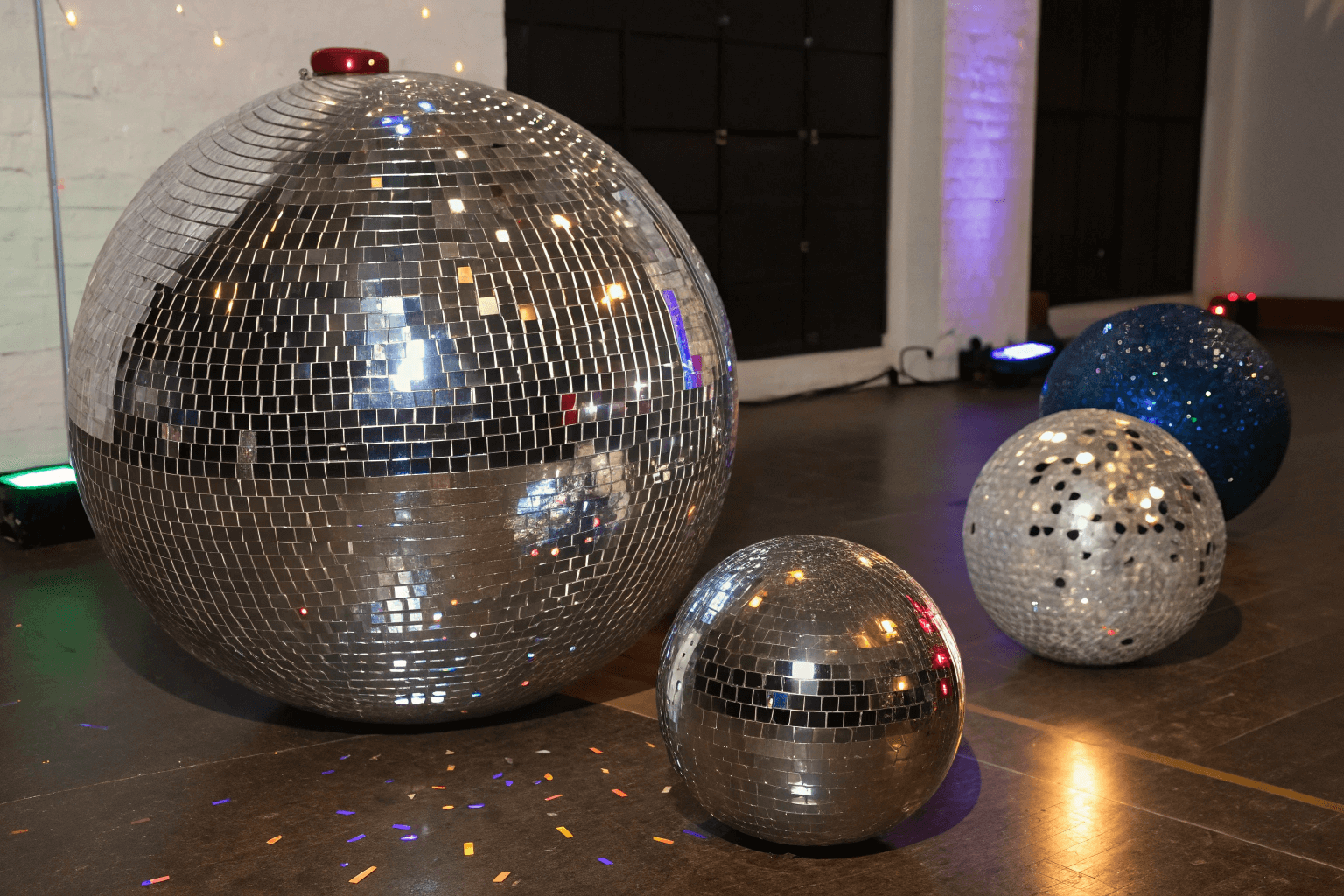
Source Commercial-Grade Mirror Balls, Factory-Direct.
Reusability: Multi-Season Display Potential
Multi-season reusability is achieved through modular display systems with interchangeable components like shelves and panels, allowing stores to reconfigure layouts for different promotions. This approach is supported by durable, adaptable elements and on-demand printed graphics, minimizing replacement needs and supporting sustainability goals.

The Modular Design Framework for Seasonal Adaptation
The core of multi-season use lies in modular fixtures. These systems use interchangeable components—shelves, panels, racks, and display cases—that can be quickly swapped or rearranged. This allows a single fixture to serve multiple campaigns without being fully replaced.
Common modular systems include wall systems and gondola units. Their design allows for adjustments in shelf heights and configurations to accommodate different product sizes or seasonal themes, from summer launches to winter promotions.
This modular philosophy directly reduces costs and waste. Stores avoid the labor and material expense of installing entirely new fixtures for each campaign. Instead, they refresh the display with targeted updates, extending the fixture’s lifecycle and improving return on investment.
Engineering Durable and Adaptable Display Elements
Practical reusability requires components built to last. Engineering integrates durable, multi-purpose elements. Examples include using graphic-wrapped recycled shipping tubes to support video monitors or creating hollow resin rocks to conceal wires and tech, blending function with theme.
Material and production choices further sustainability. Using recyclable substrates and water-based inks reduces environmental impact. On-demand printing for assets like foam board headers or vinyl banners minimizes overproduction and waste, allowing graphics to be updated easily for new seasons.
Displays are also engineered to incorporate evolving technology seamlessly. This includes integrating LED fire pits with motion sensors, directional sound speakers, or auto-timer SEG lighting systems that span wide areas for consistent, energy-efficient illumination. These elements are designed to be part of the modular system, ensuring the display remains engaging and functional across its multi-season use.
Labor Cost of Static vs. Complex Installations
Labor costs for retail installations vary widely based on complexity. Static setups like standard shelving are straightforward, with labor typically costing $50-$100 per hour. Complex installations involving custom fabrication, electrical work, or specialized systems require skilled trades, driving labor to 20-40% of total hard costs and adding significant premiums to the project timeline and budget.

Defining Static and Complex Installations
Static installations involve pre-fabricated, standard components like basic shelving units or simple display racks. These require minimal assembly and no specialized trades, making the installation process predictable and fast.
Complex installations include custom millwork, integrated lighting systems, refrigerated displays, or architectural features. These projects demand licensed electricians, carpenters, and other skilled professionals, which extends the project schedule and increases coordination needs.
The fundamental difference is the need for specialized skills and integration with building systems. Static setups avoid connections to electrical or HVAC systems, while complex installations are defined by this engineering and integration work.
Cost Drivers and Regional Budget Impact
Labor rates for professional installers typically range from $50 to $100 per hour. For complex work involving electrical systems or custom fabrication, rates are at the higher end of this scale or can exceed it due to the required expertise.
In retail construction, labor represents 20% to 40% of total hard costs. When a project includes complex elements like custom lighting or HVAC integrations, it can add a 20-30% premium to the tenant improvement budget. This premium accounts for the higher skilled labor rates and the extended time needed for installation and system coordination.
Location significantly impacts the total investment. For example, tenant improvement costs can range from around $117 per square foot in more efficient regions to over $211 per square foot in high-cost areas like Northern California. These regional variances directly affect the labor budget allocated for a project.
Comparative ROI: Disco Balls vs. Digital Signage
Digital signage offers a measurable, high-return investment with proven sales uplifts and cost savings. Disco balls, while effective for ambiance, lack quantifiable retail ROI data and function primarily as a fixed decorative cost.
| Metric | Digital Signage | Disco Balls |
|---|---|---|
| Primary ROI Data | Measurable, data-backed (e.g., 32% sales growth, 124% Year 1 ROI) | No quantifiable retail ROI data available |
| Cost Structure | High initial investment, 30-50% lower ongoing costs vs. print | Fixed capital expense with no operational savings |
| Payback Period | 12-18 months | Not applicable (decorative asset) |
| Measurable Impact | Drives sales, reduces costs, increases engagement (55-83% recall) | Atmospheric value; contributes to experience, not direct sales |

The Measurable ROI of Digital Signage
Digital signage delivers concrete financial returns in retail environments. Industry data shows it can drive a 32% increase in sales while reducing operational costs by 35%. This performance stems from high viewer engagement, with studies indicating 55% to 83% of shoppers notice and recall the dynamic content displayed.
The investment typically pays for itself within 12 to 18 months. After this break-even point, the long-term return on investment often exceeds 100%. A key factor in this high ROI is the significant reduction in ongoing expenses. By eliminating the need for constant reprinting, shipping, and manual labor to update static signs, businesses see ongoing costs that are 30% to 50% lower than traditional print signage.
A practical example illustrates the potential. A sample Year 1 ROI calculation, based on a $15,000 revenue uplift against total costs of $6,700, results in a 124% return on the initial investment. This demonstrates the powerful, quantifiable advantage of a dynamic, data-driven communication tool.
The Decorative Cost of Disco Balls
In contrast, disco balls function as a low-tech decorative element. They are designed for ambient lighting and atmosphere, with no established engineering standards or retail-specific performance metrics. Searches yield no sourced data on quantifiable ROI, failure rates, or formal cost-benefit analyses for their use in a commercial retail context.
Their value is primarily atmospheric, contributing to a space’s experiential feel or “Instagrammability” rather than driving measurable sales metrics. Unlike digital signage, a disco ball is a fixed capital expense. It offers no capability for dynamic content updates and generates no associated operational cost savings.
When placed in a direct comparison, digital signage delivers a return on investment that is 2x to 3x superior, as measured through analytics and potential sponsorship value. The disco ball remains a novelty item whose financial impact is anecdotal, while digital signage provides a scalable, data-backed solution with clear total cost of ownership and ROI calculations.
Inventory Management for Global Store Rollouts
Global store rollout inventory management is a specialized discipline that coordinates supply chain logistics, demand forecasting, and local compliance to ensure the right products are in the right stores at the right time. It moves beyond simple stock tracking to integrate technology, real-time data, and strategic partnerships to mitigate risks like customs delays, stockouts, or overstocking across diverse markets.

The Core Framework: From Forecasting to Fulfillment
Demand forecasting uses AI and historical data to predict stock needs for each new market, adjusting for local trends and seasonality.
A centralized inventory management system provides a single source of truth for stock levels across all warehouses and store locations in real time.
Implementing ABC analysis prioritizes high-value, fast-moving items (like flagship decorative pieces) for tighter stock control and faster replenishment cycles.
Establishing clear audit rhythms—daily for high-value items, weekly for core stock, and monthly for full counts—ensures accuracy and prevents shrinkage from the outset.
Logistics, Technology, and Partner Integration
Leveraging RFID tags and IoT sensors provides granular, real-time visibility into inventory movement from factory to store floor, reducing loss and errors.
Dedicated account management and logistics partners, like those in a B2B Professional Program, handle complex customs pre-clearance and chartered freight to meet non-negotiable launch deadlines.
A hybrid inventory model combines a central warehouse for bulk, slow-moving items with regional hubs to enable rapid, cost-effective replenishment of best-sellers to local stores.
Technology integration between ERP, warehouse management, and point-of-sale systems automates reordering triggers and maintains consistent data flow across all operational nodes.
Final Thoughts
The value of decorative elements like mirror balls isn’t found in a single line item on a budget sheet. It’s woven into the broader retail strategy. When viewed through the lenses of foot traffic generation, social media appeal, and long-term cost management, these installations shift from being a simple expense to a potential investment in the store’s identity and customer experience.
The key takeaway for any retailer is to move beyond the initial purchase price. A comprehensive evaluation must consider the total cost of ownership, including installation, maintenance, and potential for reuse. It also requires a clear objective: is the goal to create a viral social media moment, to become a neighborhood destination, or to enhance ambiance? By aligning the decor’s purpose with measurable business goals—whether that’s increased dwell time, social shares, or seasonal adaptability—retailers can make more informed decisions that balance creative impact with financial prudence.
Frequently Asked Questions
What is the typical ROI for retail window displays?
The industry standard ROI for retail window displays ranges from 50% to 90%. Effective displays can drive a 20% increase in impulse purchases and sales lifts of up to 478% for featured products. A key benchmark is a $9 return for every $1 spent.
How much should a retailer budget for store decor?
Initial setup budgets for store decor and fixtures typically range from $25,000 to $50,000 for a mid-market store. Total retail build-out costs can be $140 to $190 per square foot. The final budget depends heavily on whether the goal is a premium brand experience or a more functional, minimalist design.
Can mirrors be used to increase foot traffic?
The provided research focuses on convex mirrors for safety and visibility, not foot traffic generation. To assess mirrors for driving traffic, studies on consumer psychology, retail design for sightline optimization, and specific foot traffic metrics would be required, which are not covered in the current data.
Are disco balls a worthwhile investment for retail stores?
Based on available data, disco balls are not recommended for retail investment. They are engineered for event venues with a maximum lifespan of 5 to 7 years. There are no documented ROI metrics for their use in sustained retail environments, making them unsuitable for budget allocation aimed at driving traffic.
What is the most cost-effective type of shop decor?
Modular fixtures and shelving systems are the most cost-effective. An initial investment of $25,000 to $50,000 for a full store setup offers long-term value through reusability, allowing for easy and affordable seasonal updates without major new purchases.
How do you measure engagement from a window display?
Engagement is measured using key performance indicators like increases in foot traffic and dwell time (tracked with sensors), conversion rates from QR code scans, and sales lift. Industry data shows effective displays can generate a 15% to 20% sales increase for featured products within two weeks.