

Sourcing a vintage-style disco ball that delivers authentic visual impact and stands up to professional use is more complex than just picking a shiny sphere. The wrong choice in tile size, material, or color tone can leave a high-end event or permanent installation looking cheap and missing the mark.

This guide breaks down the critical specifications for B2B buyers. We’ll compare the visual effects of 5mm versus 10mm mirror facets, explain why genuine glass tiles are essential for authentic nightclub design, and analyze the durability differences between modern and antique construction. You’ll get the data you need, like the 1,500% surge in social media interest driving this trend and the specific rotation speeds (0.5–3 RPM) that define a period-accurate installation.
Industry Manufacturers List
Quick Comparison: Top Picks
| Manufacturer | Location | Core Strength | Verdict |
|---|---|---|---|
| Real Glass Mirror Tile Disco Balls | Industry Wide | High‑clarity glass mirror tiles on fiberglass or foam spheres; typical tile size 5–10 mm; higher mass and breakage risk but best specular reflection and sharp light points for classic disco aesthetics. | Premium, authentic vintage sparkle with superior optical clarity. Best for professional sets and high-impact events where visual authenticity is paramount. |
| Plastic (Acrylic/Polycarbonate) Mirror Sheet Disco Balls | Industry Wide | Acrylic or polycarbonate mirrored tiles or continuous skins on lightweight cores; key metrics are impact resistance, low weight, and shatterproof performance. | Shatterproof, lightweight, and safe for high-traffic or mobile use. Prioritizes safety and handling over maximum vintage optical precision. |
Real Glass Mirror Tile Disco Balls

Real glass mirror tile disco balls are crafted by bonding small glass facets to a rigid core, creating the most authentic and high-contrast sparkle available. This construction produces the tight, crisp light beams that are the hallmark of classic disco effects, offering a look that plastic versions cannot match.
These products are built on fiberglass or foam spheres, typically using 5–10 mm glass tiles. While their production results in a heavier and more fragile final product compared to plastic-faced alternatives, the focus is on achieving superior optical clarity and long-term reflectivity for a premium, period-correct aesthetic.
At a Glance:
- 📍 Location: Industry Wide
- 🏭 Core Strength: High‑clarity glass mirror tiles on fiberglass or foam spheres; typical tile size 5–10 mm; higher mass and breakage risk but best specular reflection and sharp light points for classic disco aesthetics.
- 🌍 Key Markets: Professional stage and set design, nightclubs, film/TV period sets, premium weddings and corporate events seeking authentic vintage disco looks.
Why We Picked Them:
| ✅ The Wins | ⚠️ Trade-offs |
|---|---|
|
|
Plastic (Acrylic/Polycarbonate) Mirror Sheet Disco Balls

Plastic disco balls are built using acrylic or polycarbonate mirror sheeting or tiles. This material choice makes them exceptionally durable and lightweight, offering a practical alternative to traditional glass.
The core of their production focuses on applying these mirrored plastics to lightweight frames. The key performance metrics are impact resistance, low weight, and being shatterproof, which comes with a moderate trade-off in optical precision compared to glass.
At a Glance:
- 📍 Location: Industry Wide
- 🏭 Core Strength: Acrylic or polycarbonate mirrored tiles or continuous skins on lightweight cores; key metrics are impact resistance, low weight, and shatterproof performance with moderate loss in optical precision and long‑throw sparkle versus glass.
- 🌍 Key Markets: High‑traffic events, mobile DJs, touring productions, schools, public venues, and temporary themed installs where safety, quick handling, and low weight are prioritized over maximum vintage authenticity.
Why We Picked Them:
| ✅ The Wins | ⚠️ Trade-offs |
|---|---|
|
|
The Resurgence of the Retro Aesthetic
The retro aesthetic, particularly vintage disco balls, is experiencing a major comeback driven by social media virality and Gen Z nostalgia, with significant commercial growth and evolving applications in modern design and professional events.

The Viral Engine: Social Media and Nostalgia
The trend is powered by a 1,500% increase in ‘#discoball’ TikTok searches since 2023, with the hashtag reaching 140 million views.
Google Trends data shows a significant spike to a normalized score of 16 in September 2025, indicating a major surge in public interest.
This revival is largely driven by Gen Z’s embrace of nostalgic aesthetics, repurposing disco balls for photo-worthy moments in home decor, weddings, and events.
Market Evolution and Key Segments
Disco balls have evolved from 1970s nightclub icons into versatile design elements for minimalist, boho, and eclectic interiors.
Amazon sales data for party decorations averaged 167-279 units per month in 2025, peaking at 213.92 units in August, showing robust commercial demand.
Key market segments include Standard Disco Balls for events, high-end Mushroom/Wall-Mounted artistic installations, and Interactive/LED variants for luxury experiences and festivals.
Sustained Growth and Professional Application
The trend is projected to remain relevant through 2026, supported by the growing $200M+ retro home decor market and seasonal Q4 spikes.
For professionals, this resurgence creates demand for reliable, commercial-grade products and custom fabrication, as seen in BDB’s case studies for hotel lobbies and music festivals.
Innovations like smart features and LED integration are expanding the functional appeal of retro aesthetics, moving them beyond pure decoration into interactive experience design.
Tile Size: 5mm vs 10mm Resolution
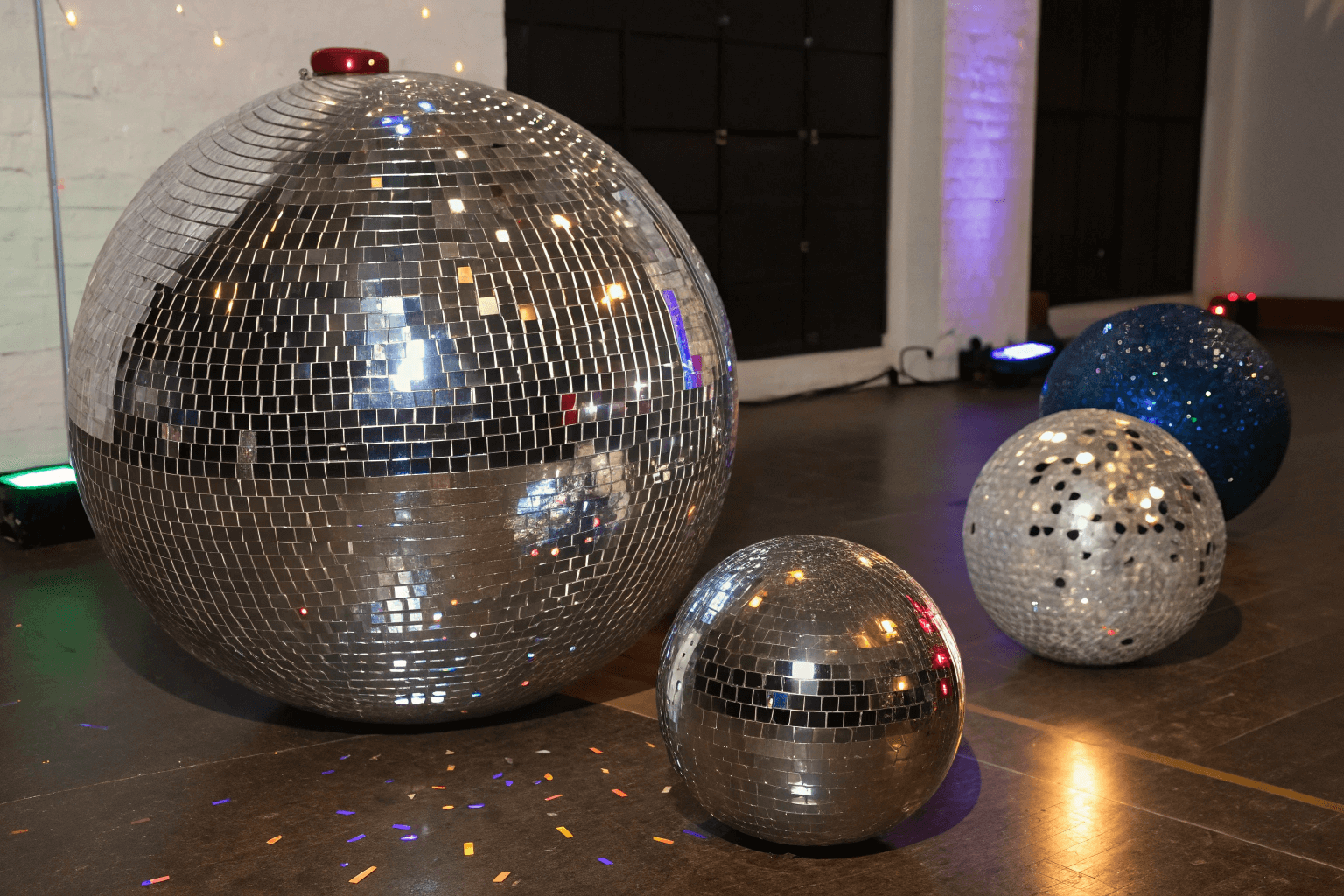
The choice between 5mm and 10mm mirror facets defines the visual character of a disco ball. 5mm facets deliver a dense, intricate sparkle ideal for detailed settings, while 10mm facets produce broader, more impactful beams suited for large-scale venues.

| Facet Size | Visual Effect | Ideal Use Case |
|---|---|---|
| 5mm x 5mm | Finer, more detailed sparkle with higher beam density | Smaller to medium balls (10cm-150cm), intimate settings, professional event setups |
| 10mm x 10mm | Broader, more pronounced light beams with larger reflections | Larger balls, high-energy venues, nightclubs, cost-effective large-scale coverage |
The 5mm Facet: Precision and Density
5mm x 5mm mirror facets create a finer, more detailed sparkle by producing a higher density of individual light beams.
This resolution is ideal for smaller to medium-sized disco balls (10cm to 150cm), where the increased visual density enhances brilliance in more intimate or detailed settings.
Professional setups for events and clubs often prefer 5mm facets for their enhanced visual impact, though they may require more precise lighting angles to maximize the effect.
The 10mm Facet: Impact and Coverage
10mm x 10mm facets generate broader, more pronounced light beams with fewer but larger individual reflections.
This size is the standard for many professional kits, offering a balance of dramatic effect, durability, and easier coverage over greater distances, making it suitable for large venues.
It is a versatile and cost-effective choice for larger disco balls, commonly used by event planners and nightclubs to create high-energy atmospheres.
Choosing the Right Resolution for Your Project
Select 5mm facets for projects where intricate light detail and maximum sparkle density are the priority, such as in boutique lounges, photo shoots, or architectural features.
Opt for 10mm facets when the goal is bold, sweeping light movements that can be seen clearly across a large dance floor or event space, prioritizing impact and logistical simplicity.
Consider the ball’s size, viewing distance, and lighting setup; a 50cm ball with 5mm facets offers a different visual character than the same size with 10mm facets.
Source Commercial-Grade Mirror Balls, Factory-Direct
Authenticity in Nightclub Design
Authenticity in nightclub design is the degree to which a space reflects historically accurate materials, lighting, and spatial cues from the eras it references, such as the 1970s disco era. It moves beyond using a disco ball as a superficial prop; authenticity hinges on the ball’s physical construction, how it is lit, and its integration into the room’s architectural and cultural narrative.

What Defines an Authentic Nightclub Design?
Authenticity is the degree to which a space reflects historically accurate materials, lighting, and spatial cues from the eras it references, such as the 1970s disco era.
It moves beyond using a disco ball as a superficial prop; authenticity hinges on the ball’s physical construction, how it is lit, and its integration into the room’s architectural and cultural narrative.
Historically grounded details signal care, craft, and respect for the original club culture, which directly affects guest perception, immersion, and the venue’s brand value.
Key Metrics for Authentic Disco Ball Implementation
Use real glass mirror facets, not plastic or acrylic, for accurate light reflection and material feel.
Select era-accurate ball diameters: standard ceilings typically use 12–20 inch balls, while large dance halls may require 36–48 inch spheres.
Implement a slow rotation speed between 0.5–3 RPM and mount the ball at a historically plausible height above the crowd.
Light the ball with tightly focused pinspots positioned at specific angles to maximize the spread of moving light dots across walls, floors, and guests.
For a genuine vintage look, consider balls with visible patina and imperfect tile alignment, as seen in surviving 1970s examples, which provide a more believable period feel than flawless modern replicas.
Applications and Industry Standards for Authentic Design
Authenticity standards are critical for immersive nightclub interiors, film and TV set design, high-fidelity period event theming, and experiential brand activations where a specific era is central.
These standards inform all choices, from ball size and material to motor systems and ceiling rigging, ensuring the element fits the intended historical context.
Authentic design extends to complementary décor, such as chrome railings, the use of low-saturated color gels, and analog-style sound and lighting trusses, to create a cohesive and immersive environment.
Color Tones: Silver vs. Gunmetal Mirror
Silver mirror tiles deliver a bright, classic sparkle for maximum light dispersion, while gunmetal mirror tiles offer a darker, muted gray tone for a more sophisticated and contemporary reflection. The choice depends on whether your project calls for vibrant retro energy or modern, refined depth.

The Classic Brilliance of Silver Mirror
Silver mirror tiles feature a bright, highly reflective chrome-like finish that produces classic sparkling light effects. This finish is the standard for vintage disco balls, designed for maximum light dispersion and vibrant dance floor illumination.
It is the ideal choice for event theme planners and DIY decorators seeking the iconic, high-shine retro aesthetic. Common products include classic 20cm silver disco balls and craft mirror tiles widely available in party supply markets.
The Modern Sophistication of Gunmetal Mirror
Gunmetal mirror tiles offer a darker gray tone with a subtle metallic sheen, providing a more muted and contemporary reflection. Known as GGG Gunmetal Gray Waterglass Mirror, this tone is often used in stained glass mosaics and modern disco-inspired designs.
The finish appeals to set designers and architects looking for sophisticated visual effects with less glare than traditional silver. It is commonly found in mosaic art supplies and home decor markets, catering to projects that require a refined, modern edge.
Choosing the Right Tone for Your Project
Select silver mirror for projects demanding high reflectivity and classic, energetic retro sparkle, such as dance floors or themed parties. Opt for gunmetal mirror when designing for a contemporary, muted aesthetic that adds depth and sophistication, suitable for lounge areas or architectural features.
Consider the lighting environment: silver performs best under bright, direct light, while gunmetal can create intriguing effects in softer or colored lighting. For B2B professionals like event planners or retailers, offering both options allows catering to diverse client visions, from vibrant celebrations to elegant installations.
Creating a “70s Lounge” with Clustered Decor
Creating a “70s Lounge” with Clustered Decor involves grouping bold, textured elements like shag rugs, rattan furniture, houseplants, and statement lighting in conversational pits or around low-slung seating to evoke a cozy, eclectic 1970s vibe.

The Core Concept of 70s Clustered Decor
Clustered decor involves grouping bold, textured elements like shag rugs, rattan furniture, and houseplants in intimate settings to foster social interaction.
The style centers on creating cozy, conversational pits or areas around low-slung seating to evoke an eclectic 1970s vibe.
It emphasizes layering textures, patterns, and natural materials to build warmth and tactile depth in a space.
Essential Elements and How to Group Them
Start with a plush base using thick, long-pile shag carpeting in bold colors like avocado green or mustard yellow.
Arrange low-slung modular seating, such as velvet sofas or swivel chairs, upholstered in geometric or floral prints.
Cluster natural materials like wicker chairs, wooden tables, and macramé hangings for an organic, boho touch.
Add statement lighting like lava lamps or bubble chandeliers and accessorize with houseplants, pop art, and functional pieces like home bars.
For high-impact zones, scale clusters appropriately, using 4 to 6 focal items per conversational area to balance nostalgia and modern usability.
Implementation for Event and Set Design
Begin with a neutral, affordable base layer that can be easily updated, then build clustered decor groups on top.
Incorporate textured surfaces like terrazzo tiles or patterned wallpaper on floors and walls to enhance the retro atmosphere.
Use modular furniture pieces to allow for flexible layouts and quick reconfiguration during events or productions.
Mix authentic vintage finds, such as record players or ceramic pieces, with contemporary neutral items to achieve a balanced aesthetic.
For professional projects requiring precision, partner with a fabrication expert to execute custom elements like mirrored furniture or architectural features that complement the 70s theme.
Durability of Modern vs. Antique Balls
Antique disco balls are generally more durable than modern ones due to superior craftsmanship and materials, while modern versions prioritize affordability over longevity.

Material and Construction: The Core of Durability
Antique disco balls from the 1970s, like those from Omega National Products, were handcrafted with aluminum shells and individually glued mirrored glass tiles, creating a robust structure.
Modern budget versions often use lightweight styrofoam or plastic cores with machine-applied, lower-quality plastic or polished mirrors, leading to sloppy tiling and gaps.
The hand-glued precision of vintage balls reduces microchipping and tile detachment, while modern mass-produced models are more prone to damage and have poorer reflectivity.
Lifespan, Maintenance, and Professional Use
A well-maintained antique ball can last for decades, with some manufacturers citing a 50-year process, whereas cheap modern balls are often designed for short-term, single-event use.
Antique balls are more repairable and refurbishable, tolerating professional reuse, while modern budget models have a higher risk of irreparable damage.
For event planners and set designers, investing in high-end modern replicas (like the Fuzzix MB40 with real glass and metal chains) or authentic antiques ensures reliability across multiple projects.
Safety, Environmental Impact, and Making the Right Choice
While antique construction used fossil fuels, its metal and glass parts are more separable. Modern balls often add plastics and LEDs, creating complex waste that is hard to recycle.
Some modern balls feature non-flammable cores for safety, but their overall environmental footprint is worsened by disposable materials and shorter lifecycles.
The choice depends on need: premium modern options or antiques for professional, repeated use; budget modern balls may suffice for one-off, low-stakes events where longevity is not a priority.
Frequently Asked Questions
What defines a vintage disco ball?
A vintage disco ball is an early mirror ball from the late 19th to mid-20th century. It’s typically a spherical object, originally 27 inches in diameter, handcrafted with over 1,200 small mirrored glass tiles attached to a core of metal or papier-mâché. Designed to reflect light and create a starry effect, they were used in dance halls, jazz clubs, and theaters. Key features include hand-applied mirrors (not machine-cut), larger sizes like 36-48 inches for clubs, and no integrated LEDs or battery motors.
What’s the difference between real glass and plastic mirror tiles for disco balls?
Real glass tiles offer superior optical clarity and rigidity for precise reflections, making them ideal for permanent, high-end installations. Plastic tiles (acrylic or polycarbonate) are significantly lighter, shatterproof, and easier to install, which makes them preferable for safety in high-traffic events, temporary setups, or DIY projects. While glass provides an authentic, distortion-free shimmer, plastic excels in portability and custom shaping, though it may warp or cloud over time.
Where can I buy bulk vintage disco balls?
Several wholesale sources specialize in bulk disco ball purchases. Key platforms include SupplyLeader.com, which connects buyers with manufacturers for custom orders; Oriental Trading for bulk party supplies; and Alibaba.com for a global marketplace of mini disco balls and mirror decorations. Other suppliers like TableclothsFactory, Etsy shops (e.g., SkyColorShop), and Leilani Wholesale offer various sizes and materials, from large foam balls to small glass mirror ornaments.
What mirror tile size gives the most authentic vintage look?
For an authentic vintage look, use mirror tiles measuring approximately 3/8 inch (9.5mm) square. This size is featured on professional models like the ProX 16-inch ball, which uses more tiles for brighter reflections. Smaller DIY mosaic tiles around 5mm produce a finer, less traditional effect. Vintage-style real glass tiles are typically about 3mm (1/8 inch) thick, with square sizes cut for custom applications.
How do I achieve a retro look with disco ball decor?
Create a retro aesthetic by using disco balls as key decorative elements. Hang them from ceilings to catch light, use them as backdrop accent pieces for photo areas, or cluster mini balls as table centerpieces with candles and bold colors. Other ideas include using them as photo booth props, unique planters in gardens, or DIY candle holders. The goal is to integrate their reflective sparkle into various settings to evoke a playful, nostalgic vibe.
How do I clean vintage glass mirrors on a disco ball?
Clean vintage glass mirrors with a gentle DIY solution of rubbing alcohol, white vinegar, and water. Apply it with a microfiber cloth or crumpled newspaper to avoid streaks. First, remove dust with alcohol, then spray and wipe the solution in an S-pattern. For heavy film, use vinegar or shaving cream, then buff dry immediately. Avoid abrasive pads, bleach, or ammonia-based cleaners, as they can scratch the glass or damage the antique backing. Always test on a small area first.
Final Thoughts
Finding the right vintage-style mirror ball is about more than just picking a shiny object. It’s a choice that defines the atmosphere of a space. Whether you’re drawn to the intricate sparkle of 5mm facets for a boutique lounge or the bold impact of 10mm tiles for a large dance floor, the details matter. The authenticity of real glass, the character of silver versus gunmetal finishes, and the durability of the construction all contribute to the final effect. These elements separate a simple decoration from a design statement that captures the true spirit of the era.
This resurgence of retro aesthetics isn’t a fleeting trend. It’s a lasting design movement driven by a desire for immersive, tactile experiences. For professionals—from event planners and set designers to architects and venue owners—this means an opportunity. By understanding the nuances of sourcing, from tile resolution to material authenticity, you can create environments that are not only visually stunning but also emotionally resonant. The right mirror ball becomes a focal point that tells a story, transforming any space into a memorable destination.